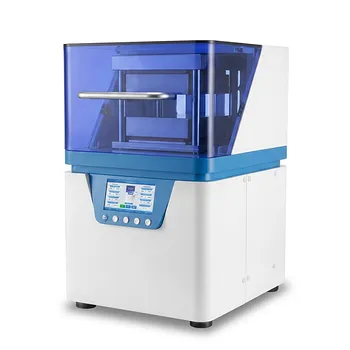
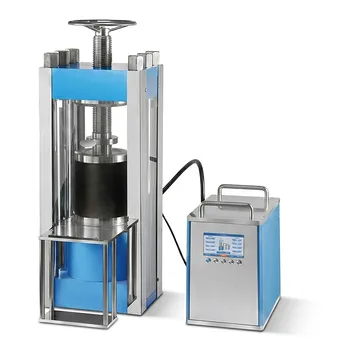
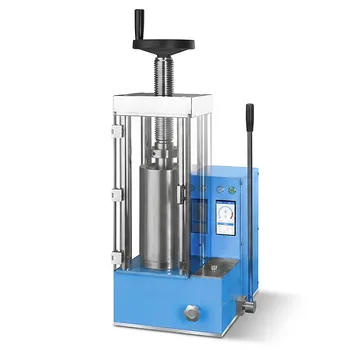
Fabricating high-quality polyhydroxybutyrate (PHB) nanocomposite films requires a high-precision electrically heated press to simultaneously apply extreme pressure (such as 100 bar) and precise thermal energy (around 175 °C). This dual-action process forces the PHB polymer chains to pack tightly and flow uniformly within a mold, eliminating microscopic defects and ensuring a consistent film thickness of approximately 200 µm. Without this precision, the resulting films would suffer from internal air gaps and structural irregularities that compromise their mechanical and thermal performance.
The core utility of a high-precision press lies in its ability to transform raw composite blends into a dense, uniform solid-state membrane through controlled thermal-mechanical densification. By standardizing physical dimensions and stabilizing the crystalline structure, the press ensures that any subsequent performance data is a result of the material’s properties rather than manufacturing flaws.
Achieving Structural Integrity and Densification
Elimination of Internal Defects and Air Gaps
High-precision hydraulic presses apply substantial clamping force to ensure the polymer melt flows completely into every corner of the mold. This intense pressure is necessary to expel trapped air and eliminate micropores or defects that naturally occur during the initial mixing of PHB and nanocomposites. A dense internal structure is critical for enhancing the mechanical strength of the film and preventing structural failure under stress.
Tight Packing of Polymer Chains
The combination of heat and pressure facilitates the rearrangement of polymer chains, allowing them to pack more tightly than they would under ambient conditions. In nanocomposites, this process is vital for ensuring the thorough fusion of the polymer matrix with inorganic fillers. This compaction creates a continuous phase that is essential for uniform ion transport and overall material stability.
Optimized Material Density
Using a heated press allows for higher material density at lower mechanical pressures than cold-pressing techniques. The heat softens the PHB matrix, making it more receptive to the compression force, which results in a densified membrane structure. This level of densification is often the deciding factor in whether a film can effectively resist penetration by external elements or internal growths, such as dendrites.
Ensuring Reproducibility Through Precision Control
Standardization of Film Thickness
A high-precision press is engineered to produce films with minimal thickness deviation, often targeting a specific profile like 200 µm. Maintaining a uniform thickness is not just an aesthetic requirement; it is a prerequisite for reliable experimental data. Variations in thickness can lead to biased results in subsequent tests, such as photocatalytic degradation or peel strength assessments.
High Surface Quality and Smoothness
The precision of the heating elements and the mold interface ensures the production of films with excellent surface quality. Smooth surfaces are necessary for advanced post-processing steps, such as corona treatments, where surface irregularities would lead to uneven results. A consistent surface ensures that the material interacts predictably with its environment during testing.
Programmable Pressure and Temperature Stages
Modern laboratory presses offer programmable control over preheating, high-pressure molding, and cooling phases. This allows researchers to compensate for temperature fluctuations and maintain a constant high temperature throughout the molding process. Such precision ensures that every sample produced is identical, allowing for valid comparisons across different batches of material.
Stabilization of Crystalline Structure
Controlled Cooling Rates
When a high-precision press is paired with a cooling unit, it allows for strictly controlled cooling rates after the molding process. This is essential for PHB, as the rate of cooling directly dictates how the crystalline structure of the composite material stabilizes. Rapid or uneven cooling can lead to internal stresses or unwanted crystal formations that make the film brittle.
Thermal-Mechanical Flow Optimization
The high-temperature environment (often reaching 190°C to 220°C depending on the specific blend) ensures that composite granules are properly re-melted. Once flowable, the high pressure forces this melt to fill the mold precisely. This ensures that the final "quenched" state of the polymer is a dense, uniform plate with superior physical-mechanical properties.
Understanding the Trade-offs
Thermal Degradation Risks
Subjecting PHB to high temperatures (around 175 °C) for extended periods can trigger thermal degradation. While heat is necessary for flow, excessive exposure can break down polymer chains, weakening the final film. Precision timing and temperature control are required to balance melt flow against the risk of chemical breakdown.
Mechanical Stress and Mold Release
Applying high pressure (100 bar or more) can make sample recovery difficult if the mold is not properly prepared. The intensity of the compaction can cause the film to adhere to the plates, potentially causing surface micro-fractures during removal. Additionally, the high clamping forces require robust equipment that may be cost-prohibitive for smaller-scale laboratory setups.
How to Apply This to Your Project
When selecting or operating a heated press for PHB nanocomposite fabrication, your primary objective should dictate your specific settings:
- If your primary focus is mechanical durability: Prioritize higher pressure stages (up to 100 bar) and slower, controlled cooling to ensure maximum densification and a stable crystalline structure.
- If your primary focus is analytical accuracy: Focus on the precision of the thickness control (targeting +/- 5 µm) to ensure that your thermal and mechanical test data is not skewed by sample variance.
- If your primary focus is processing sensitive additives: Minimize the preheating duration and use the lowest effective melting temperature to prevent the thermal degradation of the PHB matrix or its nano-fillers.
By mastering the balance of heat and pressure, you ensure that the resulting PHB films are defined by their engineered chemistry rather than avoidable manufacturing defects.
Summary Table:
| Key Benefit | Precision Requirement | Impact on PHB Nanocomposite Film |
|---|---|---|
| Structural Densification | High Pressure (e.g., 100 bar) | Eliminates air gaps and ensures a dense, solid-state membrane. |
| Material Uniformity | Precise Heat (e.g., 175 °C) | Facilitates tight chain packing and thorough filler fusion. |
| Data Reproducibility | Minimal Thickness Deviation | Standardizes dimensions (e.g., 200 µm) for accurate testing. |
| Crystal Stabilization | Controlled Cooling Rates | Prevents brittleness by ensuring stable crystal formation. |
| Surface Quality | Programmable Molding Stages | Produces smooth surfaces essential for post-processing like corona treatment. |
Elevate Your Material Research with KINTEK Precision
Maximize the performance of your PHB nanocomposites by eliminating manufacturing flaws. KINTEK specializes in comprehensive laboratory pressing solutions tailored for advanced material science and battery research. Whether you need manual, automatic, heated, multifunctional, or glovebox-compatible models, our equipment delivers the exact thermal-mechanical control required for superior densification and reproducibility.
From cold and warm isostatic presses to high-precision heated plates, we provide the tools to ensure your films are defined by their chemistry, not their defects.
Ready to upgrade your lab’s capabilities? Contact KINTEK today to find your perfect pressing solution!
References
- Denis Mihaela Panaitescu, Gheorghe Dinescu. Poly(3-hydroxybutyrate) Modified by Nanocellulose and Plasma Treatment for Packaging Applications. DOI: 10.3390/polym10111249
This article is also based on technical information from Kintek Solution Knowledge Base .
Related Products
- Cylindrical Lab Electric Heating Press Mold for Laboratory Use
- Heated Hydraulic Press Machine with Heated Plates for Vacuum Box Laboratory Hot Press
- Automatic Hydraulic Heat Press Machine with Multi Stage Programmable Control and Integrated Water Cooling Plate Size 180x180mm
- Automatic Heated Hydraulic Press Machine with Heated Plates for Laboratory
- Heated Hydraulic Press Machine With Heated Plates For Vacuum Box Laboratory Hot Press
People Also Ask
- How does a laboratory electric heated press ensure sample quality? Optimize SiR-EPDM vulcanization and molding.
- What role does a laboratory electric heated press play in polymer composite fabrication? Key for Standardized Specimens
- What role does a laboratory electric heating press play in NBR molding? Master Vulcanization & Material Density
- Why is a laboratory electric heating press required for PP/EPDM molding? Achieve Superior Specimen Integrity
- What is the purpose of incorporating cartridge heaters into a lab press mold for MLCC block compression? Optimize Results