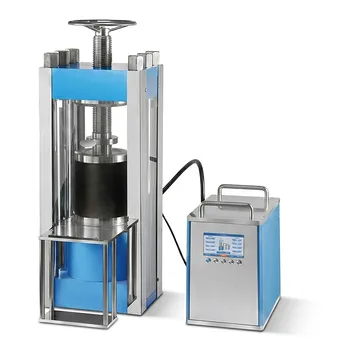
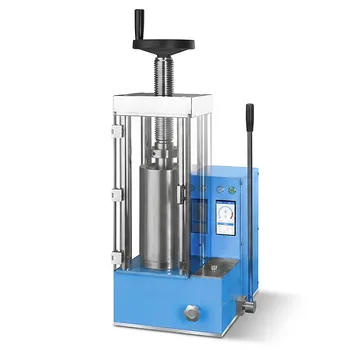
A laboratory electric heated press ensures the quality of SiR-EPDM blends by applying precisely controlled thermal energy and constant pressure to trigger the vulcanization process. This synchronized application of heat and force transforms the raw polymer mixture into a dense, cross-linked thermoset elastomer while eliminating internal air bubbles. The result is a high-performance sample with uniform thickness, precise geometric integrity, and a stabilized internal structure ready for standardized testing.
Core Takeaway: The heated press acts as both a chemical catalyst and a physical mold, using high-temperature thermal fields and stable pressure to ensure the formation of a uniform, bubble-free, three-dimensional molecular network.
The Role of Precise Thermal Energy
Triggering the Vulcanization Reaction
The press provides the necessary energy to drive the chemical cross-linking of the SiR-EPDM polymer chains. Whether using sulfur or peroxide-based agents, the stable high temperature (typically between 150°C and 165°C) ensures that the vulcanizing agents react completely throughout the material.
Facilitating Uniform Heat Conduction
High-precision heated plates ensure that heat is conducted uniformly to the mold. This uniform distribution prevents localized "hot spots" or "cold spots," which could lead to inconsistent cross-link density and varied physical properties across the specimen.
Driving Molecular Network Formation
The thermal energy causes the rubber molecular chains to undergo a chemical transformation from a plastic state to a finished, elastic sheet. This process establishes a stable three-dimensional spatial network, which is the fundamental requirement for the blend to achieve its intended flame retardancy and mechanical strength.
Mechanical Compression and Structural Integrity
Eliminating Internal Voids and Air Bubbles
High pressure is critical for forcing internal air pockets and gases out of the compound during the heating phase. By eliminating internal air bubbles, the press ensures the specimen has a dense physical structure and avoids interfacial defects that could cause premature failure during testing.
Ensuring Full Mold Cavity Filling
Constant pressure, often reaching levels like 10 MPa or 300 KN, forces the viscous SiR-EPDM material into every corner of the mold. This ensures that the final samples—whether square sheets or dumbbell shapes—possess perfect geometric dimensions and a smooth surface finish.
Consolidation of Composite Layers
In cases where the SiR-EPDM blend involves multiple layers or adhesives, the press provides the physical constraints necessary for tight bonding. This eliminates interfacial voids, creating a reliable, integrated composite structure that functions as a single, high-performance material.
Understanding the Trade-offs and Pitfalls
The Risk of Thermal Over-Exposure
If the temperature is too high or the "dwell time" is too long, the SiR-EPDM blend may undergo thermal degradation. This over-vulcanization can make the sample brittle, undermining its natural elasticity and skewing the results of subsequent mechanical tests.
Pressure Imbalances and Internal Stress
If the press does not distribute pressure evenly, the sample may contain residual internal stresses. These stresses can cause the finished specimen to warp or shrink once it is removed from the mold, resulting in thickness variations that violate testing standards.
Incomplete Cross-Linking
Conversely, insufficient temperature control can lead to under-vulcanization, where the polymer chains have not fully bonded. This results in a "tacky" or soft specimen that lacks the necessary structural integrity and chemical resistance required for accurate data collection.
Applying the Technology to Your Project
Successful specimen preparation depends on balancing the specific requirements of the SiR-EPDM ratio with the press settings.
- If your primary focus is mechanical strength: Ensure the press is set to a constant, high pressure to maximize density and eliminate even the smallest internal voids.
- If your primary focus is thermal stability or flame retardancy: Prioritize precise temperature control and uniform thermal fields to ensure a consistent three-dimensional molecular network.
- If your primary focus is geometric precision: Utilize high-precision steel molds with the press to guarantee uniform thickness and adherence to standard square or dumbbell shapes.
By masterfully controlling both the heat and the force, the laboratory press ensures that every SiR-EPDM sample is a true representation of the material's potential.
Summary Table:
| Key Feature | Impact on Sample Quality | Potential Risk if Mismanaged |
|---|---|---|
| Precise Thermal Energy | Triggers full vulcanization & stable molecular networking | Thermal degradation or material brittleness |
| Constant Pressure | Eliminates internal air bubbles & ensures perfect mold filling | Residual internal stress or sample warping |
| Uniform Heat Distribution | Prevents localized hot/cold spots for consistent density | Incomplete cross-linking (tacky specimens) |
| Mechanical Compression | Consolidates composite layers & eliminates interfacial voids | Thickness variations violating test standards |
Elevate Your Material Research with KINTEK Precision
Unlock the full potential of your SiR-EPDM blends and battery research with KINTEK’s industry-leading laboratory pressing solutions. From achieving perfect vulcanization to ensuring uniform sample thickness, our equipment is designed for the rigorous demands of modern material science.
Why Choose KINTEK?
- Versatile Range: We offer manual, automatic, heated, and multifunctional models tailored to your specific lab requirements.
- Specialized Applications: Our glovebox-compatible models and cold/warm isostatic presses (CIP/WIP) are widely applied in cutting-edge battery research.
- Precision Control: Achieve the exact thermal fields and stable pressure needed to eliminate internal defects and ensure standardized testing results.
Ready to enhance your lab's efficiency and sample integrity? Contact our experts today to find the ideal pressing solution for your project!
References
- R. Deepalaxmi, V. Rajini. Property Enhancement of SiR-EPDM Blend Using Electron Beam Irradiation. DOI: 10.5370/jeet.2014.9.3.984
This article is also based on technical information from Kintek Solution Knowledge Base .
Related Products
- Cylindrical Lab Electric Heating Press Mold for Laboratory Use
- Heated Hydraulic Press Machine with Heated Plates for Vacuum Box Laboratory Hot Press
- Automatic Heated Hydraulic Press Machine with Hot Plates for Laboratory
- Automatic Large Format Laboratory Heated Hydraulic Press 400x400mm Plate Capacity
- 24T 30T 60T Heated Hydraulic Lab Press Machine with Hot Plates for Laboratory
People Also Ask
- What role does a laboratory electric heated press play in polymer composite fabrication? Key for Standardized Specimens
- What role does a laboratory electric heating press play in NBR molding? Master Vulcanization & Material Density
- Why is a laboratory electric heating press required for PP/EPDM molding? Achieve Superior Specimen Integrity
- What is the purpose of incorporating cartridge heaters into a lab press mold for MLCC block compression? Optimize Results
- Which lab press parameters are critical for PLA sheet quality? Master Temperature, Pressure & Cooling