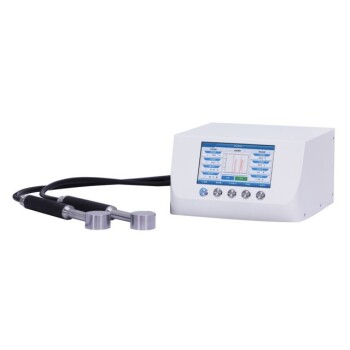
Precise thermal regulation is critical for ensuring the validity of Fiber Reinforced Plastic (FRP) research. An industrial constant temperature oven is required to create a stable, controlled environment that simulates both the manufacturing conditions and the harsh operating environments the material will face. This equipment allows researchers to isolate temperature as a variable to accurately measure secondary deformation and material softening.
By strictly controlling the thermal environment, researchers can quantify the specific impact of heat on the structural integrity of composite materials, separating manufacturing variances from operational stress.
Simulating the Manufacturing Environment
Replicating Production Variables
FRP materials are sensitive to the ambient conditions in which they are created. To study this, the oven is used to simulate temperatures typically ranging from 15°C to 35°C.
Modeling Regional and Seasonal Differences
This specific temperature range is not arbitrary. It represents the variations found in different seasons and geographic regions.
Ensuring Process Consistency
By holding these temperatures constant, researchers can determine how environmental heat during the production phase affects the initial formation of the material.
Evaluating Operational Durability
Mimicking High-Stress Zones
Once deployed, FRP materials often face environments far hotter than where they were manufactured. The testing phase utilizes the oven to maintain temperatures between 50°C and 80°C.
Recreating Real-World Scenarios
These higher temperatures mimic specific, demanding applications. A primary example cited is the environment of a boat engine room, where heat is constant and intense.
Quantifying Material Behavior
Measuring Secondary Deformation
Heat can cause cured materials to shift or warp over time. The constant temperature oven allows for the quantitative evaluation of secondary deformation—changes that occur after the material has been formed.
Assessing Softening Effects
FRP composites run the risk of losing rigidity under thermal stress. Controlled heating allows researchers to identify exactly when and how the material begins to soften.
Understanding the Trade-offs
The Necessity of Stability
The primary limitation in this type of research is thermal fluctuation. If the oven cannot maintain a strictly constant temperature, the data regarding deformation becomes unreliable.
Separating Variables
Without an industrial-grade oven, it is impossible to distinguish whether deformation is caused by material flaws or inconsistent heating. Precision eliminates this ambiguity.
Optimizing Your Research Protocol
To get the most out of your material analysis, align your thermal settings with your specific research goals:
- If your primary focus is production consistency: Utilize the 15°C to 35°C range to understand how regional climates affect the initial curing process.
- If your primary focus is product reliability: Utilize the 50°C to 80°C range to stress-test the material against softening in high-heat applications like engine rooms.
Precise thermal regulation is the only way to transform anecdotal observation into rigorous, quantifiable material science.
Summary Table:
| Research Phase | Temperature Range | Purpose & Application |
|---|---|---|
| Manufacturing Simulation | 15°C - 35°C | Replicating regional/seasonal variables & production consistency |
| Operational Testing | 50°C - 80°C | Mimicking high-stress zones (e.g., boat engine rooms) |
| Material Analysis | Constant Setpoint | Quantifying secondary deformation & softening points |
Elevate Your Composite Material Research with KINTEK
Don't let thermal fluctuations compromise your data integrity. KINTEK specializes in comprehensive laboratory pressing and thermal solutions, offering a range of manual, automatic, and multifunctional equipment designed for the most demanding research environments. Whether you are conducting battery research or testing FRP structural integrity, our high-precision systems ensure repeatable, quantifiable results.
Ready to optimize your lab's performance? Contact us today to discover how our industry-leading solutions can enhance your material analysis!
References
- Pham-Thanh Nhut, Quang Thang. Evaluating deformation in FRP boat: Effects of manufacturing parameters and working conditions. DOI: 10.1515/jmbm-2022-0311
This article is also based on technical information from Kintek Solution Knowledge Base .
Related Products
- Infrared Heating Quantitative Flat Plate Mold for Precise Temperature Control
- Lab Double Plate Heating Mold for Laboratory Use
- Automatic High Temperature Heated Hydraulic Press Machine with Heated Plates for Lab
- Split Automatic Heated Hydraulic Press Machine with Heated Plates
- Warm Isostatic Press for Solid State Battery Research Warm Isostatic Press
People Also Ask
- How do precision temperature-controlled heating plates function in electrolyte thermal stability storage experiments?
- What is the importance of a precision temperature-controlled heating module? Ensure Aluminum-Cadmium Thermal Stability
- How does heating platen precision affect rubber specimens? Achieve uniform density and reliable testing results.
- How are thin polymer films produced for spectroscopic analysis? Expert Guide to Heat and Low-Pressure Methods
- What accessories and field services can be used to optimize the capabilities of presses? Maximize Your Lab Performance