Precise pressure application is the critical variable in transitioning battery development from theoretical chemistry to viable, high-energy-density reality. For advanced materials like ternary lithium or Lithium Manganese Iron Phosphate (LMFP), controlled pressure is required to create high-density electrodes that overcome current energy density bottlenecks. This precision allows researchers to move beyond simple manufacturing scale-up and focus on technology-driven innovation, such as extending the range of electric vehicles.
Core Takeaway Developing next-generation batteries requires more than just new chemistry; it requires mechanically optimized electrode structures. Precise pressure application ensures the consistency needed to evaluate technical innovations accurately, enabling the production of high-density electrodes that are essential for breaking through performance ceilings.
The Role of Pressure in Electrode Architecture
Overcoming Energy Density Bottlenecks
To improve battery capacity, researchers must maximize the amount of active material packed into a given volume.
Laboratory presses enable the creation of high-density electrodes, which directly address current limitations in energy storage. By compacting materials effectively, you increase the loading of active material per unit volume, which is a fundamental requirement for extending EV range.
Optimizing Electrical Contact
High-precision pressure is required to compress mixtures of active materials, binders, and conductive agents into a cohesive sheet.
This compression ensures intimate contact between internal particles. Without this uniform contact, the electrode suffers from high direct current resistance (DCR), rendering the high-energy material ineffective in practical applications.
Stabilizing Long-Term Cycling
Uniform pressure does more than just pack material; it secures it.
Proper application prevents the shedding of active materials during operation. This ensures the mechanical stability of the electrode throughout long-term charge-discharge cycles, preventing premature failure.
Impact on Atomic and Microscopic Structure
Inducing Favorable Atomic Configurations in LMFP
For Lithium Manganese Iron Phosphate (LMFP), pressure plays a sophisticated role beyond simple compaction.
Applying directional compressive strain can induce Manganese (Mn) and Iron (Fe) atoms to arrange in specific asymmetric patterns. This atomic configuration activates low-energy optical phonon modes, which facilitates rapid ion migration and maximizes ionic conductivity.
Managing Internal Stress and Defects
Materials used in advanced energy storage are sensitive to geometric and microscopic inconsistencies.
Precise pressure holding compensates for powder rearrangement during the initial compression phase. This prevents internal stress concentration and delamination cracking, ensuring the molded "green body" maintains its integrity after demolding.
Understanding the Trade-offs
The Density vs. Porosity Balance
While high pressure increases energy density, applying too much pressure can be detrimental.
Excessive density eliminates the necessary porosity within the electrode. If the porosity is too low, the electrolyte cannot wet the material effectively, hindering ion diffusion and severely impacting the battery's cycle life and rate performance.
Accuracy in Electrochemical Evaluation
Inconsistent pressure application introduces variables that skew data.
To obtain accurate data regarding charge-discharge rates and phase stability, the electrode's physical structure must be uniform. Precise pressure control eliminates mechanical variables, ensuring that test results reflect the true electrochemical properties of the material innovation, rather than artifacts of poor preparation.
Making the Right Choice for Your Goal
To leverage pressure effectively in battery research, align your compression strategy with your specific performance targets:
- If your primary focus is maximizing range: Prioritize higher pressure to increase active material loading and minimize wasted volume, reducing the relaxed lattice volume.
- If your primary focus is rate performance (charging speed): Moderate the pressure to maintain an optimized ratio of porosity, ensuring efficient electrolyte wetting and ion diffusion.
- If your primary focus is material innovation (LMFP): Use precise, directional strain to manipulate atomic arrangements and boost intrinsic ionic conductivity.
Precision in pressure application is not merely a manufacturing step; it is a tool for manipulating material properties to achieve superior battery performance.
Summary Table:
| Factor | Impact on Battery Performance | Key Benefit |
|---|---|---|
| Electrode Density | Increases active material loading per unit volume | Extends EV range and capacity |
| Particle Contact | Reduces Direct Current Resistance (DCR) | Improves electrical efficiency |
| LMFP Structure | Induces favorable atomic arrangements | Maximizes ionic conductivity |
| Porosity Control | Maintains electrolyte wetting paths | Ensures long-term cycle life |
| Mechanical Stability | Prevents shedding of active materials | Enhances durability and safety |
Elevate Your Battery Research with KINTEK Precision
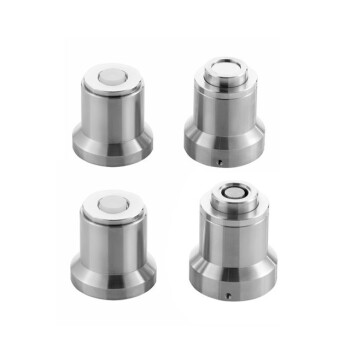
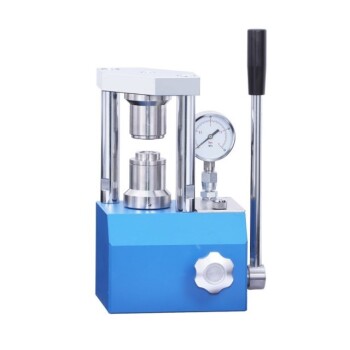
Transition from theoretical chemistry to high-performance reality with KINTEK’s comprehensive laboratory pressing solutions. Whether you are developing ternary lithium or LMFP technologies, our equipment provides the precise pressure control necessary to optimize electrode architecture and ionic conductivity.
Our specialized range includes:
- Manual & Automatic Pellets Presses for rapid prototyping.
- Heated and Multifunctional models for advanced material synthesis.
- Glovebox-compatible designs for moisture-sensitive battery chemistry.
- Cold (CIP) and Warm Isostatic Presses (WIP) for uniform material density.
Don't let mechanical inconsistencies skew your electrochemical data. Partner with KINTEK to achieve the high-density, high-stability results your innovation deserves.
References
- Jialu Tian. Analysis of Challenges Faced by Enterprises in Innovation and Future Development Strategies: Taking the New Energy Vehicle Industry as an Example. DOI: 10.54254/2754-1169/2025.bj24873
This article is also based on technical information from Kintek Solution Knowledge Base .
Related Products
- Laboratory Hydraulic Press Lab Pellet Press Button Battery Press
- Carbide Lab Press Mold for Laboratory Sample Preparation
- Warm Isostatic Press for Solid State Battery Research Warm Isostatic Press
- Button Battery Sealing Press Machine for Lab
- Lab Cylindrical Press Mold for Laboratory Use
People Also Ask
- How is a laboratory hydraulic press used for HAP composite gels? Master Mineral Substrate Standardization
- What role does a laboratory hydraulic press play in the preparation of piezoelectric ceramic discs for DC-PG? | KINTEK
- What role does a laboratory hydraulic press play in reaction pellets? Optimizing Lunar Soil and Metal Fuel Density
- Why is a laboratory hydraulic press required for PBAT and PLA sample preparation? Achieve Flawless Characterization
- What role does a laboratory hydraulic press play in the assembly of all-solid-state battery test cells? Expert Guide