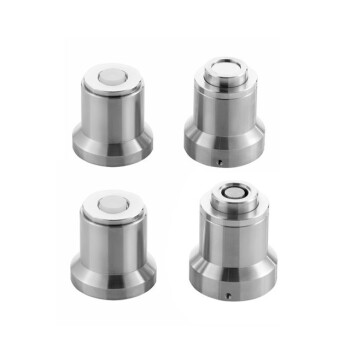
The selection of a specific mold diameter, such as 20 mm, is critical because it establishes the precise geometric baseline required to control heat transfer and accurately measure densification. By fixing this dimension using high-strength tooling, researchers can isolate the effects of processing methods and calculate significant volumetric changes, such as shrinkage rates, with high precision.
The mold diameter serves as a fundamental control variable that governs thermal uniformity and enables the standardized calculation of diameter shrinkage—often reaching approximately 40%—ensuring that data regarding material densification is both accurate and comparable across different studies.
Impact on Physical Sintering Dynamics
Controlling Heat Transfer Uniformity
The geometry of the green body is the primary factor influencing how heat propagates through the material.
Defining a specific diameter, such as 20 mm, ensures that thermal gradients remain consistent across samples. This uniformity prevents uneven sintering, which is essential for producing a structurally sound ceramic.
Quantifying Massive Volumetric Shrinkage
Lithium Lanthanum Titanate (LLTO) undergoes drastic physical changes during the sintering process.
Primary data indicates that diameter shrinkage can reach approximately 40%. Starting with a precise, known dimension like 20 mm allows researchers to calculate this shrinkage exactly, providing a clear metric for how much the material has densified.
Standardization and Data Integrity
Establishing a Baseline for Comparison
In materials science, valid comparisons require standardized specifications.
By adhering to a fixed diameter, researchers create a universal standard for sample specifications. This allows for the direct comparison of different synthesis pathways without geometric variations skewing the results.
Isolating Processing Contributions
To improve LLTO performance, researchers must evaluate how different processing methods contribute to densification.
A fixed mold diameter eliminates geometry as a variable. This ensures that any observed improvements in density or structure can be attributed solely to the processing method rather than anomalies in the sample's shape or size.
Operational Considerations and Constraints
The Necessity of High-Strength Tooling
The precision of the 20 mm measurement is only as good as the mold used to create it.
To ensure the green body maintains this exact diameter under compaction pressure, high-strength steel molds are required. Using inferior tooling could lead to mold deformation, rendering the baseline dimension—and subsequent shrinkage calculations—inaccurate.
Designing for Final Dimensions
The relationship between the green body and the final product is non-linear due to the high shrinkage rate.
Engineers must recognize that the 20 mm diameter is a starting point, not an end state. The design process must account for the substantial 40% reduction in volume, ensuring the final component meets the required specifications despite this drastic physical transformation.
Making the Right Choice for Your Research
To ensure your LLTO preparation yields valid, actionable data, consider your specific analytical goals:
- If your primary focus is Comparative Analysis: Adhere strictly to the 20 mm standard to ensure your shrinkage and densification data can be benchmarked against existing research.
- If your primary focus is Process Optimization: Use the fixed diameter to isolate variables, allowing you to attribute changes in material density directly to your synthesis modifications.
Precise mold selection transforms the green body from a simple powder compact into a reliable, standardized instrument for evaluating material performance.
Summary Table:
| Factor | Impact on LLTO Preparation | Scientific Benefit |
|---|---|---|
| Thermal Uniformity | Ensures consistent heat gradients across the sample | Prevents uneven sintering and structural defects |
| Shrinkage Control | Accounts for ~40% diameter reduction during sintering | Enables precise calculation of densification rates |
| Standardization | Establishes a 20 mm geometric baseline | Facilitates accurate data comparison across studies |
| Tooling Quality | Requires high-strength steel molds | Prevents mold deformation under high compaction pressure |
Elevate Your Battery Research with KINTEK Precision Solutions
Achieving the perfect LLTO green body requires more than just technique—it demands the right equipment. KINTEK specializes in comprehensive laboratory pressing solutions tailored for advanced materials science.
Whether you need manual, automatic, heated, or multifunctional presses, or specialized cold and warm isostatic presses, our high-strength tooling ensures your 20 mm samples remain precise under pressure. Don't let geometric variables compromise your densification data.
Ready to optimize your lab's workflow?
Contact KINTEK today to find the perfect press for your research.
References
- Alexandru Okos, Cristian Bogdănescu. Hydrothermal Synthesis of Lithium Lanthanum Titanate. DOI: 10.3390/cryst15030241
This article is also based on technical information from Kintek Solution Knowledge Base .
Related Products
- Lab Cylindrical Press Mold for Laboratory Use
- Lab Double Plate Heating Mold for Laboratory Use
- Lab Isostatic Pressing Molds for Isostatic Molding
- Lab Polygon Press Mold
- Lab Ball Press Mold
People Also Ask
- What is the purpose of incorporating cartridge heaters into a lab press mold for MLCC block compression? Optimize Results
- Why is precise cooling management of the lab press mold necessary? Protect Core Integrity in Thermoforming
- What is the function of a pressing tool in thermoplastic panels? Master Precision Shaping & Fusion Bonding
- Why is a high-performance laboratory molding press critical for in-situ electrolyte formation? Unlock Battery Success
- How does the geometry of laboratory molds influence mycelium-based composites? Optimize Density and Strength