Coordinating high-temperature annealing with sustained pressure is critical because it allows the wood's internal structure to permanently reorganize. During the Viscoelastic Thermal Compression (VTC) process, the heat (approximately 200°C) softens the lignin, while the pressure holds the microfibers in their new, dense configuration. Without this coordination, the wood would immediately attempt to return to its original shape, destroying the densification effect.
To achieve permanent wood densification, the VTC process relies on "set-conditioning," where sustained pressure forces lignin into a new arrangement while high heat releases the internal stresses that would otherwise cause the material to spring back.
The Mechanics of Molecular Rearrangement
Lignin and Plastic Flow
At temperatures around 200°C, lignin—the natural "glue" in wood cell walls—reaches a state of plastic flow. In this state, the polymer chains become mobile enough to shift and slide past one another.
Locking the Microfiber Structure
While the lignin is mobile, sustained pressure acts as the mechanical force that dictates the wood's new geometry. By holding the wood in a compressed state during this phase, you ensure the lignin cools and "sets" in a way that supports the densified form.
Managing Internal Stresses
The Release of Elastic Energy
Compression naturally builds up internal stresses within the wood microfibers, which act like tiny compressed springs. The annealing phase provides the thermal energy necessary to "relax" these springs, converting elastic energy into permanent deformation.
Preventing Irreversible Spring-back
If pressure is released before the annealing process is complete, the stored energy in the microfibers will cause spring-back. This recovery is often irreversible and results in a loss of density and dimensional stability.
Understanding the Trade-offs
Thermal Degradation vs. Set-Conditioning
While 200°C is necessary for lignin flow, it is near the threshold where wood components begin to thermally degrade. This requires a precise balance between dwell time and temperature to avoid weakening the wood fibers.
Energy Consumption and Cycle Times
Maintaining high pressure and high temperature simultaneously is energy-intensive. Shortening the annealing time to save costs can lead to "hygro-instability," where the wood swells significantly when exposed to moisture later.
How to Apply This to Your Project
Ensuring Long-Term Durability
To ensure the densification remains stable under real-world conditions, the coordination of heat and load must be treated as a single, inseparable event.
- If your primary focus is Dimensional Stability: Maintain the 200°C annealing temperature until the internal stresses have fully relaxed to prevent future swelling.
- If your primary focus is Structural Integrity: Closely monitor the duration of the high-heat phase to ensure you achieve plastic flow without causing thermal charring of the cellulose.
- If your primary focus is Process Efficiency: Focus on the cooling phase; do not release pressure until the wood temperature has dropped below the lignin's glass transition point.
Properly synchronized thermal annealing and pressure control transform wood from a temporary compressed state into a permanently densified, high-performance material.
Summary Table:
| VTC Phase | Role of High Heat (200°C) | Role of Sustained Pressure | Outcome |
|---|---|---|---|
| Softening | Induces lignin plastic flow | Maintains cell wall compression | Structural reorganization |
| Conditioning | Relaxes internal elastic stresses | Prevents fiber "spring-back" | Dimensional stability |
| Cooling | Sets lignin in new configuration | Locks dense geometry until set | Permanent densification |
Achieve Precision in Material Research with KINTEK
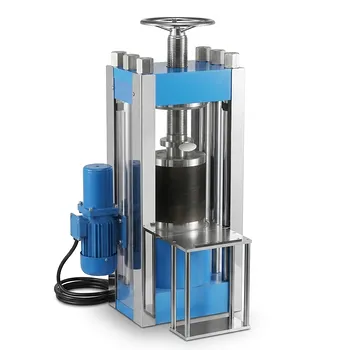
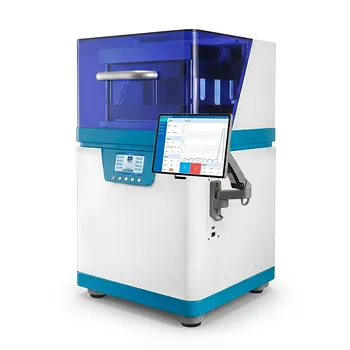
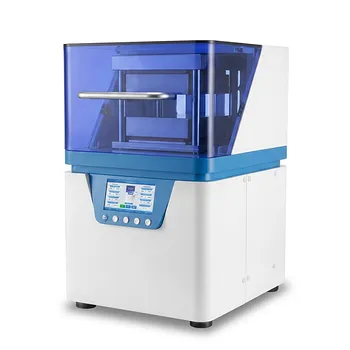
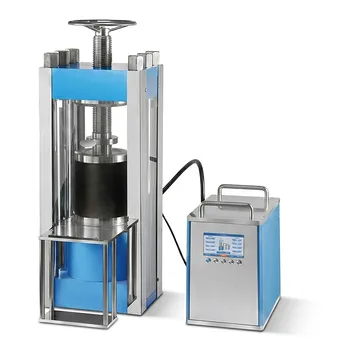
To transform wood into a high-performance material, you need precision control over temperature and load. KINTEK specializes in comprehensive laboratory pressing solutions, offering manual, automatic, heated, multifunctional, and glovebox-compatible models, as well as cold and warm isostatic presses.
Whether you are focusing on battery research or advanced wood densification, our equipment ensures the exact coordination required for successful set-conditioning and structural integrity.
Ready to upgrade your lab's capabilities? Contact us today to find your perfect pressing solution!
References
- Frederick A. Kamke. Densified radiata pine for structural composites. DOI: 10.4067/s0718-221x2006000200002
This article is also based on technical information from Kintek Solution Knowledge Base .
Related Products
- Split Warm Isostatic Lab Press 200 Ton Powder Compaction Chamber for Battery Research and Material Science
- Warm Isostatic Press for Solid State Battery Research Warm Isostatic Press
- Automatic Hydraulic Hot Press with Large Plate and Precision Temperature Control for Advanced Material Sample Preparation and Industrial Research
- Cylindrical Lab Electric Heating Press Mold for Laboratory Use
- Automatic Hydraulic Heat Press Machine with Multi Stage Programmable Control and Integrated Water Cooling Plate Size 180x180mm
People Also Ask
- Why is Warm Isostatic Pressing suitable for materials that cannot be formed at room temperature? Master Material Density
- How is hydraulic pressure utilized as the pressure medium in warm isostatic pressing? Master Your Material Density
- What is the function of a booster source in the warm isostatic pressing process? Master Precision Fluid Injection
- What is the role of a heat generator in warm isostatic pressing? Master Thermal Precision for Superior WIP Results
- In which industries is Warm Isostatic Pressing (WIP) applied? Optimize High-Performance Material Densification