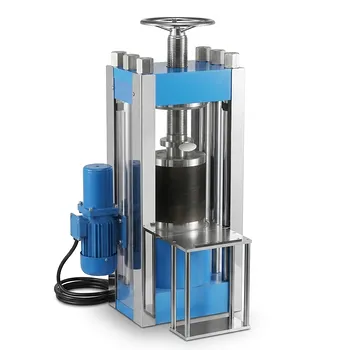
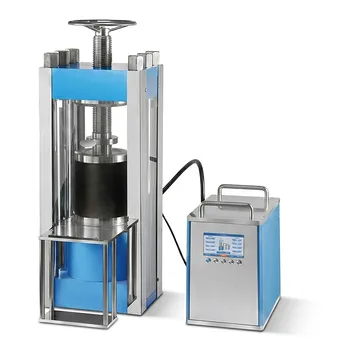
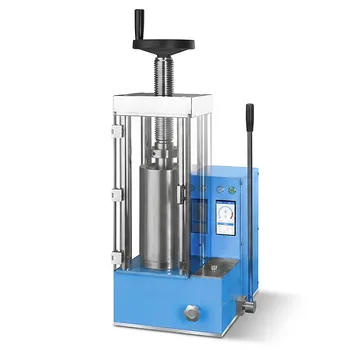
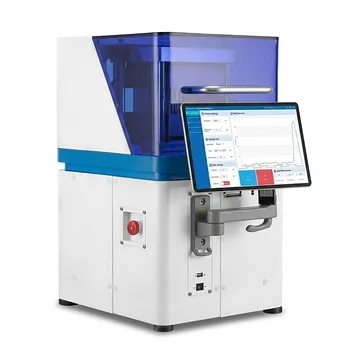
The primary purpose of heating the liquid medium in Warm Isostatic Pressing (WIP) is to achieve a specific viscosity that facilitates optimal mold filling and compression. By raising the temperature of the fluid—typically water, oil, or a specialized solution—the process ensures that pressure is transmitted uniformly and effectively throughout the system.
Core Takeaway While the immediate goal of heating is to optimize the flow and behavior of the pressing medium, the ultimate objective is to soften the binders within the material being pressed. This thermal softening allows pressure to drive material into microscopic pores and cracks, increasing density without compromising the component's shape.
The Mechanics of Medium Heating
Optimizing Fluid Viscosity
According to standard WIP principles, the liquid medium must be maintained at a specific temperature to reach the desired viscosity. This rheological change is critical because it ensures the medium can fill the mold chamber completely and transmit isostatic pressure without resistance.
Injection and Circulation
The heated liquid is typically injected continuously into a sealed pressing cylinder via a booster source. To maintain thermal consistency, the medium is often heated by a generator or a bath before entering the high-pressure environment.
Active Temperature Management
Precise control is maintained using heating elements located either within the supply tank or integrated directly into the pressing cylinder. This setup allows for the independent regulation of heating rates and cooling curves, ensuring the medium remains stable throughout the cycle.
Impact on Material Consolidation
Softening Polymer Binders
The heat from the medium transfers to the component, specifically targeting the polymer binders used in ceramic green bodies. The temperature is raised to the binder's melting point or softening range (often above 70°C) to significantly reduce the binder's viscosity.
Defect and Pore Closure
Once the binder softens, the applied isostatic pressure drives a viscous flow of material into internal voids. This physical movement effectively closes air gaps, cracks, and pores, leading to a denser and mechanically stronger final part.
Understanding the Trade-offs
The Risk of Thermal Distortion
While heat is necessary for consolidation, excessive temperatures pose a significant risk. If the temperature climbs too high, the material may become too soft, causing the overall shape of the part to distort or degrade under pressure.
Balancing Pressure and Heat
Effective WIP requires finding the critical window where the material is soft enough to densify but rigid enough to hold its shape. High-precision systems are required to identify these points, often involving complex profiles where pressure is applied before heating, or vice versa, to protect intrinsic material characteristics.
Making the Right Choice for Your Goal
To maximize the effectiveness of Warm Isostatic Pressing, tailor your temperature strategy to your specific material constraints:
- If your primary focus is Defect Elimination: Ensure the medium temperature reaches the specific softening point of your binder to allow viscous flow into micro-pores.
- If your primary focus is Dimensional Precision: Prioritize independent pressure-temperature regulation to prevent excessive heat from causing component distortion or slump.
Success in WIP lies in using the heated medium not just as a pressure conveyor, but as a precise thermal tool to manipulate binder rheology.
Summary Table:
| Feature | Role of Heating in WIP |
|---|---|
| Fluid Viscosity | Reduces resistance for optimal mold filling and pressure transmission |
| Binder State | Softens polymer binders (often >70°C) to enable viscous flow |
| Pore Management | Facilitates closure of microscopic cracks and internal voids |
| Process Control | Ensures uniform thermal distribution via continuous injection/circulation |
| Material Integrity | Balanced heat prevents thermal distortion while maximizing consolidation |
Optimize Your Material Consolidation with KINTEK
Unlock the full potential of your research with KINTEK’s industry-leading laboratory pressing solutions. Whether you are focused on battery research or advanced ceramics, our comprehensive range of manual, automatic, heated, and multifunctional models—including high-precision Cold and Warm Isostatic Presses—provides the exact thermal and pressure control needed to eliminate defects and ensure dimensional precision.
Ready to elevate your lab's performance? Contact us today to discover how KINTEK can provide the perfect isostatic pressing solution tailored to your specific material requirements.
Related Products
- Warm Isostatic Press for Solid State Battery Research Warm Isostatic Press
- Split Warm Isostatic Lab Press 200 Ton Powder Compaction Chamber for Battery Research and Material Science
- Split Hot Isostatic Pressing Machine 150 Ton Laboratory Heated Isostatic Press
- Electric Isostatic Pressing Machine 40 Tons Automatic Laboratory Powder Compacting Press
- Lab Isostatic Pressing Molds for Isostatic Molding
People Also Ask
- Why must composite cathodes be sealed in vacuum lamination bags for WIP? Ensure Battery Stability and Density
- How do sacrificial volume materials (SVM) maintain microchannels in isostatic pressing? Ensure Structural Integrity
- What is the function of elastic molds in warm isostatic pressing? Achieve Uniform Density in Composite Particles
- What is the mechanism of a Warm Isostatic Press (WIP) on cheese? Master Cold Pasteurization for Superior Safety
- How does Warm Isostatic Pressing differ from traditional pressing methods? Unlock Uniform Density for Complex Parts