The Invisible Margin of Failure
In battery research, the difference between a breakthrough and a baseline failure often happens before the first cycle begins.
For Sodium-ion batteries (SIBs), the margin of error is nearly microscopic. While Lithium-ion chemistry is demanding, Sodium is a far more restless element. It does not wait for an invitation to react; it seeks any opportunity to return to its oxidized state.
The assembly process is where most research "deaths" occur. Without a strictly controlled environment—specifically an ultra-high purity argon glovebox—the chemistry degrades in real-time, leaving the researcher with data that reflects environmental contamination rather than material potential.
The Chemical Anxiety of Sodium Metal
Sodium metal is characterized by an inherent chemical "anxiety." It is significantly more reactive than lithium, reacting instantaneously with trace oxygen.
The Immediate Oxide Barrier
When sodium foil is exposed to even minute oxygen levels, a non-conductive oxide layer forms on the surface. This isn't just a cosmetic change.
This layer acts as a wall, increasing internal resistance and choking the flow of ions. In an ultra-purity argon environment, we preserve the metal's active state. This is the "engineer’s romance"—maintaining a material in its most potent, pristine form.
The Risk of Exothermic Pathways
Safety in SIB research is a systemic challenge. Sodium’s reaction with atmospheric moisture is exothermic and produces hydrogen gas.
In a standard lab atmosphere, this is a fire hazard. Inside the glovebox, the argon—a heavy, noble gas—acts as a thermal and chemical buffer, suppressing these hazardous pathways before they can begin.
The Hydrolysis Saboteur
The electrolyte is the lifeblood of the SIB, but it is also its most vulnerable component. Sodium salts like $NaPF_6$ are aggressively hygroscopic.
- Acidic Transformation: When these salts encounter moisture, they undergo hydrolysis.
- Corrosive Byproducts: This reaction produces hydrofluoric acid or other acidic species that corrode the battery casing.
- SEI Destruction: A contaminated electrolyte prevents the proper formation of the Solid Electrolyte Interphase (SEI), the thin layer that determines whether a battery lasts for ten cycles or a thousand.
Protecting the Crystal Lattice
Cathode materials, particularly manganese-based oxides, suffer from "ambient aging."
Moisture can cause sodium ions to leach out of the crystal lattice prematurely. This leads to a structural collapse of the material before it even reaches the testing stage.
Maintaining a moisture level below 0.1 ppm isn't just a safety protocol; it is a structural preservation strategy. It ensures the capacity measured in the lab is a result of your engineering, not a symptom of environmental decay.
The Operational Rigor of Purity
Maintaining an ultra-pure environment is a battle against entropy. Every entry into the airlock, every micro-tear in a butyl glove, and every improperly dried component is a potential point of failure.
| Variable | The Risk | Impact on Research |
|---|---|---|
| Oxygen (>0.1 ppm) | Anode Oxidation | High internal resistance; data drift |
| Moisture (>0.1 ppm) | Electrolyte Hydrolysis | Acidic corrosion; SEI failure |
| Airlock Integrity | Atmospheric Spikes | Sudden material degradation |
| Ar-Gas Purity | Constant Contamination | Baseline "noise" in electrochemical results |
Engineering the Solution: KINTEK Precision
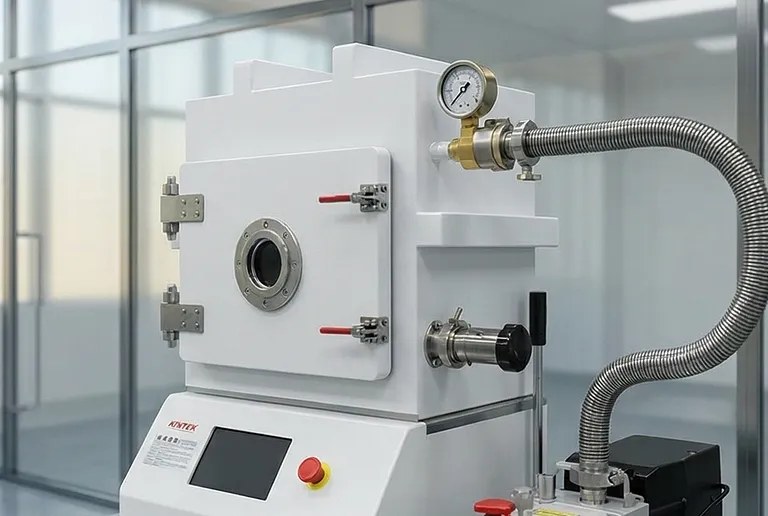
The glovebox provides the environment, but the tools inside must respect the same laws of precision.
At KINTEK, we design laboratory pressing solutions that recognize the unique constraints of SIB research. Our hardware is engineered to function within the high-stakes environment of an argon glovebox, ensuring that your material processing is as pure as the atmosphere it inhabits.
- Glovebox-Compatible Systems: Compact, efficient presses designed for restricted spaces without compromising on force or precision.
- Multi-Phase Capabilities: From manual presses for rapid prototyping to automatic and heated models for advanced material synthesis.
- Isostatic Excellence: Our cold and warm isostatic presses provide the uniform density required for high-performance solid-state battery research.
Success in sodium-ion innovation requires a marriage between chemical purity and mechanical reliability. Ensure your research is built on a foundation of absolute stability.
Related Products
Related Articles
- The Physics of Transparency: Why Pressure is the Silent Architect of Spectroscopic Clarity
- The Architecture of Density: Why Pressure is the Silent Architect of Solid-State Batteries
- The Geometry of Electrons: Why Surface Precision is the Silent Partner in SECM Research
- The Geometry of Ionic Flow: Why Precision Pressing Dictates Material Truth
- The Architecture of Heat: Why Sample Density Dictates the Truth in Metal Hydride Research
