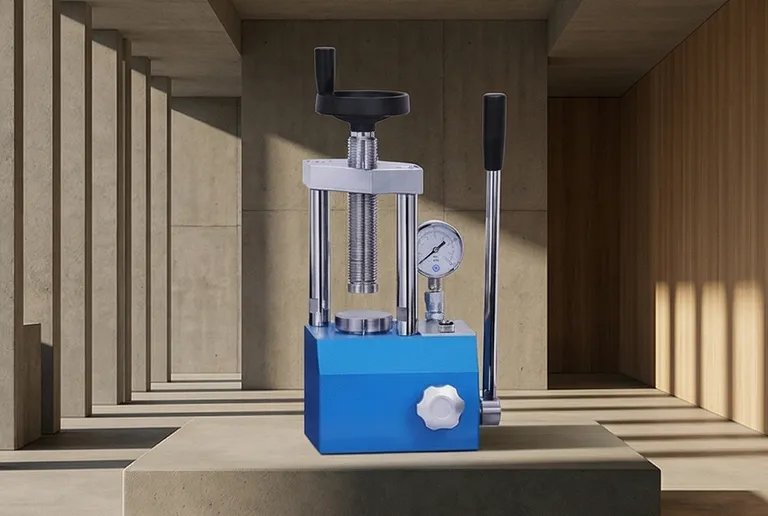
The Invisible Medium
In the laboratory, we often search for the signal while fighting the noise.
When analyzing the molecular structure of starch via Fourier Transform Infrared (FTIR) spectroscopy, the biggest challenge isn't the starch itself. It is the medium we use to see it.
To the naked eye, a Potassium Bromide (KBr) pellet looks like a simple glass disk. To the infrared beam, it is a silent, transparent bridge. But achieving that transparency is a delicate dance between chemistry and mechanical force.
The Engineering of "Nothingness"
The goal of sample preparation is to make the matrix disappear.
KBr is chosen because it is "infrared-neutral." It allows radiation to pass through without adding its own spectral signature. This creates a clean slate, allowing the molecular vibrations of the starch—the hydroxyl bonds and carbon-hydrogen groups—to speak for themselves.
Why the Matrix Matters
- Uniform Dilution: Starch is naturally dense. Without KBr, the IR beam would be blocked entirely, resulting in "saturated" peaks that hide the very data we seek.
- Chemical Inertness: A good matrix is a boring one. KBr does not react with starch, ensuring the chemical integrity of the sample remains untouched by the process of observation.
- Signal-to-Noise Ratio: By acting as a diluent, KBr allows for a high-resolution spectrum that can distinguish between a successful cross-linking reaction and a failed experiment.
The Geometry of Pressure
There is a moment in pellet preparation called plastic flow.
Under high pressure—usually several tons—the crystalline structure of KBr powder begins to flow like a liquid, encapsulating the starch particles before solidifying into a dense, translucent disk.
This is not just about making a shape; it is about eliminating light scattering. If the pressure is uneven or insufficient, the pellet remains opaque. The infrared light bounces off the internal boundaries of the powder grains, scattering like headlights in a thick fog.
The Mechanics of Perfection
| Factor | Technical Requirement | Impact on Spectrum |
|---|---|---|
| Pressure Consistency | 7-10 Tons (Standard) | Ensures uniform plastic flow and minimal scattering. |
| Sample Ratio | 1:100 (Starch to KBr) | Prevents saturated absorption peaks. |
| Environmental Control | Low Humidity (<30%) | Prevents moisture contamination in the O-H region. |
The Ghost in the Machine: Moisture
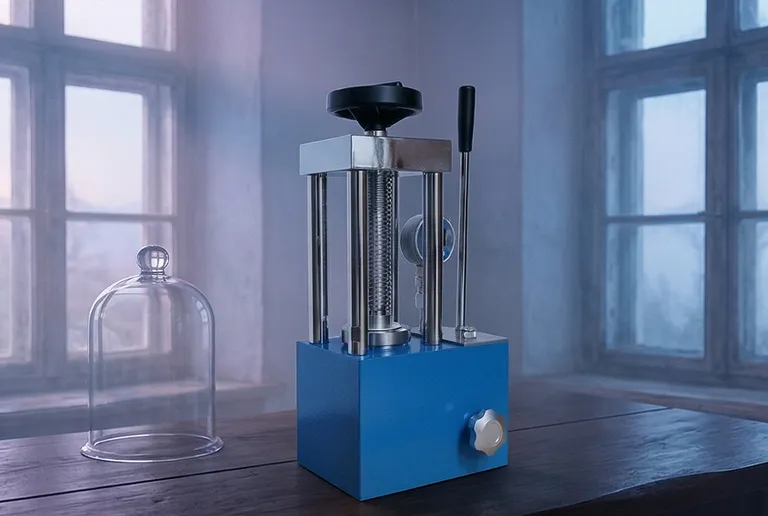
If there is a villain in this story, it is the hygroscopic nature of KBr.
KBr loves water. It pulls moisture from the air with an almost magnetic desperation. If the powder is not kept perfectly dry, the resulting spectrum will show massive water peaks that overlap with the starch’s hydroxyl (O-H) bonds.
This is where the psychology of the lab comes into play. We often blame our samples for "wet" results, when in reality, the failure occurred in the minutes the KBr sat on the benchtop. Precision requires an obsession with the invisible environment.
The Strategy of Success
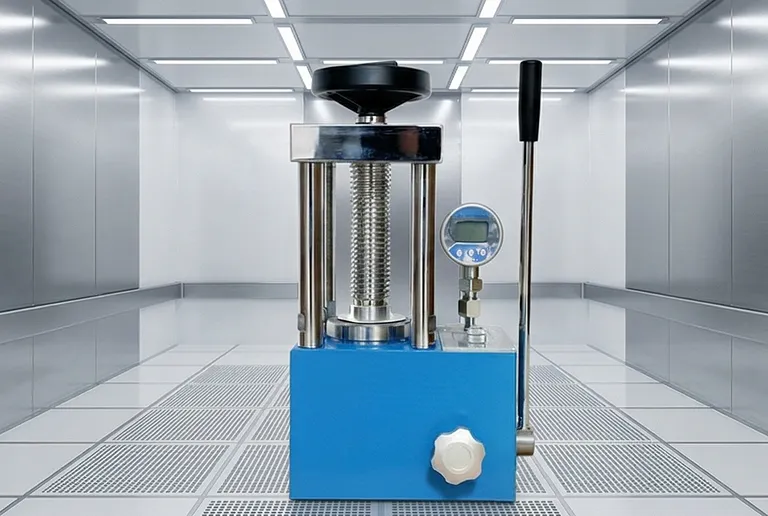
A successful FTIR analysis is the result of a system, not an individual. To move from "good enough" to "definitive," researchers must focus on three pillars:
- Preparation Purity: Always pre-dry KBr and work in controlled environments (or gloveboxes).
- Dilution Precision: Exact mass measurements ensure that quantitative comparisons between different starch batches are valid.
- The Right Force: The use of high-quality laboratory presses to ensure the pressure is applied evenly, consistently, and safely.
Precision Tools for Molecular Clarity
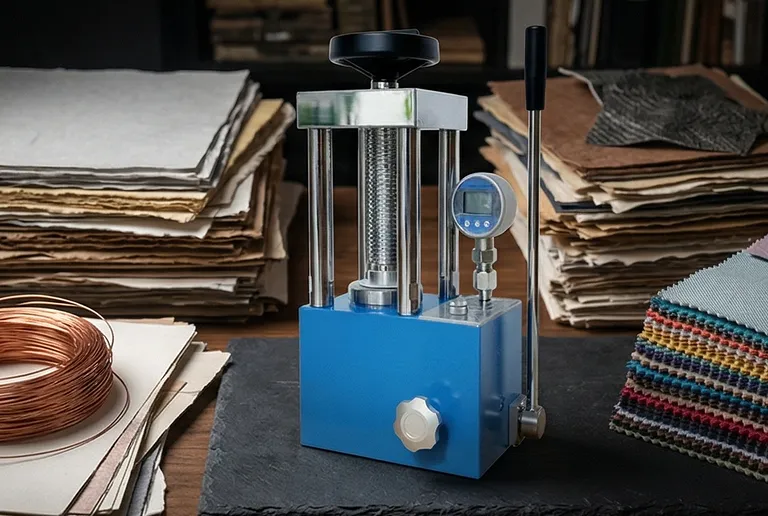
The transition from a pile of powder to a transparent window requires more than just theory; it requires hardware designed for the rigors of the modern lab.
At KINTEK, we understand that a pellet is only as good as the press that created it. Whether you are conducting fundamental starch research or exploring the frontiers of battery technology, our range of manual, automatic, and glovebox-compatible presses provide the stability and control necessary for high-stakes analysis.
True spectral clarity starts with the perfect press. Contact Our Experts
Related Products
- Laboratory Hydraulic Press 2T Lab Pellet Press for KBR FTIR
- XRF KBR Plastic Ring Lab Powder Pellet Pressing Mold for FTIR
- Laboratory Hydraulic Pellet Press for XRF KBR FTIR Lab Press
- XRF KBR Steel Ring Lab Powder Pellet Pressing Mold for FTIR
- Automatic Laboratory Hydraulic Press for XRF and KBR Pellet Pressing
Related Articles
- The Physics of Transparency: Why Pressure is the Silent Architect of Spectroscopic Clarity
- The Architecture of Density: Why Pressure is the Silent Architect of Solid-State Batteries
- The Architecture of Heat: Why Sample Density Dictates the Truth in Metal Hydride Research
- The Geometry of Electrons: Why Surface Precision is the Silent Partner in SECM Research
- The Geometry of Ionic Flow: Why Precision Pressing Dictates Material Truth



















