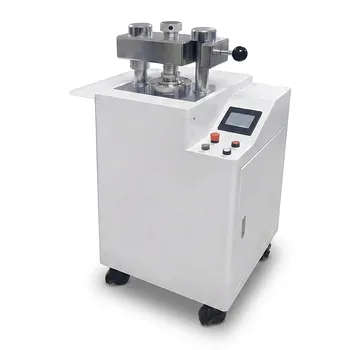
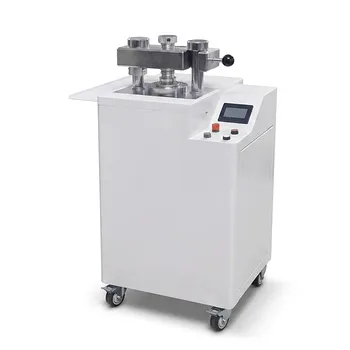
Precision engineering and customization are fundamentally reshaping lab pellet presses from simple crushing tools into sophisticated analytical instruments. These advancements primarily target the production of highly uniform pellets, a critical requirement for ensuring the accuracy of sensitive analytical techniques like X-ray fluorescence (XRF) and infrared spectroscopy.
Modern pellet press technology has evolved beyond generating raw force; it now prioritizes the reproducibility of results. By combining high-tolerance engineering with modular customization, laboratories can match equipment specifications to exact experimental needs, minimizing sample variance and maximizing data integrity.
The Role of Precision Engineering in Sample Integrity
Ensuring Pellet Uniformity
The primary driver of precision engineering in this field is the need for absolute consistency. Advanced manufacturing techniques ensure that presses produce pellets with uniform density and surface quality every single time.
The Impact on Analytical Accuracy
For techniques such as XRF and infrared spectroscopy, the physical quality of the sample directly dictates the quality of the data. Precision engineering minimizes surface defects and density gradients that could otherwise skew analytical results.
Advanced Materials and Durability
To maintain this level of precision over time, manufacturers are utilizing high-strength alloys and wear-resistant coatings. These advanced materials enhance the durability of the press, ensuring that tolerance levels remain tight even after repeated high-pressure cycles.
Tailoring Technology to the Workflow
Adaptability Through Modular Design
Customization allows laboratories to move away from "one-size-fits-all" constraints. Modern presses offer adjustable parameters, including variable pressure settings and diverse operational modes, to accommodate a wide variety of sample types.
Application-Specific Solutions
Manufacturers are now designing presses specifically optimized for distinct analytical methods. For instance, units designed for XRF pellet preparation often feature integrated pellet dies and specialized mechanisms to streamline the processing of those specific samples.
Digital Control and Reproducibility
Customization also extends to software and control systems. Digital integration allows operators to program specific pressure, timing, and holding sequences, ensuring that unique experimental conditions can be replicated perfectly by any user.
Understanding the Trade-offs
Specificity vs. Flexibility
While customization offers significant advantages, it requires a clear understanding of your laboratory's long-term needs. A press that is highly specialized for a specific XRF application (with integrated dies) may offer less flexibility for general-purpose crushing tasks compared to a standard, modular unit.
Complexity of Operation
The shift toward high-precision, digital, and automated systems can introduce a learning curve. While these features reduce manual labor and human error, they move the operator's role from manual force application to programming and process management.
Making the Right Choice for Your Goal
To navigate these advancements effectively, you must align the technology with your primary laboratory objective.
- If your primary focus is analytical consistency: Prioritize precision engineering features, specifically looking for digital pressure controls and high-tolerance dies to ensure XRF/IR accuracy.
- If your primary focus is process efficiency: Look for customization options that integrate specific workflow steps, such as automated settings or specialized dies that reduce handling time.
- If your primary focus is equipment longevity: Select models utilizing advanced alloys and wear-resistant coatings to withstand rigorous daily use.
By leveraging precision engineering and customization, you transform sample preparation from a manual variable into a controlled, reliable constant.
Summary Table:
| Feature | Precision Engineering Impact | Customization Benefit |
|---|---|---|
| Sample Uniformity | Ensures consistent density and surface quality | Tailors pressure profiles to specific materials |
| Analytical Accuracy | Minimizes surface defects for XRF/IR spectroscopy | Integrated dies optimize sample prep workflows |
| Durability | High-strength alloys maintain tight tolerances | Wear-resistant coatings for rigorous research |
| Reproducibility | High-tolerance mechanical components | Programmable digital control for exact replication |
Elevate Your Analytical Precision with KINTEK
Don't let sample preparation be the weak link in your research. KINTEK specializes in comprehensive laboratory pressing solutions, offering a versatile range of manual, automatic, heated, multifunctional, and glovebox-compatible models, as well as advanced cold and warm isostatic presses widely applied in battery research.
Whether you require high-tolerance engineering for XRF/IR accuracy or custom modular designs for unique experimental workflows, our experts are ready to deliver the durability and consistency your lab demands. Contact us today to find your perfect pressing solution and transform your sample prep into a reliable constant.
Related Products
- Automatic Fluorescence Sample Preparation Press 40 Ton Lab Pellet Press for XRF Analysis
- Automatic Laboratory Hydraulic Press Lab Pellet Press Machine
- Laboratory Hydraulic Press 2T Lab Pellet Press for KBR FTIR
- Laboratory Hydraulic Pellet Press for XRF KBR FTIR Lab Press
- Laboratory Hydraulic Press Lab Pellet Press Machine for Glove Box
People Also Ask
- What is the general process for preparing a sample pellet for XRF? Master Consistency for Accurate Analysis
- What are the advantages of preparing a sample as a dense pellet for XRF? Unlock High-Precision Trace Element Analysis
- What are the common operational types of lab pellet presses? Choosing the Right Manual, Automatic, or Hydraulic System
- What are the emerging trends in the design and materials of lab pellet presses? Modernize Your Lab Efficiency
- What are common lab pellet press issues? Expert Troubleshooting Guide for Reliable Material Research