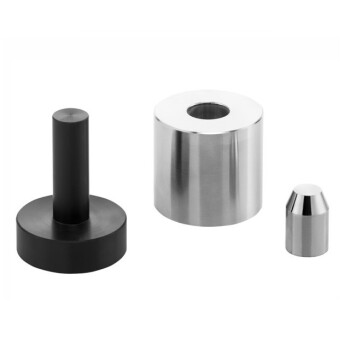
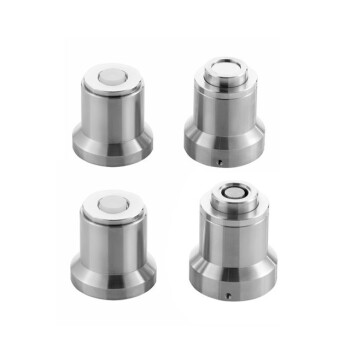
Achieving tight interfacial contact in laboratory-scale aluminum-ion batteries is primarily a function of the precise mechanical fit of the test cell components. Researchers must apply a constant tightening force to the unit during assembly—using either manual methods or precision tools—to physically compress the electrode stack and ensure uniform connection.
Validating electrochemical performance requires simulating the internal pressure of industrial-grade batteries. Applying consistent mechanical pressure eliminates contact resistance artifacts, ensuring that your data represents the cell's chemistry rather than its assembly quality.
The Mechanics of Proper Assembly
Relying on Component Precision
The foundation of good contact is the precise mechanical fit of the cell hardware. Before assembly begins, researchers must ensure that the casing, pistons, and spacers are machined to exact tolerances. Loose or ill-fitting components will prevent the applied force from transferring effectively to the electrode interface.
Applying Constant Tightening Force
Once the components are aligned, the critical step is the application of force. You must tighten the test unit until a specific, constant pressure is reached. This compression forces the current collectors and active materials into intimate contact, bridging microscopic gaps that would otherwise impede ion and electron flow.
Utilizing the Right Tools
This force can be applied manually or through precision tools. While manual tightening is common, using calibrated tools (such as torque wrenches) provides higher reproducibility. These tools ensure that the "tightness" is quantifiable and consistent across different test cells.
The Impact on Data Integrity
Eliminating False Overpotentials
The primary reason for enforcing tight contact is to prevent false overpotentials. Poor interfacial contact introduces high internal resistance. In electrochemical measurements, this resistance manifests as an artificial voltage drop, which can be easily mistaken for poor electrode kinetics or material degradation.
Improving Measurement Accuracy
By removing mechanical resistance variables, you isolate the electrochemical behavior of the material. Tight assembly ensures that the voltage and current responses recorded by your potentiostat are accurate reflections of the aluminum-ion reaction mechanisms, not artifacts of a loose connection.
Common Pitfalls and Considerations
The Risk of Inconsistent Pressure
If the tightening force varies from cell to cell, your data will lack reproducibility. A cell tightened loosely will show different impedance characteristics than one tightened firmly, even if the internal chemistry is identical. This variability makes it difficult to compare results between different batches or materials.
Simulating Industrial Conditions
Laboratory cells often lack the natural stack pressure found in commercial pouch or prismatic cells. If you fail to apply sufficient tightening force, you are not accurately simulating the internal pressure of an industrial-grade battery. This disconnect can lead to lab results that appear promising but fail to translate to practical applications.
Making the Right Choice for Your Goal
To ensure your aluminum-ion battery research yields valid, publication-quality data, apply the following strategies:
- If your primary focus is high reproducibility: Use precision tools to apply a quantified, identical torque value to every cell you assemble.
- If your primary focus is minimizing data artifacts: Prioritize the mechanical fit of components to eliminate false overpotentials caused by contact resistance.
Consistently applying the correct mechanical pressure is the single most effective way to transition from noisy, unreliable data to accurate electrochemical characterization.
Summary Table:
| Assembly Factor | Impact on Battery Performance | Recommended Strategy |
|---|---|---|
| Component Fit | Prevents force leakage and misalignment | Use high-tolerance machined pistons and spacers |
| Tightening Force | Bridges gaps between current collector and active material | Apply constant, calibrated mechanical pressure |
| Tooling Choice | Ensures data reproducibility across batches | Utilize torque-controlled or hydraulic pressing tools |
| Internal Pressure | Simulates industrial-grade cell environments | Match stack pressure to commercial battery standards |
Maximize Your Battery Research Precision with KINTEK
Don’t let poor interfacial contact compromise your electrochemical data. KINTEK specializes in comprehensive laboratory pressing solutions designed to help researchers achieve the exact mechanical tolerances required for high-performance battery assembly.
Our versatile range includes manual, automatic, heated, and multifunctional presses, as well as glovebox-compatible models and isostatic presses (CIP/WIP) tailored for advanced battery material synthesis. Whether you are working on aluminum-ion, lithium-ion, or solid-state technology, our equipment ensures uniform pressure distribution to eliminate false overpotentials and deliver publication-quality results.
Ready to elevate your lab's assembly standards? Contact KINTEK today to find the perfect pressing solution for your research needs!
References
- Nattha Chaiyapo, Nonglak Meethong. Impact of Electrolyte Concentration on Surface Properties and Electrochemical Performance of Aluminum Anodes in Aluminum‐Ion Batteries. DOI: 10.1002/admi.202500289
This article is also based on technical information from Kintek Solution Knowledge Base .
Related Products
- Laboratory Hydraulic Press Lab Pellet Press Button Battery Press
- Lab Infrared Press Mold for Laboratory Applications
- Button Battery Sealing Press Machine for Lab
- Lab Cylindrical Press Mold for Laboratory Use
- Lab Button Battery Tablet Press Sealing Mold
People Also Ask
- How is a laboratory hydraulic press used for HAP composite gels? Master Mineral Substrate Standardization
- What role does a laboratory hydraulic press play in the preparation of piezoelectric ceramic discs for DC-PG? | KINTEK
- What role does a laboratory hydraulic press play in reaction pellets? Optimizing Lunar Soil and Metal Fuel Density
- Why is a laboratory hydraulic press required for PBAT and PLA sample preparation? Achieve Flawless Characterization
- What role does a laboratory hydraulic press play in the assembly of all-solid-state battery test cells? Expert Guide