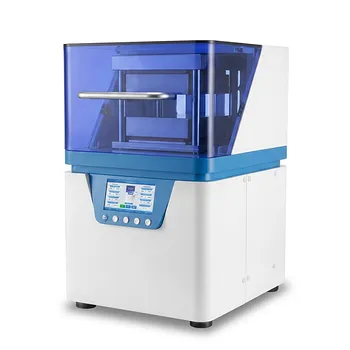
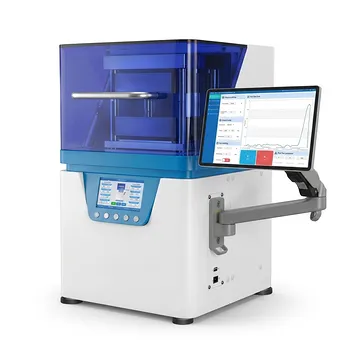
Hydraulic presses utilize fluid mechanics to decouple input force from output pressure, allowing operators to generate immense power with minimal physical exertion. Unlike manual alternatives that rely directly on the user's strength, hydraulic systems amplify a small input force into a large compressive force, making them essential for minimizing strain during high-pressure tasks.
By removing the reliance on an operator's physical strength, hydraulic presses do more than just make the work easier; they standardize the process. This ensures that pressure is applied consistently across every cycle, eliminating the data variability caused by human fatigue.
The Mechanics of Reduced Exertion
High Force, Low Input
The core advantage of a hydraulic press is its ability to generate extremely high force output while requiring very little input effort.
This mechanical advantage is achieved through hydraulic fluid dynamics, allowing a user to perform heavy-duty tasks that would be impossible or physically exhausting with a manual lever or screw press.
Minimizing Operator Fatigue
In environments requiring frequent sample preparation, the cumulative toll of manual operation is significant.
Hydraulic presses, particularly mini versions, drastically reduce the physical demand on the operator. This reduction in fatigue is critical for maintaining focus and safety over long work shifts.
Enhancing Process Consistency
Eliminating Human Variability
One of the most significant hidden benefits of reduced physical effort is repeatability.
When an operator struggles with a manual press, the applied pressure often fluctuates based on their stamina. Hydraulic presses deliver consistent pressure every time, ensuring that sample production is uniform and reliable.
Precision Control
Beyond brute force, hydraulic systems offer precision control over force, speed, and position.
This allows the user to fine-tune the operation for delicate or specific requirements, ensuring accurate results that manual methods cannot easily replicate.
Operational Environment and Safety
Optimizing Laboratory Space
While offering high power, modern hydraulic "mini presses" are designed to be compact.
They require significantly less counter space than larger industrial alternatives, making them highly advantageous in crowded laboratory environments where real estate is at a premium.
Built-in Safety Mechanisms
High-pressure equipment carries inherent risks, but hydraulic presses mitigate these with integrated safety features.
Standard designs often include pressure relief valves and emergency stop buttons. These features prevent over-pressurization and allow for immediate cessation of operation, protecting both the user and the equipment.
Understanding the Trade-offs
Complexity vs. Simplicity
While hydraulic presses reduce physical effort, they introduce a level of mechanical complexity compared to purely manual tools.
Users must rely on the integrity of the hydraulic system (seals and valves) rather than simple leverage. However, this complexity is the necessary exchange for achieving high force without physical strain.
Making the Right Choice for Your Goal
To determine if a hydraulic press is the right solution for your specific needs, consider your primary operational objectives:
- If your primary focus is high-volume processing: The hydraulic press is essential to prevent operator fatigue and maintain throughput during frequent sample preparation.
- If your primary focus is data accuracy: The consistent application of pressure will remove human variability, ensuring your samples are identical and your results are repeatable.
- If your primary focus is space optimization: Look specifically for hydraulic mini presses, which offer the necessary force without occupying valuable laboratory bench space.
Ultimately, the hydraulic press is not just a tool for applying force; it is an instrument for stabilizing your workflow and protecting your workforce.
Summary Table:
| Feature | Manual Press | Hydraulic Press | Benefit to Operator |
|---|---|---|---|
| Input Effort | High physical strength required | Minimal input force needed | Reduces muscle strain and fatigue |
| Consistency | Fluctuates with operator stamina | Uniform pressure every cycle | Eliminates data variability |
| Force Output | Limited by user strength | Extremely high (multi-ton) | Enables heavy-duty applications |
| Safety | Minimal built-in features | Relief valves & emergency stops | Enhances laboratory safety |
| Footprint | Variable | Compact "Mini" designs available | Optimizes limited lab bench space |
Maximize Your Laboratory Efficiency with KINTEK
Ready to transform your workflow? KINTEK specializes in comprehensive laboratory pressing solutions designed to eliminate operator fatigue and ensure precision. From manual and automatic models to heated, multifunctional, and glovebox-compatible designs—including advanced cold and warm isostatic presses for battery research—we have the perfect fit for your application.
Experience the KINTEK advantage today:
- Reduce Physical Strain: Minimize effort with our high-force hydraulic systems.
- Ensure Repeatability: Achieve consistent results with precision-controlled pressure.
- Optimize Your Space: Choose from our range of powerful, compact mini presses.
Contact our experts today to find your ideal pressing solution!
Related Products
- Automatic Hydraulic Hot Press with Large Plate and Precision Temperature Control for Advanced Material Sample Preparation and Industrial Research
- Automatic Hydraulic Heat Press Machine with Multi Stage Programmable Control and Integrated Water Cooling Plate Size 180x180mm
- Automatic High Temperature Heated Hydraulic Press Machine with Heated Plates for Lab
- Automatic Heated Hydraulic Lab Press with Programmable Touch Screen Controls and Precision Temperature Regulation
- Manual Heated Hydraulic Lab Press with Integrated Hot Plates Hydraulic Press Machine
People Also Ask
- What are the specific features and applications of hydraulic hot press machines? Precision Solutions for Modern Labs
- How does an automatic hydraulic press operate? Achieve Precision and Consistency in Lab Pelleting
- What are the advantages and common applications of an automatic hydraulic press? Elevate Your Lab's Precision
- What is the technical significance of setting a precise dwell time? Achieve Peak Material Density and Stability
- When is an automatic hydraulic press more suitable than a manual press? Scale Your Lab with Precision & Speed