For materials like aluminum and iron, isostatic pressing and die compaction are both capable of achieving similarly high material densities. The fundamental difference lies in the direction of force: isostatic pressing uses fluid to apply pressure equally from all directions, ensuring uniform density, whereas die compaction relies on rigid dies to apply pressure in a specific direction, which frequently results in density variations within the part.
Core Takeaway While both methods effectively compact metal powders, isostatic pressing is superior for achieving uniform material properties and complex geometries. By eliminating the directional limitations and friction of die compaction, isostatic pressing prevents internal defects and ensures consistent shrinkage during post-processing.
Mechanics of Pressure Application
Directional vs. Isotropic Force
The defining characteristic of die compaction is the use of rigid dies. This method applies pressure uniaxially (in one specific direction).
Isostatic pressing (specifically Cold Isostatic Pressing or CIP) transmits pressure through a fluid medium. This provides isotropic pressure control, meaning the pressing force is applied with equal magnitude from every direction simultaneously.
The Impact on Density Distribution
Because die compaction pushes powder in a single direction, it is susceptible to density gradients. Parts may be dense in some areas and porous in others due to the mechanics of the press.
In contrast, the omni-directional pressure of isostatic pressing ensures uniform density throughout the entire component. The pressure reaches every part of the material equally, eliminating internal density gradients.
Material Integrity and Strength
Eliminating Micro-Cracks
The isotropic nature of isostatic pressing significantly improves the rearrangement efficiency of powder particles.
This efficient rearrangement effectively eliminates micro-cracks within the "green" (compacted but not yet sintered) material, a common issue when pressure is applied unevenly.
Superior Green Strength
Isostatic pressing produces components with significantly higher structural integrity prior to sintering.
Compacts produced via CIP exhibit green strengths up to 10 times greater than their die-compacted counterparts. This robustness is critical for handling parts before the final heating process.
Geometric Capabilities
Handling Complex Shapes
Die compaction is generally limited to shapes that can be ejected from a rigid mold.
Isostatic pressing can produce components of much greater size and complexity. It enables the creation of parts with long length-to-diameter ratios that still maintain uniform density along their entire length.
The Role of Friction
Die compaction suffers from die-wall friction, where the powder drags against the mold, causing uneven density distribution.
Isostatic pressing eliminates this friction entirely as there is no rigid die wall interaction during the pressure phase.
Understanding the Trade-offs: Processing Efficiency
Lubricants and Sintering
To mitigate friction, die compaction often requires die-wall lubricants. These must be burned off later, adding a step to the process.
Isostatic pressing requires no die-wall lubricants. This allows for higher achievable densities and simplifies the final sintering process by removing the lubricant removal step.
Post-Process Shrinkage
The method of compaction directly affects the final yield rate during sintering (heating).
Because die compaction often leaves density variations, parts may deform or shrink unevenly when heated. Isostatic pressing ensures uniform shrinkage, preventing deformation and significantly increasing the yield rate of finished products.
Making the Right Choice for Your Goal
Both methods can process aluminum and iron, but your specific requirements regarding shape and consistency should dictate the choice.
- If your primary focus is part complexity: Choose isostatic pressing, as it accommodates large, complex shapes and long length-to-diameter ratios without density loss.
- If your primary focus is material uniformity: Choose isostatic pressing to ensure equal pressure distribution, eliminating the density gradients and micro-cracks common in die compaction.
- If your primary focus is processing simplicity: Consider isostatic pressing to eliminate the need for lubricants and the associated removal steps during sintering.
Isostatic pressing is the definitive choice when internal structural uniformity and geometric freedom are required to prevent deformation in the final product.
Summary Table:
| Feature | Die Compaction | Isostatic Pressing |
|---|---|---|
| Pressure Direction | Uniaxial (Single direction) | Isotropic (All directions) |
| Density Distribution | Variations/Gradients | Uniform throughout |
| Geometric Flexibility | Simple shapes/Ejectable | Complex shapes/High L:D ratios |
| Friction Issues | Significant die-wall friction | No die-wall friction |
| Green Strength | Standard | Up to 10x higher |
| Lubrication | Requires die-wall lubricants | No lubricants needed |
| Sintering Result | Risk of uneven shrinkage | Uniform, predictable shrinkage |
Elevate Your Material Research with KINTEK
Ready to eliminate density gradients and achieve superior material integrity? KINTEK specializes in comprehensive laboratory pressing solutions tailored for high-performance applications like battery research and advanced metallurgy.
Whether you need manual, automatic, heated, multifunctional, or glovebox-compatible models, or require the precision of cold and warm isostatic presses, we have the expertise to optimize your results. Ensure uniform shrinkage and defect-free components for your aluminum and iron applications today.
Related Products
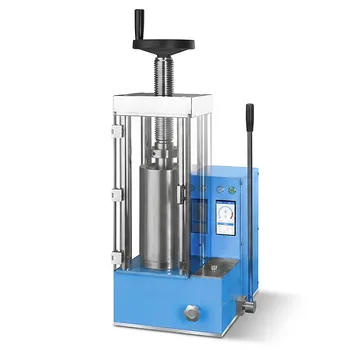
- Electric Isostatic Pressing Machine 40 Tons Automatic Laboratory Powder Compacting Press
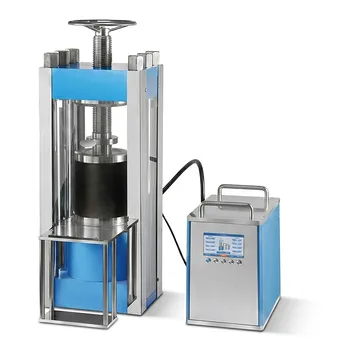
- Warm Isostatic Press for Solid State Battery Research Warm Isostatic Press
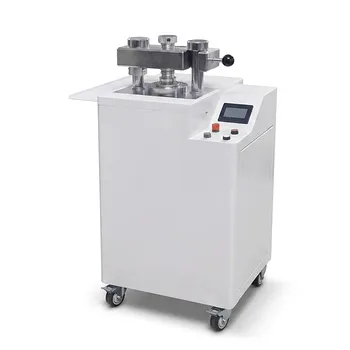
- Split Warm Isostatic Lab Press 200 Ton Powder Compaction Chamber for Battery Research and Material Science
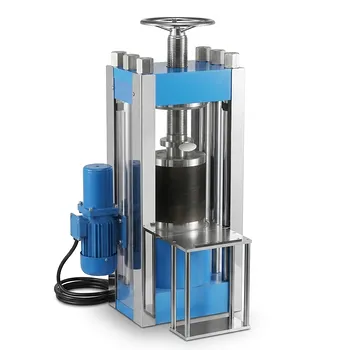
- Electric Lab Cold Isostatic Press CIP Machine
- Split Hot Isostatic Pressing Machine 150 Ton Laboratory Heated Isostatic Press
People Also Ask
- What are the key characteristics of the isostatic pressing process? Unlock Uniform Density and Complex Geometries
- Why is vacuum-sealed packaging necessary before isostatic pressing of CuPc thin films? Protect Integrity & Uniformity
- How is pressure applied to the material during isostatic pressing? Master Uniform Density and Complex Geometries
- How does pressure distribute during isostatic pressing of aluminum? Achieve Uniform Density for Your Lab Materials
- What are the applications of isostatic pressing in the automotive industry? Precision Manufacturing for High-Performance Parts