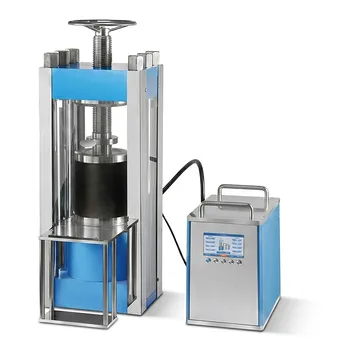
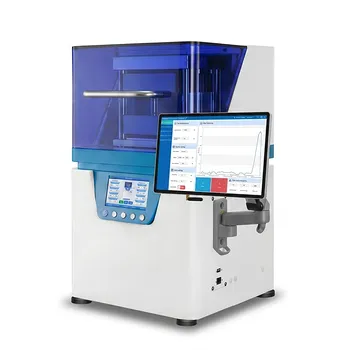
The integration of heating elements into a pressure mold is the critical factor in transitioning wood from a rigid, brittle state to a pliable, densified final product. By raising the wood's core temperature to approximately 80°C, the mold softens the lignin—the natural "glue" of the plant—allowing the wood fibers to compress without breaking. This simultaneous application of localized heat and mechanical force ensures that the internal structure undergoes plastic deformation, resulting in a stable, high-density material rather than a fractured one.
Core Takeaway: A pressure mold with integrated heating enables thermo-mechanical densification by precisely reaching the glass transition temperature of lignin, preventing structural failure while the wood is physically compressed.
The Role of Simultaneous Heat and Pressure
Softening the Structural "Glue"
Lignin is the polymer that gives wood its stiffness, and at room temperature, it acts as a rigid binder. The integrated heating elements raise the wood's internal temperature to the crucial softening point of approximately 80°C. Once this threshold is crossed, the lignin becomes plasticized, allowing the cellulose fibers to move and rearrange without snapping.
Preventing Brittle Fracture
In traditional cold pressing, wood is prone to brittle fracture, where the cellular walls shatter under stress. By providing a controlled thermal field, the heated mold ensures the material remains in a ductile state throughout the compression cycle. This transition is what allows for a significant increase in density while maintaining the wood's structural integrity.
Consistent Heat Distribution
Integrated heating elements turn the mold into a thermal vessel, ensuring that heat is not just applied to the surface but penetrates the core. This uniform thermal field is vital because it prevents internal stresses that occur when the outside of the wood is soft but the center remains cold and rigid.
Understanding the Trade-offs and Pitfalls
Thermal Degradation Risks
While heat is necessary for plasticization, exceeding the optimal temperature range can lead to the thermal degradation of hemicellulose and cellulose. If the mold temperature is too high for too long, the wood may lose its mechanical strength or suffer from unsightly discoloration.
Moisture Management Challenges
Heating wood in a closed mold can cause internal moisture to turn into steam, creating high internal vapor pressure. If the pressure is released too quickly or if the heat is uneven, the wood may "explode" or delaminate upon exiting the mold.
Energy Efficiency vs. Setup Cost
Integrated heating systems offer superior process control but require a higher initial capital investment and more complex maintenance. The precision required to balance heat cycles with pressure application increases the technical barrier to entry compared to basic mechanical pressing.
How to Apply This to Your Project
Optimizing Your Densification Strategy
To achieve the best results with a heated pressure mold, your approach must be tailored to the specific species and moisture content of the wood.
- If your primary focus is Maximum Structural Integrity: Ensure the temperature strictly hovers around the 80°C mark to prevent fiber damage while maintaining the pressure until the wood has cooled slightly within the mold.
- If your primary focus is Achieving Highest Possible Density: Prioritize a longer pre-heating phase to ensure the core is fully plasticized before maximum mechanical pressure is applied.
- If your primary focus is Surface Finish and Aesthetics: Use precision-controlled heating elements to avoid scorch marks, ensuring the mold surfaces are cleaned periodically to prevent resin buildup.
The success of wood densification relies on treating the mold not just as a press, but as a precision instrument that manages the delicate transition of wood chemistry under load.
Summary Table:
| Feature | Role in Wood Densification | Key Benefit |
|---|---|---|
| Lignin Softening | Reaches ~80°C glass transition point | Enables plastic deformation without fiber breakage |
| Fracture Prevention | Maintains wood in a ductile state | Preserves structural integrity during compression |
| Thermal Uniformity | Penetrates core with consistent heat | Prevents internal stresses and uneven density |
| Moisture Control | Regulates internal vapor pressure | Avoids material delamination or explosive release |
Transform Your Material Research with KINTEK Precision
At KINTEK, we specialize in comprehensive laboratory pressing solutions designed for the most demanding applications. Whether you are conducting advanced wood densification or cutting-edge battery research, our range of manual, automatic, heated, multifunctional, and glovebox-compatible models, along with cold and warm isostatic presses, provides the precision and reliability you need.
Don't settle for inconsistent results or structural failures. Our heated pressing systems ensure perfect thermal distribution to achieve optimal plasticization and density. Unlock the full potential of your lab’s efficiency—contact us today to find the ideal solution for your specific research needs!
References
- O. Waßmann, S.I.‐U. Ahmed. Tribological properties and related effects of compressed, thermally modified and wax-impregnated wood. DOI: 10.1007/s00107-024-02145-4
This article is also based on technical information from Kintek Solution Knowledge Base .
Related Products
- Lab Heat Press Special Mold
- Cylindrical Lab Electric Heating Press Mold for Laboratory Use
- Lab Round Bidirectional Press Mold
- Lab Polygon Press Mold
- Special Shape Lab Press Mold for Laboratory Applications
People Also Ask
- How is a laboratory heat press used to evaluate bio-based aliphatic polyesters? Prepare Reliable Samples for Analysis
- How is a laboratory heat press utilized in MEA preparation? Achieve High-Efficiency Iron-Chromium Redox Flow Batteries
- Why is a laboratory heat press necessary for biodegradable films? Unlock Precision Bonding and Barrier Performance
- What is the purpose of incorporating cartridge heaters into a lab press mold for MLCC block compression? Optimize Results
- How do laboratory heated presses ensure performance of flexible electrolytes? Boost Wearable Battery Durability