Isostatic compaction achieves superior density by applying pressure evenly from all directions rather than a single axis. While die compaction struggles with friction that creates density gradients, isostatic pressing utilizes a pressurized fluid to exert uniform force across the entire surface of the mold, ensuring consistent material packing regardless of the part's shape.
Core Takeaway Isostatic compaction decouples density from geometry by eliminating die-wall friction and the need for internal lubricants. This results in components with uniform density, higher green strength, and the ability to maintain structural integrity even in parts with high length-to-diameter ratios.
The Mechanics of Density Distribution
Omnidirectional Pressure Application
The fundamental differentiator of isostatic compaction is the application of pressure. Unlike die compaction, which is uniaxial (top-down), isostatic compaction applies force evenly over the entire surface area of the mold.
This omnidirectional pressure ensures that every particle of powder is subjected to the same force vector. Consequently, the material packs together uniformly, eliminating the density variations often found in the center of die-compacted parts.
Eliminating Die-Wall Friction
In traditional die compaction, friction between the powder and the rigid die walls is a major obstacle. This friction "drags" the powder, causing significant density gradients where the edges are dense, but the center or bottom remains porous.
Isostatic compaction eliminates this issue entirely. Because the pressure is applied via a fluid against a flexible mold, there is no rigid wall to create friction. This absence of drag allows for a completely uniform internal structure.
Optimizing Material Purity
The Impact of Lubricant Removal
To mitigate friction in die compaction, manufacturers must add lubricants to the powder mix. These lubricants occupy volume within the part, physically preventing the powder particles from touching.
Isostatic pressing removes the need for these die-wall lubricants. Without these additives taking up space, the metal or ceramic powder can be compacted to a much higher raw density.
Simplifying the Sintering Process
The absence of lubricants offers a secondary downstream benefit: simplified sintering. In die compaction, the lubricant must be burned off, which can complicate the heating cycle.
Isostatic parts proceed to sintering without this requirement, reducing processing steps and eliminating the risk of defects caused by incomplete lubricant removal.
Air Evacuation
To further enhance uniformity, air is often evacuated from the loose powder before the compaction cycle begins. Removing interstitial air pockets ensures that the applied pressure acts solely on compressing the powder lattice, rather than compressing trapped gas.
Overcoming Geometric Limitations
Handling High Length-to-Diameter Ratios
Die compaction is severely limited by the length of the part. As the length-to-diameter ratio increases, the pressure drop-off due to friction makes it impossible to achieve uniform density at the bottom of the part.
Isostatic compaction solves this by applying pressure laterally along the entire length of the component. This allows for the production of long, slender parts (such as rods or tubes) with consistent density from end to end.
Superior Green Strength
The combination of higher density and uniform pressure results in significantly higher "green strength" (the strength of the part before sintering).
Parts produced via Cold Isostatic Pressing (CIP) can exhibit green strengths up to 10 times greater than their die-compacted counterparts. This makes large or complex preforms easier to handle and machine prior to final sintering.
Common Pitfalls in Compaction
The Friction Trap
It is critical to understand that density gradients are not just a cosmetic issue; they are structural weak points. In die compaction, the "neutral zone" (the area of lowest density) is a predictable failure point. Isostatic compaction is the necessary choice when isotropic properties are required to avoid this specific failure mode.
Complexity vs. Uniformity
While isostatic pressing offers superior density, it is typically used for more complex or larger shapes. Simple, short geometries may not justify the shift from die compaction if the density gradients are negligible for the application. However, as complexity increases, the reliability of die compaction drops precipitously.
Making the Right Choice for Your Goal
Select the compaction method that aligns with your specific structural and geometric requirements.
- If your primary focus is Uniformity in Long Parts: Choose isostatic compaction to eliminate the density drop-off associated with high length-to-diameter ratios.
- If your primary focus is Maximum Density: Choose isostatic compaction to eliminate space-consuming lubricants and achieve tighter particle packing.
- If your primary focus is Green Strength: Choose isostatic compaction to achieve up to 10x greater strength for handling and machining preforms.
Isostatic compaction is the definitive solution when material integrity cannot be compromised by the physics of friction.
Summary Table:
| Feature | Die Compaction (Uniaxial) | Isostatic Compaction (Omnidirectional) |
|---|---|---|
| Pressure Direction | Single Axis (Top-Down) | Uniform from all directions |
| Friction Issues | High die-wall friction | Zero die-wall friction |
| Lubricants | Required (reduces purity) | Not required (higher raw density) |
| Density Gradient | Significant (porous centers) | Highly uniform internal structure |
| Green Strength | Standard | Up to 10x higher strength |
| Shape Capability | Short, simple geometries | Long, complex, or slender parts |
Elevate Your Material Research with KINTEK Precision
Don't let density gradients compromise your structural integrity. KINTEK specializes in comprehensive laboratory pressing solutions designed to meet the rigorous demands of battery research and advanced materials science. Whether you need manual, automatic, heated, or multifunctional models, or specialized cold and warm isostatic presses, our equipment ensures isotropic properties and maximum green strength for your preforms.
Our value to you:
- Glovebox-compatible designs for sensitive materials.
- Precision control to eliminate internal defects and simplify sintering.
- Expert technical support to help you choose the right pressing technology for your specific geometry.
Ready to achieve 10x greater green strength? Contact KINTEK today to find your pressing solution!
Related Products
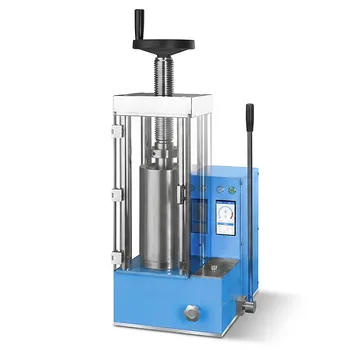
- Electric Isostatic Pressing Machine 40 Tons Automatic Laboratory Powder Compacting Press
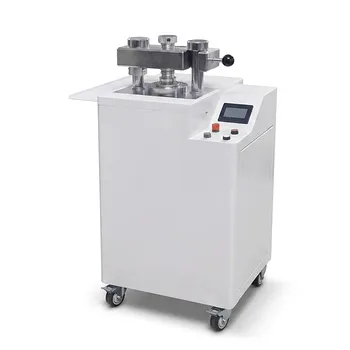
- Warm Isostatic Press for Solid State Battery Research Warm Isostatic Press
- Split Warm Isostatic Lab Press 200 Ton Powder Compaction Chamber for Battery Research and Material Science
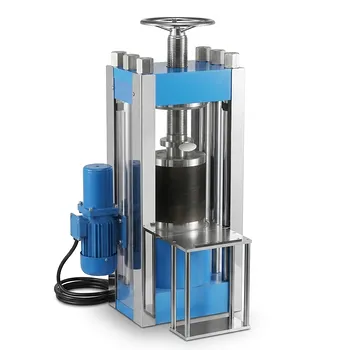
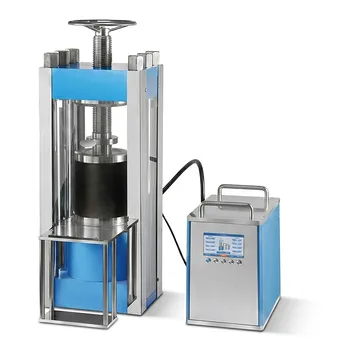
- Electric Lab Cold Isostatic Press CIP Machine
- Split Hot Isostatic Pressing Machine 150 Ton Laboratory Heated Isostatic Press
People Also Ask
- What are the key characteristics of the isostatic pressing process? Unlock Uniform Density and Complex Geometries
- Why is vacuum-sealed packaging necessary before isostatic pressing of CuPc thin films? Protect Integrity & Uniformity
- How is pressure applied to the material during isostatic pressing? Master Uniform Density and Complex Geometries
- How does pressure distribute during isostatic pressing of aluminum? Achieve Uniform Density for Your Lab Materials
- What are the applications of isostatic pressing in the automotive industry? Precision Manufacturing for High-Performance Parts