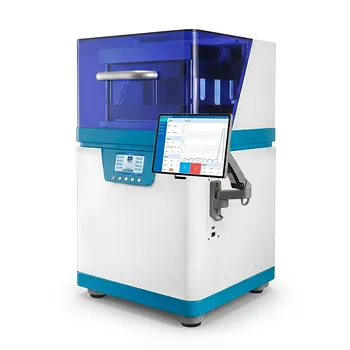
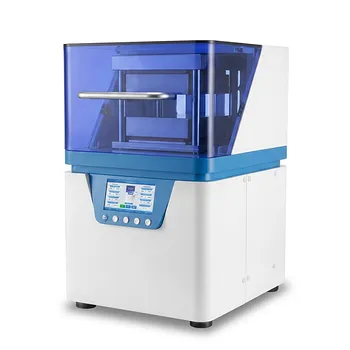
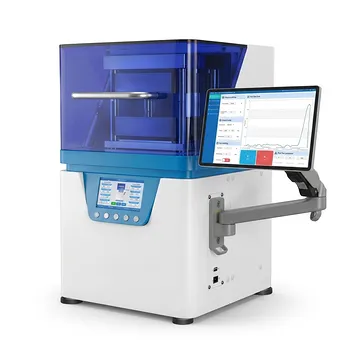
In material science laboratories, the hydraulic press serves as a versatile instrument for both mechanical characterization and precise sample preparation. Its primary application is subjecting materials to controlled high pressure to analyze stress-strain behavior, while simultaneously serving as a critical tool for compacting powders into uniform pellets for spectroscopic analysis.
The hydraulic press acts as the bridge between raw material and actionable data; it reveals physical limits through stress testing and enables chemical analysis by creating standardized, high-quality samples.
Characterizing Material Properties
The most direct application of a hydraulic press in a laboratory setting is the investigation of physical durability.
Stress-Strain Analysis
As highlighted in the primary reference, researchers use hydraulic presses to study deformation. By applying significant pressure, scientists can map out the stress-strain behavior of a material.
Determining Failure Points
This process allows labs to identify the exact point of failure. Understanding these physical limits is essential for determining the potential real-world applications of a new material.
Investigating High-Pressure Effects
Beyond simple destruction, presses allow researchers to observe how materials behave under extreme conditions. This provides insight into how substances might perform in high-stress environments, such as deep-sea or aerospace applications.
Sample Preparation for Spectroscopy
While mechanical testing is about assessing the material itself, sample preparation is about enabling other analytical instruments to work correctly.
Creating Pellets for Analysis
Many analytical techniques, specifically X-ray fluorescence (XRF) and Fourier-transform infrared spectroscopy (FTIR), require samples to be extremely flat and uniform.
Compacting Powder Mixtures
Hydraulic presses are used to compress loose powder mixtures into solid pellets. This compaction ensures that the sample density is consistent, which is vital for accurate spectroscopic readings.
Thin Film Production
For certain optical analyses, the press is used to create thin, transparent films. This application requires precise control to ensure the film is uniform without cracking.
Advanced Research and Development Applications
Beyond standard testing and prep, hydraulic presses facilitate the creation of prototypes and complex composites.
Microfluidic Prototyping
In specialized R&D, presses are utilized to prototype microfluidic devices. The pressure helps bond layers of materials together to create microscopic channels used in fluid analysis.
Pharmaceutical Research
In pharmaceutical development, presses are used to test powder compaction for pill manufacturing, ensuring that medication tablets have the structural integrity to survive shipping and handling.
Understanding the Trade-offs
While hydraulic presses are powerful, they require careful management to ensure valid results.
Force vs. Integrity
The core challenge is applying the correct amount of force. Excessive pressure can alter the chemical structure of a sample or introduce density gradients that skew analytical results.
Destructive Nature
When used for material characterization (stress-strain testing), the process is inherently destructive. The sample is often unusable for further testing, requiring researchers to have ample raw material available.
Precision Limitations
Standard hydraulic presses rely on Pascal’s law, multiplying force through fluid displacement. While powerful, manual systems may lack the fine-grain control of electromechanical systems, potentially leading to inconsistencies in pellet thickness or density if not monitored carefully.
Making the Right Choice for Your Goal
When employing a hydraulic press in the lab, your objective dictates your methodology.
- If your primary focus is Physical Characterization: Prioritize measuring the exact pressure applied to accurately plot stress-strain curves and identify deformation limits.
- If your primary focus is Spectroscopic Analysis: Prioritize the uniformity and flatness of the pellet to ensure your XRF or FTIR data remains uncorrupted by surface irregularities.
- If your primary focus is Prototyping: Focus on the "hold time" and even pressure distribution to ensure proper bonding of composite layers or microfluidic chips.
Success relies not just on generating force, but on controlling it to reveal the specific truth your research requires.
Summary Table:
| Application Category | Primary Laboratory Function | Specific Use Case Example |
|---|---|---|
| Material Testing | Stress-Strain Analysis | Identifying failure points and deformation limits |
| Sample Preparation | Pellet Compaction | Creating uniform discs for XRF and FTIR analysis |
| Advanced R&D | Material Bonding | Prototyping microfluidic devices and composites |
| Pharmaceuticals | Tablet Testing | Evaluating structural integrity for pill manufacturing |
Elevate Your Laboratory Precision with KINTEK
Maximize the accuracy of your material research with KINTEK’s comprehensive laboratory pressing solutions. Whether you are conducting rigorous stress-strain analysis or require flawless sample preparation for spectroscopy, our equipment is engineered for peak performance.
Why choose KINTEK?
- Versatile Range: We offer manual, automatic, heated, and multifunctional models.
- Specialized Systems: Access glovebox-compatible models and advanced cold/warm isostatic presses.
- Industry Expertise: Widely applied in battery research and advanced material characterization.
Don't let inconsistent pressure compromise your data. Contact us today to find the perfect press for your lab!
Related Products
- Automatic Hydraulic Hot Press with Large Plate and Precision Temperature Control for Advanced Material Sample Preparation and Industrial Research
- Automatic Hydraulic Heat Press Machine with Multi Stage Programmable Control and Integrated Water Cooling Plate Size 180x180mm
- Automatic Heated Hydraulic Lab Press with Programmable Touch Screen Controls and Precision Temperature Regulation
- Manual Heated Hydraulic Lab Press with Integrated Hot Plates Hydraulic Press Machine
- Automatic High Temperature Heated Hydraulic Press Machine with Heated Plates for Lab
People Also Ask
- What are the specific features and applications of hydraulic hot press machines? Precision Solutions for Modern Labs
- How does an automatic hydraulic press operate? Achieve Precision and Consistency in Lab Pelleting
- What are the advantages and common applications of an automatic hydraulic press? Elevate Your Lab's Precision
- What is the technical significance of setting a precise dwell time? Achieve Peak Material Density and Stability
- When is an automatic hydraulic press more suitable than a manual press? Scale Your Lab with Precision & Speed