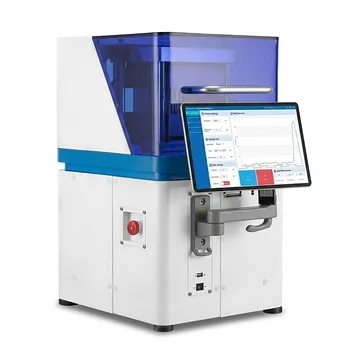
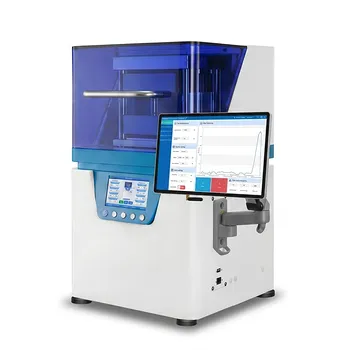
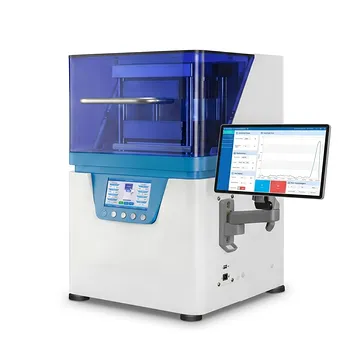
Laboratory presses serve as critical infrastructure across sectors ranging from pharmaceuticals and rubber molding to aerospace and plastic processing. Their primary functions span the entire product lifecycle, utilized heavily for Research and Development (R&D), precise material testing, sample preparation for analysis, and specialized short-run production processes such as lean manufacturing.
While often associated solely with scientific experiments, laboratory presses act as the bridge between theoretical analysis and practical manufacturing. They enable organizations to validate materials in R&D, perform rigorous quality control, and execute limited production runs without the overhead of full-scale industrial machinery.
The Role in Research and Analysis
Laboratory presses are indispensable in scientific settings where precision is paramount. They allow researchers to manipulate material properties under controlled conditions before moving to mass production.
Sample Preparation for Spectroscopy
One of the most frequent applications in the lab is preparing samples for spectroscopic analysis. This ensures data accuracy during chemical testing.
Specific tasks include pressing pellets from a KBr matrix for infrared (IR) spectroscopy and briquetting inorganic samples for x-ray fluorescence (XRF) spectroscopy. Heated platens are also used to press thin polymer films for IR transmission sampling.
Material Development and Testing
In R&D departments within universities and factories, presses are used to develop new materials. Researchers use them to test how materials behave under compression and to create prototypes.
This is critical for determining the viability of composites, ceramics, and thermoplastic resins before they are approved for larger applications.
Applications in Manufacturing and Production
Contrary to their name, laboratory presses are not limited to the lab bench. They play a vital role in the actual manufacturing workflow, particularly in specialized production environments.
Lean and Cell Manufacturing
For operations that do not require mass production, laboratory presses are the standard equipment for "short runs" and limited production.
They are ideal for cell manufacturing and lean manufacturing processes, where flexibility and rapid changeovers are more valuable than high-volume throughput.
Quality Control (QC)
Hydraulic laboratory presses are frequently deployed on factory floors for quality assurance. They allow technicians to pull samples from the line and test them immediately to ensure consistency.
This helps identify defects in batches of rubber, plastic, or composite materials before they are shipped.
Industry-Specific Utilization
Different sectors utilize the versatility of laboratory presses to solve specific material challenges.
Pharmaceuticals and Medical
In the pharmaceutical industry, presses are used for compacting powders to increase density and reduce porosity.
Common applications include pill making and the development of new drug delivery formulations. They are also used in medical research to test biocompatible materials.
Rubber, Plastics, and Laminating
These industries rely on hot presses for molding and bonding.
Lamination processes bond different materials into composites or multilayer structures. Molding applications shape plastics and rubbers into precise forms, while curing processes utilize heat and pressure to set adhesives and coatings properly.
Heavy Industry and Electronics
In aerospace, computer manufacturing, and wood research, presses are used to test durability and structural integrity.
They are essential for briquetting and compacting granular materials in metallurgy and ceramics, ensuring that raw materials meet the necessary density specifications.
Understanding the Trade-offs
While laboratory presses are versatile, they are designed for precision and flexibility rather than raw speed.
Volume vs. Precision
The primary limitation is throughput. These presses are excellent for creating a dozens of precise prototypes or a few hundred production units, but they cannot match the speed of industrial automated presses for mass production.
Size Constraints
Laboratory presses generally have smaller platens and lower total tonnage capabilities compared to industrial counterparts. They are not suitable for molding large automotive parts or structural building components.
Making the Right Choice for Your Goal
Selecting the right approach depends heavily on whether your objective is discovery or delivery.
- If your primary focus is Analytical Testing: Prioritize a press with high precision and heated platens to ensure uniform pellets and films for spectroscopy (FTIR/XRF).
- If your primary focus is R&D and Prototyping: Look for versatility in pressure ranges to handle various materials, from delicate composites to dense ceramics.
- If your primary focus is Lean Manufacturing: value durability and cycle consistency to support repetitive short-run production and quality control tasks.
Ultimately, the laboratory press is the tool that validates your science before it becomes a scalable product.
Summary Table:
| Industry Sector | Primary Applications | Key Benefits |
|---|---|---|
| Pharmaceuticals | Pill development, powder compaction | Improved density & reduced porosity |
| Materials Science | Sample prep for IR/XRF spectroscopy | Precise material analysis & validation |
| Rubber & Plastics | Molding, curing, and laminating | Reliable bonding & material testing |
| Manufacturing | Lean production & Quality Control (QC) | Cost-effective short runs & consistency |
| Electronics | Composite testing & structural integrity | Durable prototype development |
Optimize Your Lab Performance with KINTEK Solutions
At KINTEK, we specialize in comprehensive laboratory pressing solutions tailored for precision research and lean manufacturing. Whether you are advancing battery research or perfecting material analysis, our extensive range of manual, automatic, heated, and multifunctional models—including specialized cold and warm isostatic presses—ensures superior results.
Ready to elevate your R&D or production capabilities? Contact us today to find the perfect press for your specific laboratory needs.
Related Products
- Laboratory Hydraulic Press Lab Pellet Press Button Battery Press
- Laboratory Hydraulic Press Lab Pellet Press Machine for Glove Box
- Laboratory Split Manual Heated Hydraulic Press Machine with Hot Plates
- Laboratory Hydraulic Pellet Press for XRF KBR FTIR Lab Press
- Laboratory Hydraulic Split Electric Lab Pellet Press
People Also Ask
- How is a laboratory hydraulic press used for HAP composite gels? Master Mineral Substrate Standardization
- What role does a laboratory hydraulic press play in reaction pellets? Optimizing Lunar Soil and Metal Fuel Density
- What role does a laboratory hydraulic press play in the preparation of piezoelectric ceramic discs for DC-PG? | KINTEK
- Why is a laboratory hydraulic press required for PBAT and PLA sample preparation? Achieve Flawless Characterization
- What role does a laboratory hydraulic press play in the assembly of all-solid-state battery test cells? Expert Guide