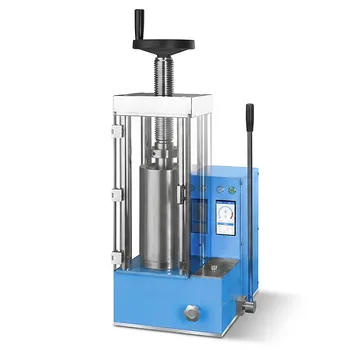
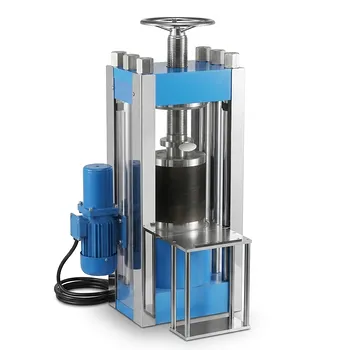
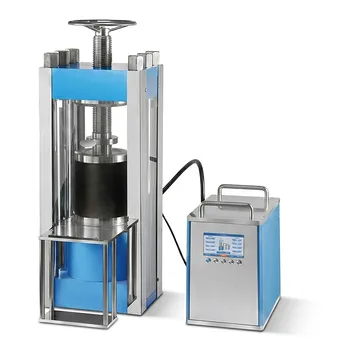
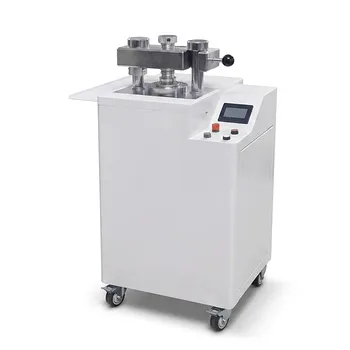
Isostatic pressing is a versatile manufacturing technique applied across a distinct range of sectors, from sensitive chemical processing to heavy industrial engineering. Its primary applications include the pharmaceutical industry, explosives manufacturing, the chemical industry, the food industry, and the production of nuclear fuel and ferrites.
Core Takeaway While often associated with heavy metallurgy, isostatic pressing is critical for any sector requiring uniform density and structural integrity in complex shapes. It bridges the gap between delicate precision in pharmaceuticals and the extreme durability required in nuclear and aerospace applications.
Critical Industrial Sectors
Chemical and Pharmaceutical Processing
The pharmaceutical industry relies on isostatic pressing to compress powders into precise forms with uniform density.
Similarly, the chemical industry utilizes this technology for material consolidation and processing.
Explosives manufacturing also employs this method, leveraging the process to safely compact materials where uniform density is critical for predictable performance.
Energy and Nuclear Applications
The production of nuclear fuel is a major application of isostatic pressing.
This process ensures high-density compaction of fuel elements, which is vital for safety and efficiency in reactors.
Additionally, the technology supports advanced energy storage, specifically for components used in battery technologies and high-temperature environments.
Food and Specialized Manufacturing
In the food industry, isostatic pressing is used for high-pressure processing to pasteurize products or modify food textures without heat.
The technology is also standard in the production of ferrites, which are ceramic compounds used in magnetic applications.
High-Performance Engineering
Aerospace and Automotive
Beyond the primary processing industries, aerospace is a dominant user of Cold Isostatic Pressing (CIP).
Engineers use it to create lightweight, durable components like turbine blades and engine parts that must withstand extreme stress.
The automotive sector utilizes the process for manufacturing complex parts that require consistent material properties to ensure safety and reliability.
Medical and Materials Science
The medical field employs isostatic pressing to manufacture complex implants and prosthetics.
The process guarantees both the structural strength and biocompatibility required for devices placed inside the human body.
Materials science labs frequently use press technology to process polymers, composites, and ceramics for experimental analysis.
Understanding Process Variations
Temperature Considerations
While many industries use Cold Isostatic Pressing (CIP), specific applications require Warm Isostatic Pressing (WIP).
WIP is essential for processing powders and binders that have strict temperature requirements or cannot be successfully molded at room temperature.
Research vs. Production
Lab presses are distinct tools utilized for smaller-scale processing in environmental analysis and pharmaceutical R&D.
These allow for the testing of material properties on a small scale before moving to full industrial production in sectors like powdered metallurgy.
Aligning Application with Industry Goals
- If your primary focus is High-Performance Durability (Aerospace/Nuclear): Focus on the technology's ability to eliminate internal voids and create uniform density for safety-critical parts.
- If your primary focus is Precision and Purity (Pharma/Medical): Leverage the process for its ability to compact complex shapes without binders or with strict temperature controls.
- If your primary focus is Complex Geometry (Automotive/General Mfg): Utilize isostatic pressing to produce near-net-shape components like molds and tooling, reducing the need for extensive machining.
Isostatic pressing delivers the uniformity required for both delicate chemical compounds and high-stress structural components.
Summary Table:
| Industry | Key Application | Primary Benefit |
|---|---|---|
| Aerospace | Turbine blades & engine parts | High structural integrity & durability |
| Pharmaceutical | Powder compaction | Uniform density & precise dosage forms |
| Nuclear Energy | Fuel element production | High-density compaction for safety |
| Food Industry | High-pressure pasteurization | Texture modification without heat |
| Medical | Implants & prosthetics | Biocompatibility & structural strength |
| Automotive | Complex near-net-shape parts | Consistent material properties |
| Chemical | Material consolidation | Safe processing of sensitive compounds |
Elevate Your Material Research with KINTEK
At KINTEK, we specialize in comprehensive laboratory pressing solutions designed to meet the rigorous demands of global industries. Whether you are advancing battery research or developing high-performance ceramics, our range of manual, automatic, heated, and multifunctional models provides the precision you need.
Our expertise covers:
- Cold & Warm Isostatic Presses (CIP/WIP) for uniform material density.
- Glovebox-compatible models for sensitive chemical and pharmaceutical R&D.
- Specialized solutions for aerospace and nuclear fuel applications.
Ready to optimize your production and ensure superior structural integrity? Contact KINTEK today to find the perfect pressing solution for your lab or industrial application.
Related Products
- Electric Isostatic Pressing Machine 40 Tons Automatic Laboratory Powder Compacting Press
- Warm Isostatic Press for Solid State Battery Research Warm Isostatic Press
- Automatic Lab Cold Isostatic Pressing CIP Machine
- Lab Isostatic Pressing Molds for Isostatic Molding
- Split Warm Isostatic Lab Press 200 Ton Powder Compaction Chamber for Battery Research and Material Science
People Also Ask
- What are the key characteristics of the isostatic pressing process? Unlock Uniform Density and Complex Geometries
- Why is vacuum-sealed packaging necessary before isostatic pressing of CuPc thin films? Protect Integrity & Uniformity
- How is pressure applied to the material during isostatic pressing? Master Uniform Density and Complex Geometries
- How does pressure distribute during isostatic pressing of aluminum? Achieve Uniform Density for Your Lab Materials
- What are the applications of isostatic pressing in the automotive industry? Precision Manufacturing for High-Performance Parts