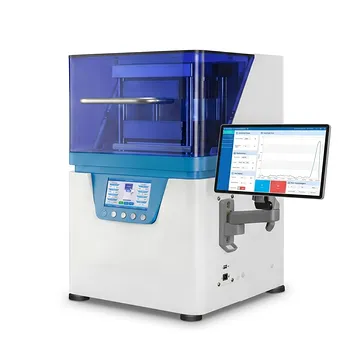
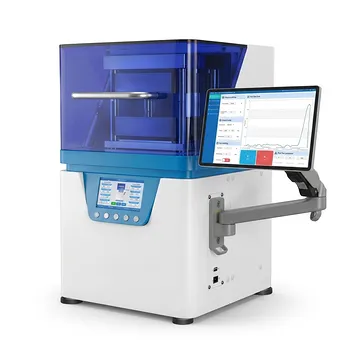
A manual two-column hydraulic press is a compact, mechanical laboratory tool designed specifically for applications where space is at a premium. Commonly featuring a 12-ton capacity, these presses are distinguished by their small footprint, 6 x 6-inch platens, and adjustable daylight openings ranging from 0.75 inches up to 18 inches. They operate without electricity, utilizing a hand-pumped lever system that makes them ideal for glove boxes or crowded workbench environments.
A manual two-column press provides high-force generation in a portable form factor, eliminating the need for hydraulic power packs or electrical connections. While they lack the automation of larger systems, they offer a robust and cost-effective solution for low-volume sample preparation in restricted spaces.
Physical Configuration and Design
The primary advantage of the two-column design is its efficient use of vertical and horizontal space.
Compact and Transportable Architecture
The two-column structure reduces the overall bulk of the machine compared to standard four-column models. This makes the unit significantly lighter and more transportable, allowing it to fit easily into confined areas like glove boxes or crowded lab benches.
Adjustable Daylight Opening
Flexibility is a key feature of these presses. Users can adjust the daylight opening—the vertical space available for the sample—typically between 0.75 inches and 7 inches. Some models offer an extended range of up to 18 inches to accommodate larger die sets or taller samples.
Platen Specifications and Safety
Standard models often come equipped with 6 x 6-inch platens to accommodate various die sizes. Furthermore, safety is prioritized through the inclusion of a safety shield, protecting the operator from potential debris during the pressing process.
Operational Mechanics
Unlike automated systems, a manual press relies entirely on mechanical leverage and hydraulic principles controlled by the operator.
Hand-Operated Force Generation
The system functions without electronic components. The user operates a mechanical lever to pump hydraulic oil into a cylinder, moving a piston that applies load to the sample. This manual operation allows the user to tactilely control the rate of pressure increase.
Precise Load Monitoring
To ensure accuracy, these presses are built with a tough housing that integrates an accurate pressure gauge. This allows the operator to visually monitor the force being applied to the pellet die or sample in real-time.
Mechanical Control Features
The press typically includes a leadscrew at the top, which is turned to bring the nose of the press into contact with the workpiece before pumping begins. Once the process is complete, a hand-operated release valve is turned to relieve the hydraulic pressure and remove the load.
Understanding the Operational Trade-offs
While manual two-column presses are efficient and cost-effective, they introduce specific workflow challenges that must be considered.
Labor Intensity
Because the force is generated physically by the operator, these presses require significant manual effort. This makes them labor-intensive and generally unsuitable for high-frequency workflows where dozens of samples must be processed daily.
Repeatability Challenges
Achieving identical results across different operators can be difficult. The rate of pumping and the exact point of pressure cessation rely on human judgment, potentially leading to slight variances in the load applied to each sample.
Lack of Automation
The absence of electronic components reduces maintenance costs and price, but it also means there are no programmable recipes or automatic pressure-holding cycles. The operator must remain present and engaged throughout the entire pressing cycle.
Making the Right Choice for Your Goal
To determine if a manual two-column press is the right fit for your laboratory, consider your specific constraints and throughput requirements.
- If your primary focus is space optimization: The compact, transportable nature of the two-column design is the superior choice for glove boxes and limited bench space.
- If your primary focus is cost-efficiency: This mechanical option avoids the high price point of automated systems, making it ideal for labs with limited budgets.
- If your primary focus is high throughput: You should reconsider this option, as the physical effort required for manual pumping will become a bottleneck for frequent use.
For low-volume applications requiring a robust, space-saving solution, the manual two-column hydraulic press remains the industry standard for reliable sample preparation.
Summary Table:
| Feature | Specification/Detail |
|---|---|
| Standard Capacity | 12 Tons |
| Platen Size | 6 x 6 inches |
| Daylight Opening | Adjustable from 0.75" to 18" |
| Operation Mode | Manual hand-pumped (no electricity required) |
| Key Design | Compact two-column architecture for space efficiency |
| Safety | Integrated safety shield and pressure gauge |
| Best For | Glove boxes, low-volume samples, and portable use |
Optimize Your Lab Space with KINTEK Pressing Solutions
Looking for a reliable way to prepare samples in restricted environments? KINTEK specializes in comprehensive laboratory pressing solutions tailored to your research needs. Whether you require manual two-column presses for glovebox compatibility or advanced automatic, heated, and isostatic models for complex battery research, we provide the precision and durability your lab demands.
Why choose KINTEK?
- Versatile Range: Manual, automatic, heated, and multifunctional models.
- Specialized Tech: Cold and warm isostatic presses for advanced material science.
- Expert Support: High-quality equipment designed for maximum repeatability.
Contact KINTEK today for a consultation and find the perfect press for your application!
Related Products
- Automatic Hydraulic Heat Press Machine with Multi Stage Programmable Control and Integrated Water Cooling Plate Size 180x180mm
- Manual Heated Hydraulic Lab Press with Integrated Hot Plates Hydraulic Press Machine
- Manual Laboratory Hydraulic Pellet Press Lab Hydraulic Press
- Manual Laboratory Hydraulic Press Lab Pellet Press
- Laboratory Manual Heated Hydraulic Press Machine with Hot Plates
People Also Ask
- How does a laboratory hydraulic heat press facilitate the molding of cellulose composite specimens? Precision Molding
- How is a hydraulic heat press used for sample preparation? Achieve Uniform, Void-Free Samples for Lab Analysis
- What is the role of a hydraulic heat press in material testing? Unlock Superior Data for Research & QC
- What is a hydraulic heat press? Discover Precision Material Bonding and Sample Preparation
- What are the industrial applications of a hydraulic heat press? Powering Lamination, Bonding, and R&D Efficiency