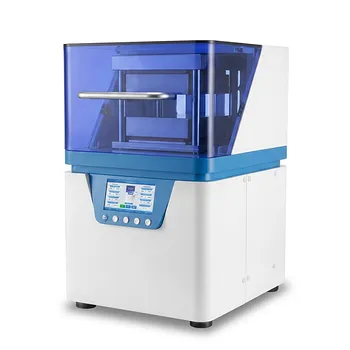
Hydraulic presses are defined by their ability to generate immense force with high precision, making them essential tools across distinct sectors. Generally, they are used for heavy-duty industrial tasks like metal forging and molding, specialized recycling processes such as crushing cars, and delicate laboratory procedures like sample preparation.
The Core Utility While the mechanism is simple—using fluid pressure to create force—the application is incredibly diverse. Hydraulic presses are not just for crushing; they are critical for precise manufacturing tasks, ranging from creating fat-free cocoa powder to shaping complex aerospace components.
Industrial Manufacturing and Fabrication
Metal Forming and Shaping
The most common use of hydraulic presses is in metalworking. Manufacturers utilize them to bend, straighten, and stamp metal sheets into specific geometries.
By using dies and heavy-duty tools, these presses can shear metal or shape solid billets into desired forms.
Automotive and Aerospace Components
In the automotive sector, hydraulic presses are responsible for forming large car body panels and assembling various internal components.
Similarly, the aerospace industry relies on them to form complex, high-strength parts, such as turbine blades, which require consistent, high-pressure application.
Assembly Operations
Beyond shaping materials, presses are used to join them. This includes press-fitting bearings, shafts, and fittings into place.
They are also utilized for riveting and crimping operations, ensuring components are securely bonded through force rather than heat or adhesives.
Material Compression and Molding
Molding Non-Metals
Hydraulic presses are not limited to metal. They are extensively used in compression molding for materials like plastics, rubber, composites, and ceramics.
The machine applies pressure to a mold, forcing the material to take a specific shape and density, which is critical for mass-producing consumer goods.
Waste Management and Recycling
For waste management, the primary goal is volume reduction. Hydraulic presses are used to compact scrap metal, bale waste materials, and crush specialized items.
A notable application cited in heavy industry is the crushing of cars, compressing them into dense blocks for efficient transport and recycling.
Specialized Food Processing
In a unique application of high-pressure technology, hydraulic presses are used in the food industry.
Specifically, they are employed to squeeze cocoa liquor, separating the solids from the butter to produce fat-free cocoa powder.
Laboratory and Research Applications
Sample Preparation
In scientific settings, precision takes precedence over raw volume. Presses are used to prepare pellets for chemical analysis.
By compressing powders into solid discs, researchers can analyze the chemical composition of samples without interference from loose particles.
Material Testing
Laboratories use these presses to investigate the effects of high pressure on various substances.
They are standard tools for testing the strength and durability of construction materials, such as concrete, ensuring they meet safety standards before use in the field.
Understanding the Trade-offs
Force vs. Speed
The primary advantage of a hydraulic system is power. While pneumatic systems operate around 100 psi, hydraulic systems can efficiently apply pressures in the 10,000 psi range.
The trade-off is often speed. Hydraulic presses generally move slower than mechanical or pneumatic alternatives, making them ideal for heavy forming but potentially less efficient for high-speed, low-force automation.
Making the Right Choice for Your Goal
To determine how a hydraulic press fits your specific requirements, consider the following applications:
- If your primary focus is Metalworking: Use a hydraulic press for high-force tasks like forging, stamping, and straightening beams where precision and power are non-negotiable.
- If your primary focus is Laboratory Science: Rely on the press for creating uniform pellets and performing destructive testing on concrete or composite materials.
- If your primary focus is Waste Management: Utilize the press for baling and crushing to maximize storage density and streamline recycling logistics.
- If your primary focus is Food Production: Leverage the clean application of high pressure to separate liquids from solids, such as in cocoa processing.
Ultimately, the hydraulic press is the industry standard wherever the requirement is to apply massive, controlled pressure to reshape, test, or compact a material.
Summary Table:
| Application Sector | Primary Use Cases | Key Benefits |
|---|---|---|
| Industrial Manufacturing | Metal forming, stamping, and automotive component assembly | High force for heavy-duty shaping |
| Laboratory & Research | KBr pellet pressing, material testing, and sample prep | Precision control and uniform density |
| Material Processing | Compression molding of plastics, rubber, and ceramics | Consistent part quality and density |
| Food & Recycling | Cocoa butter extraction and scrap metal/car crushing | Efficient separation and volume reduction |
Elevate Your Precision with KINTEK Laboratory Solutions
Whether you are conducting cutting-edge battery research or preparing delicate samples for chemical analysis, KINTEK provides the high-pressure precision your lab demands. We specialize in a comprehensive range of hydraulic pressing equipment tailored for scientific excellence, including:
- Manual & Automatic Presses for effortless sample preparation.
- Heated & Multifunctional Models for complex material synthesis.
- Glovebox-Compatible & Isostatic Presses (Cold/Warm) for advanced research environments.
Ready to enhance your lab's efficiency and accuracy? Contact KINTEK today to find the perfect pressing solution and see how our expertise can empower your next breakthrough.
Related Products
- Automatic Hydraulic Hot Press with Large Plate and Precision Temperature Control for Advanced Material Sample Preparation and Industrial Research
- Automatic Hydraulic Heat Press Machine with Multi Stage Programmable Control and Integrated Water Cooling Plate Size 180x180mm
- Automatic High Temperature Heated Hydraulic Press Machine with Heated Plates for Lab
- Automatic Heated Hydraulic Lab Press with Programmable Touch Screen Controls and Precision Temperature Regulation
- Manual Heated Hydraulic Lab Press with Integrated Hot Plates Hydraulic Press Machine
People Also Ask
- What are the specific features and applications of hydraulic hot press machines? Precision Solutions for Modern Labs
- How does an automatic hydraulic press operate? Achieve Precision and Consistency in Lab Pelleting
- What are the advantages and common applications of an automatic hydraulic press? Elevate Your Lab's Precision
- What is the technical significance of setting a precise dwell time? Achieve Peak Material Density and Stability
- When is an automatic hydraulic press more suitable than a manual press? Scale Your Lab with Precision & Speed