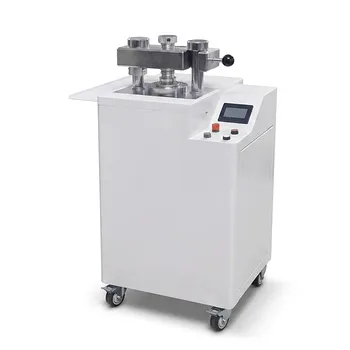
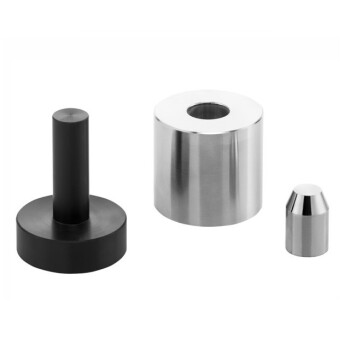
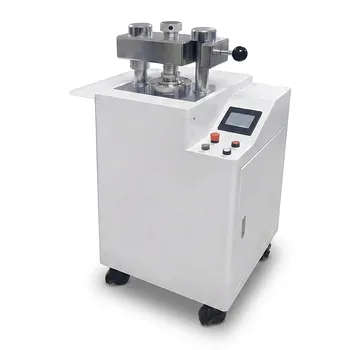
The most prevalent tool used with a laboratory press is the pellet die, which is essential for compacting powders into solid disks for analysis. Beyond basic compaction, the press is frequently paired with specialized molds for forming thin films, bending materials, and advanced monitoring systems for geological or material research.
Core Takeaway While the laboratory press provides the necessary force, its specific application is dictated by the accessory tooling. Ranging from simple compression dies to complex fluid injection systems, these tools transform a standard press into a versatile instrument for everything from sample preparation to advanced rock mechanics simulations.
Essential Processing Tools and Molds
Pellet Dies
The pellet die is the primary accessory for basic laboratory press operations. It is designed to hold powdered materials while the press applies force, compacting the loose powder into a solid, uniform disk.
Forming Molds
To expand the press's utility beyond simple compaction, operators utilize specific molds. These allow for the creation of thin films and facilitate bending or shaping processes required for polymer testing and material synthesis.
Heated Platens
For applications requiring thermal control, electric platens are integrated with the press. Coupled with a digital temperature control system, these allow researchers to heat samples during compression, which is critical for molding thermoplastics or curing composites.
Advanced Research Integration
Fluid Injection Systems
In specialized fields like geophysics, the press works in tandem with a fluid injection system. This setup is used for hydroshearing applications, where the press maintains confining pressure on rock fractures while the injection system pumps fluid into the cracks.
This combination allows researchers to evaluate permeability changes and assess the efficiency of technologies like Enhanced Geothermal Systems (EGS).
Displacement Monitoring Systems
For precise material testing, a high-sensitivity displacement monitoring system is employed alongside the press. This tool captures minute surface deformations, such as millimeter-scale subsidence or heave, during the loading process.
Data from these sensors helps calculate strain rate tensors and validate computer simulations in rock mechanics models.
Understanding the Trade-offs
Complexity vs. Data Fidelity
Integrating advanced tools like fluid injection or displacement monitoring significantly increases the complexity of the experiment. While standard pellet dies are "plug-and-play," these advanced systems require precise synchronization and calibration.
System Compatibility
Not all tools work with every press frame. High-pressure injection systems and heated platens usually require specific clearance within the frame and compatible power or hydraulic connections, potentially limiting which accessories you can use with a standard baseplate setup.
Making the Right Choice for Your Goal
To select the correct tooling, you must define the end state of your material sample.
- If your primary focus is analytical sample preparation: Prioritize high-quality pellet dies to ensure uniform, stable disks for spectroscopy or microscopy.
- If your primary focus is polymer or composite manufacturing: Invest in electric platens and forming molds to control temperature and shape simultaneously.
- If your primary focus is geological or rock mechanics research: You will need to integrate fluid injection and displacement monitoring systems to capture dynamic changes under pressure.
Success depends on matching the accessory's precision to the specific physical properties you intend to measure or modify.
Summary Table:
| Tool Category | Common Accessories | Key Application |
|---|---|---|
| Compaction | Pellet Dies | Creating solid disks for spectroscopy/microscopy |
| Thermal Processing | Electric Heated Platens | Molding thermoplastics and curing composites |
| Shaping | Forming Molds | Creating thin films and material bending tests |
| Advanced Research | Fluid Injection Systems | Geophysics and hydroshearing simulations |
| Measurement | Displacement Sensors | Monitoring surface deformation and strain rates |
Elevate Your Laboratory Precision with KINTEK
Maximize the versatility of your research with KINTEK’s comprehensive laboratory pressing solutions. Whether you are conducting cutting-edge battery research or standard sample preparation, we offer a complete range of manual, automatic, heated, and multifunctional presses, as well as specialized cold and warm isostatic models.
Our equipment is designed for seamless integration with high-precision pellet dies and advanced monitoring systems, ensuring you achieve uniform results every time. Contact KINTEK today to discuss your specific application needs and let our experts help you configure the perfect pressing system for your lab.
Related Products
- XRF KBR Steel Ring Lab Powder Pellet Pressing Mold for FTIR
- Lab XRF Boric Acid Powder Pellet Pressing Mold for Laboratory Use
- Lab Ring Press Mold for Sample Preparation
- XRF KBR Plastic Ring Lab Powder Pellet Pressing Mold for FTIR
- Lab Infrared Press Mold for No Demolding
People Also Ask
- What considerations are important regarding the die size of an XRF pellet press? Optimize for Your XRF Spectrometer and Sample
- Why are pellets used in XRF analysis, and what is their limitation? Boost Accuracy and Speed in Your Lab
- What is the general process for preparing a sample pellet for XRF? Master Consistency for Accurate Analysis
- What are the differences between manual and automatic XRF pellet presses? Choose the Right Press for Your Lab's Needs
- What are the different types of XRF pellet preparation methods available? Manual, Hydraulic, and Automated Presses Explained