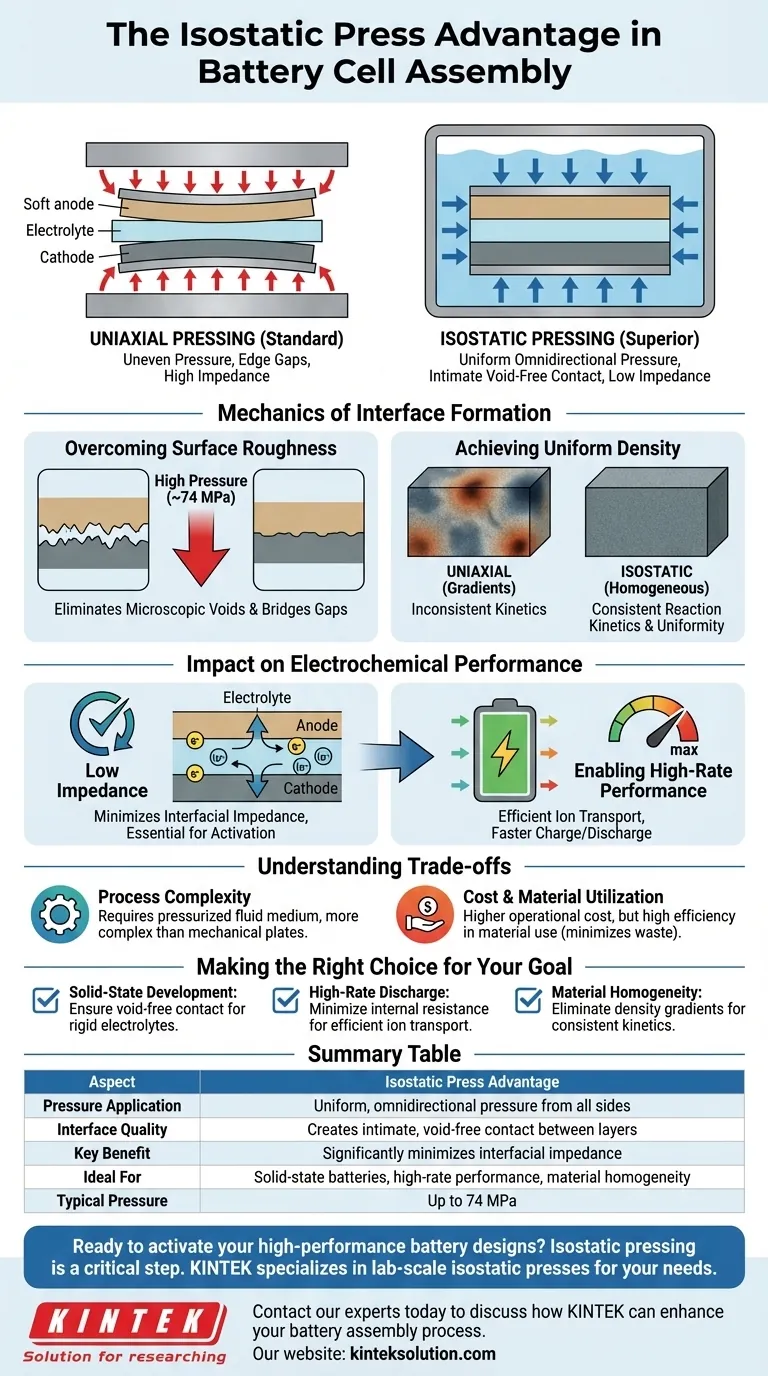
The primary advantage of using an isostatic press in battery assembly is its ability to apply uniform, omnidirectional pressure to the cell stack, typically through a liquid or gas medium. Unlike uniaxial pressing, which applies force from a single direction, isostatic pressing ensures intimate, void-free contact between complex layers, such as soft metal electrodes and rigid ceramic electrolytes. This maximization of contact area is the single most effective method for minimizing interfacial impedance in the final cell.
The critical challenge in battery assembly—particularly for solid-state architectures—is overcoming microscopic surface roughness. Isostatic pressing solves this by eliminating density gradients and bridging gaps at the solid-solid interface, creating the structural continuity required for efficient ion transport.
The Mechanics of Interface Formation
Overcoming Surface Roughness
Even high-quality battery materials possess microscopic surface irregularities. Simply stacking these layers creates gaps that act as barriers to energy flow.
Applying high pressure—often around 74 MPa—forces these layers together. This process eliminates the microscopic voids caused by surface roughness, ensuring the materials are physically flush against one another.
Superiority Over Uniaxial Pressing
Standard uniaxial presses apply force from the top and bottom only. This often leads to uneven pressure distribution and can damage brittle components or leave gaps at the edges.
Isostatic pressing applies pressure equally from all directions. This is particularly superior for mating dissimilar materials, such as ensuring a soft metal anode conforms perfectly to the surface of a rigid ceramic electrolyte.
Achieving Uniform Density
Beyond the interface, isostatic pressing impacts the bulk material. It minimizes density gradients within the sample, ensuring the internal structure is consistent throughout.
This uniformity is vital for consistent reaction kinetics. A homogeneous density profile ensures that electrochemical reactions occur evenly across the entire cell, preventing localized hot spots or bottlenecks.
Impact on Electrochemical Performance
Minimizing Interfacial Impedance
The physical connection between layers directly dictates the cell's electrical resistance. A "loose" interface results in high impedance, which throttles power output.
By maximizing the effective contact area, isostatic pressing creates a low-impedance solid-solid interface. This is a fundamental prerequisite for activating the battery and achieving low internal resistance.
Enabling High-Rate Performance
A low-impedance interface allows ions to move freely between the anode, electrolyte, and cathode. This efficient ion transport is essential for high-rate performance.
Without the intimate contact secured by isostatic pressing, the ionic transport resistance increases, severely limiting how quickly the battery can charge or discharge.
Understanding the Trade-offs
Process Complexity
While superior in performance, isostatic pressing is inherently more complex than uniaxial methods. It requires a pressurized fluid (liquid or gas) medium to transmit force, rather than simple mechanical plates.
Cost and Material Utilization
This method is often associated with higher operational costs due to the equipment required. However, it is noted for high efficiency in material utilization, making it a viable option for compacting difficult or expensive materials where waste must be minimized.
Making the Right Choice for Your Goal
To determine if isostatic pressing is the correct step for your assembly process, consider your specific performance requirements:
- If your primary focus is Solid-State Development: You must use isostatic pressing to ensure the rigid ceramic electrolyte makes void-free contact with the electrode.
- If your primary focus is High-Rate Discharge: You should prioritize this method to minimize internal resistance and maximize ion transport efficiency.
- If your primary focus is Material Homogeneity: You should use this technique to eliminate density gradients and ensure consistent reaction kinetics across the cell.
Isostatic pressing is not just a mechanical step; it is a critical activation process that bridges the gap between raw materials and a high-performance electrochemical system.
Summary Table:
| Aspect | Isostatic Press Advantage |
|---|---|
| Pressure Application | Uniform, omnidirectional pressure from all sides |
| Interface Quality | Creates intimate, void-free contact between layers |
| Key Benefit | Significantly minimizes interfacial impedance |
| Ideal For | Solid-state batteries, high-rate performance, material homogeneity |
| Typical Pressure | Up to 74 MPa |
Ready to activate your high-performance battery designs?
Isostatic pressing is a critical step for bridging the gap between raw materials and a reliable electrochemical system. KINTEK specializes in lab-scale isostatic presses designed for the precise needs of battery researchers and developers.
Our equipment helps you achieve the uniform density and void-free interfaces essential for minimizing impedance and maximizing ion transport efficiency in solid-state and high-rate cells.
Contact our experts today to discuss how an isostatic press from KINTEK can enhance your battery assembly process and accelerate your R&D.
Visual Guide
Related Products
- Warm Isostatic Press for Solid State Battery Research Warm Isostatic Press
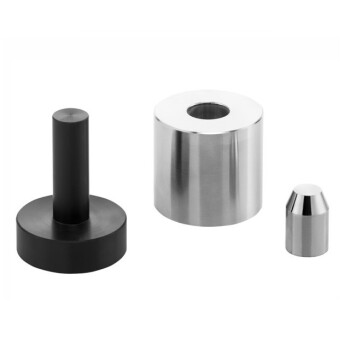
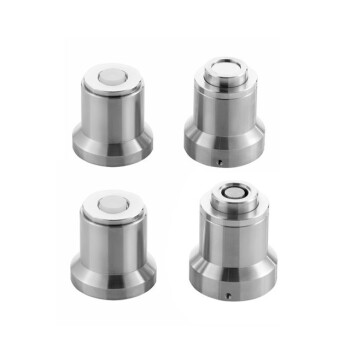
- Lab Button Battery Tablet Press Sealing Mold
- Lab Isostatic Pressing Molds for Isostatic Molding
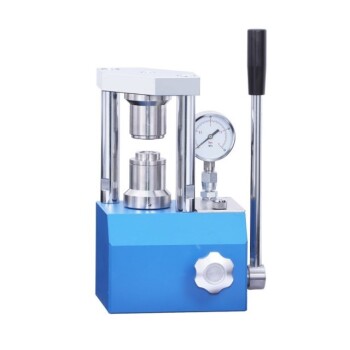
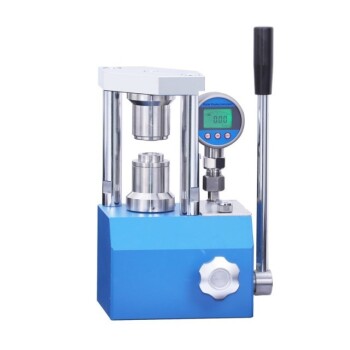
- Button Battery Sealing Press Machine for Lab
- Electric Lab Cold Isostatic Press CIP Machine
People Also Ask
- Why must composite cathodes be sealed in vacuum lamination bags for WIP? Ensure Battery Stability and Density
- How do sacrificial volume materials (SVM) maintain microchannels in isostatic pressing? Ensure Structural Integrity
- What is the function of elastic molds in warm isostatic pressing? Achieve Uniform Density in Composite Particles
- What is the significance of temperature control in Warm Isostatic Pressing? Unlock Uniform Densification and Process Stability
- What is the role of the flexible material in warm isostatic pressing? Key to Uniform Density & Precision