Composite release films serve as a robust physical barrier that prevents the molten polymer matrix from adhering to the metal mold surface during high-temperature compression. By providing high thermal stability and compressive strength, these films allow the thermoplastic matrix to melt and flow under pressure while ensuring the final part can be easily removed. This isolation is critical for maintaining the surface quality of the composite and protecting the delicate arrangement of continuous reinforcing fibers.
The primary function of composite release films is to facilitate clean demolding and protect surface integrity by acting as an chemically inert isolation layer. They enable the high-pressure impregnation of fibers while preventing the permanent bonding of the thermoplastic matrix to the processing equipment.
Preventing Adhesion in Extreme Thermal Environments
The Role of Physical Isolation
Continuous fiber reinforced thermoplastics (CFRTs) require temperatures that frequently exceed 200°C to ensure the polymer matrix reaches a sufficiently low viscosity. At these temperatures, molten polymers like polypropylene or matrix resins become inherently "sticky" and would bond permanently to metal mold plates without an intervening layer.
Resisting High-Pressure Deformation
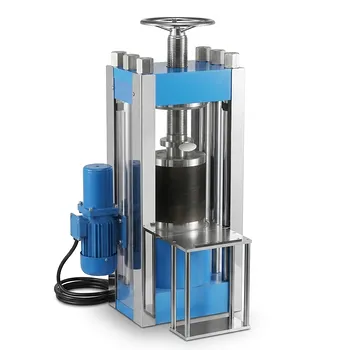
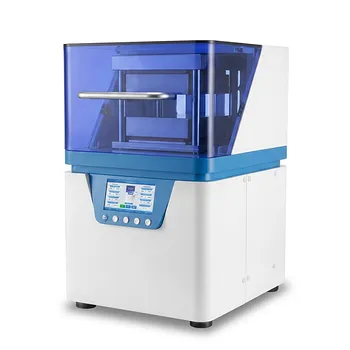
Laboratory presses often apply forces reaching tens of kilonewtons to force the molten plastic into the micro-pores of fiber bundles. Release films are engineered with high compressive strength to maintain their structural integrity under these loads, ensuring they do not tear or embed into the composite surface.
Thermal Stability and Heat Transfer
Effective release films must possess a higher melting point than the composite matrix to remain functional throughout the heating and cooling cycle. They are designed to be thin enough to allow for efficient heat transfer from the press plates to the matrix, enabling consistent melting and solidification.
Preserving Structural and Aesthetic Quality
Protecting Fine Fiber Reinforcements
Continuous fibers, such as carbon or glass fabrics, are susceptible to "pull-out" or misalignment if the matrix sticks to the mold during separation. The release film ensures that all separation forces are distributed evenly across the film surface, preserving the precise orientation of the reinforcement phase.
Achieving Superior Surface Finish
By providing a perfectly smooth interface, release films eliminate surface defects such as pitting or "resin rich" spots that occur when the matrix unevenly adheres to the mold. This is essential for samples used in performance reference standards, where uniform thickness and consistent microstructure are mandatory.
Eliminating Micro-bubbles and Voids
The presence of a smooth, non-porous film helps the molten matrix flow evenly across the fiber surfaces. This facilitates the thorough wetting of fibers and assists in the evacuation of air, which is critical for reducing internal voids and enhancing mechanical performance.
Understanding the Trade-offs
Temperature and Chemical Compatibility
Not all release films are suitable for all thermoplastic matrices; using a film with a lower thermal threshold than the processing temperature will cause the film to melt into the composite. Chemical compatibility is also vital, as some films may react with specific resin additives, leading to surface contamination or bonding.
Impact on Heat Cycle Times
While thin films are preferred for heat transfer, extremely thin films may lack the mechanical toughness to survive high-pressure cycles without wrinkling. These wrinkles can translate into the final part, creating surface irregularities that may require secondary finishing or compromise the sample's dimensional accuracy.
How to Apply This to Your Project
Integrating Release Films into the Workflow
When preparing for high-temperature pressing, selecting the correct release film is as important as the matrix itself. The film must be chosen based on its ability to withstand the specific temperature and pressure required for fiber impregnation.
- If your primary focus is high-temperature processing (above 230°C): Use high-performance fluoropolymer or polyimide films that maintain mechanical strength at extreme thermal limits.
- If your primary focus is surface aesthetics and glass-like finish: Select a high-gloss, ultra-thin release film to minimize texture transfer and ensure uniform matrix distribution.
- If your primary focus is rapid prototyping and cost-efficiency: Utilize standard PTFE-coated fiberglass or polypropylene films for lower-temperature applications where durability and reuse are prioritized.
The correct use of release films ensures that the transition from a molten stack of materials to a high-performance composite is seamless, repeatable, and non-destructive.
Summary Table:
| Key Function | Role in Processing | Impact on Final Composite |
|---|---|---|
| Physical Barrier | Prevents molten polymer from adhering to metal molds. | Enables clean, non-destructive demolding. |
| Compression Resistance | Maintains integrity under high force (kilonewtons). | Ensures uniform thickness and no film tearing. |
| Thermal Stability | Remains functional at temperatures >200°C. | Prevents film melting into the resin matrix. |
| Surface Smoothing | Provides a perfectly flat interface for resin flow. | Eliminates voids and achieves superior finish. |
Elevate Your Composite Fabrication with KINTEK
Achieving the perfect bond and flawless surface finish in continuous fiber reinforced thermoplastics requires more than just high-quality films—it requires precision equipment. KINTEK specializes in comprehensive laboratory pressing solutions designed for the most demanding research environments.
Whether you are conducting battery research or developing next-generation aerospace composites, our range of manual, automatic, heated, and multifunctional models, as well as cold and warm isostatic presses, offer the stability and control you need.
Ready to optimize your pressing workflow? Contact us today to find the ideal solution for your laboratory needs!
References
- Puch Florian, Bastian Richter. Influence of the processing on the properties of continuous fiber reinforced thermoplastic sheets prepared by extrusion. DOI: 10.1063/5.0168183
This article is also based on technical information from Kintek Solution Knowledge Base .
Related Products
- Warm Isostatic Press for Solid State Battery Research Warm Isostatic Press
- Lab Infrared Press Mold for No Demolding
- Lab Round Bidirectional Press Mold
- Lab Cylindrical Press Mold for Laboratory Use
- Laboratory Hydraulic Split Electric Lab Pellet Press
People Also Ask
- Why must composite cathodes be sealed in vacuum lamination bags for WIP? Ensure Battery Stability and Density
- How do sacrificial volume materials (SVM) maintain microchannels in isostatic pressing? Ensure Structural Integrity
- What is the function of elastic molds in warm isostatic pressing? Achieve Uniform Density in Composite Particles
- What is the function of hydraulic pressure in warm isostatic pressing? Achieve Uniform Material Density
- What is the process involved in warm isostatic pressing? Mastering Uniform Density with WIP Technology