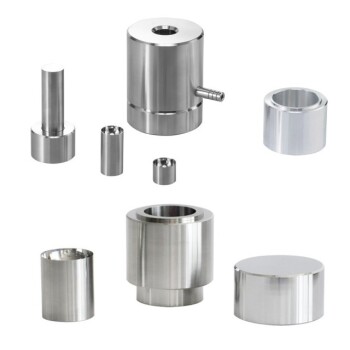
Laboratory compaction equipment functions as the critical simulation tool for mimicking real-world construction forces within a controlled environment. Its primary purpose is to prepare standardized asphalt mixture specimens with precise bulk densities and air void contents, which allows technicians to accurately determine the optimal oil-to-stone ratio (asphalt content) needed for structural stability.
Core Takeaway By strictly controlling the compaction process to mirror field conditions, this equipment generates the essential volumetric data needed to plot density and stability against asphalt content. This process identifies the exact "dosage" of asphalt required to guarantee road performance and longevity.
Bridging the Lab and the Field
The reliability of any asphalt mix design depends entirely on how well the laboratory sample predicts reality.
Simulating Construction Energy
The equipment applies dynamic mechanical force to the loose asphalt mixture. This process mimics the compaction process used by heavy rollers during field construction.
Achieving Standardized Volumetrics
The goal is not just to compress the material, but to achieve specific bulk densities and air void contents. Creating a specimen with these known properties provides a consistent baseline for all subsequent testing.
The Science of Optimization
Once the specimens are compacted, they serve as the data source for determining the mix recipe.
Plotting Performance Curves
Technicians use the standardized specimens to test how the mixture behaves under different conditions. They map the relationships between the mixture's density, stability, and the amount of asphalt binder present.
Defining the Dosage
By analyzing these relationships, engineers can pinpoint the optimal oil-to-stone ratio. This is the precise asphalt dosage that maximizes performance without compromising stability.
Understanding the Trade-offs
While laboratory compaction is the industry standard for mix design, it relies on strict adherence to procedure.
The Risk of Energy Mismatch
If the laboratory compaction energy does not accurately reflect the equipment used in the field, the "optimal" ratio will be incorrect. A lab sample that is compacted more densely than the actual road can achieve will lead to a mix design that fails prematurely.
Sensitivity to Variables
Asphalt mixtures are highly sensitive to volumetric changes. Slight deviations in the compaction method can significantly skew the air void data, leading to an erroneous calculation of the required oil content.
Making the Right Choice for Your Goal
When interpreting data from laboratory compaction equipment, align your focus with your specific engineering objectives:
- If your primary focus is Structural Stability: Ensure the equipment consistently reproduces the maximum bulk density to identify the ratio that supports heavy loads.
- If your primary focus is Durability: Prioritize the air void content data to ensure the oil-to-stone ratio provides enough binder to prevent cracking and weathering.
The correct application of this equipment transforms raw material data into a reliable blueprint for road infrastructure.
Summary Table:
| Feature | Function in Mix Design | Impact on Quality |
|---|---|---|
| Force Simulation | Mimics field rollers and construction energy | Predicts real-world material behavior |
| Density Control | Establishes standardized bulk densities | Provides consistent baseline for testing |
| Air Void Analysis | Calculates precise void contents | Prevents premature cracking and weathering |
| Optimization | Plots density vs. asphalt binder content | Identifies the most cost-effective, stable ratio |
Maximize Your Material Performance with KINTEK
Ready to achieve the perfect asphalt mix design? KINTEK specializes in comprehensive laboratory pressing solutions tailored for precision research and industrial applications. Whether you are conducting battery research or material science testing, our range of manual, automatic, heated, and multifunctional presses, alongside advanced cold and warm isostatic presses, ensures your specimens meet the strictest volumetric standards.
Don't let incorrect compaction energy compromise your infrastructure projects. Contact us today to discover how our high-precision equipment can enhance your lab's accuracy and efficiency.
References
- Dongna Li, Tengfei Yao. Research on the High-Temperature Stability of Twin-Screw Desulphurised Rubber Powder Composite SBS-Modified Asphalt and Its Mixtures. DOI: 10.3390/ma18030480
This article is also based on technical information from Kintek Solution Knowledge Base .
Related Products
- Lab Round Bidirectional Press Mold
- Lab Polygon Press Mold
- Laboratory Hydraulic Press Lab Pellet Press Machine for Glove Box
- Automatic Lab Cold Isostatic Pressing CIP Machine
- Electric Split Lab Cold Isostatic Pressing CIP Machine
People Also Ask
- What is the purpose of incorporating cartridge heaters into a lab press mold for MLCC block compression? Optimize Results
- What is the function of a pressing tool in thermoplastic panels? Master Precision Shaping & Fusion Bonding
- Why is precise cooling management of the lab press mold necessary? Protect Core Integrity in Thermoforming
- Why is a high-performance laboratory molding press critical for in-situ electrolyte formation? Unlock Battery Success
- How do the design and geometric precision of pressing molds and mandrels affect the quality of PTFE composite samples?