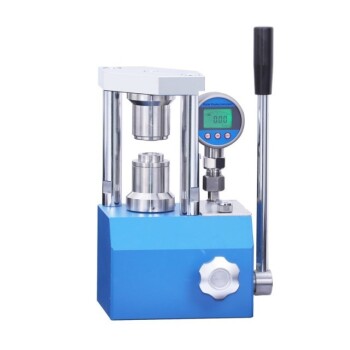
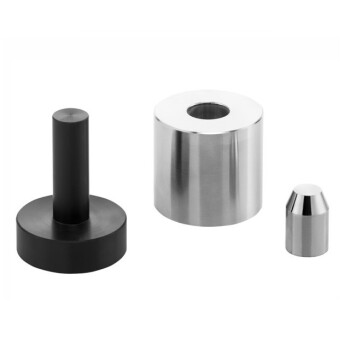
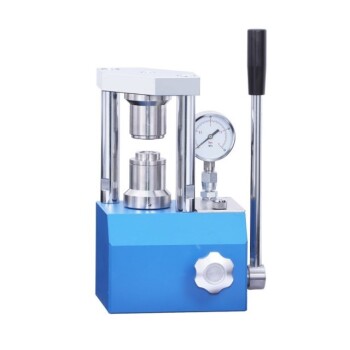
High-precision battery assembly equipment is the fundamental prerequisite for reliable sodium-ion battery performance. It ensures the accurate and constant pressure required to create tight physical contact between electrodes, electrolytes, and current collectors, while establishing a strict seal to prevent environmental contamination.
The core value of this equipment lies in eliminating mechanical variables that distort electrochemical data. By guaranteeing uniform pressure and hermetic sealing, high-precision tools ensure that test results reflect the true chemistry of the battery materials rather than inconsistencies in the assembly process.
Optimizing Internal Contact and Resistance
Eliminating Interface Gaps
The primary function of high-precision equipment is to provide accurate and constant pressure. This forces the electrodes, glass fiber-supported solid electrolytes, and current collectors into tight physical contact. This proximity is critical for eliminating interface gaps, which directly reduces the battery's internal resistance.
Enhancing Ion Transport in Solid-State Systems
For all-solid-state sodium-ion batteries, high-pressure presses are used to compact electrolyte powders and materials into dense pellet structures. This minimizes contact resistance at the interface between the electrolyte and electrodes. Proper compaction is essential for facilitating efficient interfacial ion transport.
Atomic-Level Integration via Heat and Pressure
Heated laboratory presses leverage the synergy of thermal energy and mechanical force. This combination achieves atomic-level interfacial contact between high-loading cathode materials and solid electrolyte films. This seamless integration removes interlayer voids, reducing charge transfer resistance.
Ensuring Environmental Stability and Sealing
Creating a Hermetic Seal
Hydraulic crimpers utilize uniform pressure to cause precise plastic deformation of stainless steel battery casings. This creates a complete hermetic seal that prevents air ingress. Blocking external air is vital for maintaining the electrochemical stability of the battery environment over long operational periods, such as 2500 cycles.
Preventing Leakage and Component Shift
Stable sealing pressure ensures that internal components—including spring plates, gaskets, and separators—remain tightly compressed. This prevents electrolyte leakage, which would compromise safety and performance. It also maintains excellent internal electrical contact throughout the battery's life.
Managing Volume Expansion
In solid-state assemblies, precision pressure maintenance is critical for inhibiting volume expansion during charge and discharge cycles. Continuous mechanical pressure prevents contact failure during stripping and plating processes. It also helps inhibit the penetration of lithium or sodium dendrites through the solid electrolyte.
Guaranteeing Data Accuracy and Repeatability
Standardization of Mass Loading
Precision slicing equipment ensures that electrode sheets have consistent surface areas and clean edges free of burrs. This geometric precision allows for the accurate calculation of active material mass loading. It is also vital for maintaining a strict capacity ratio between positive and negative electrodes (N/P ratio).
Repeatability of Electrochemical Metrics
Consistent assembly pressure eliminates contact resistance fluctuations that can introduce noise into test data. This consistency is vital for obtaining repeatable results in Electrochemical Impedance Spectroscopy (EIS) and long-cycle charge-discharge curves.
Enhancing Advanced Analytical Techniques
For in-situ testing, such as Nuclear Magnetic Resonance (NMR), uniform compression is essential. It minimizes signal broadening caused by magnetic susceptibility inhomogeneities. This results in significantly improved data resolution and structural stability during testing.
Common Pitfalls of Low-Precision Assembly
Unreliable Contact Resistance
Without precision equipment, pressure distribution across the cell is often uneven. This leads to localized areas of high resistance, causing unpredictable voltage drops and thermal hotspots. These inconsistencies make it impossible to distinguish between material failure and assembly failure.
Short Circuits and Safety Risks
Low-precision cutting tools often leave physical burrs on electrode edges. These microscopic imperfections can puncture separators, leading to internal short circuits. Furthermore, inadequate sealing pressure increases the risk of air infiltration, accelerating the degradation of sodium-based components.
Making the Right Choice for Your Goal
- If your primary focus is Cycle Life Testing: Prioritize hydraulic crimpers that guarantee a hermetic seal to prevent air ingress and ensure stability over thousands of cycles.
- If your primary focus is Solid-State Development: Select high-pressure presses with heating capabilities to compact powders and ensure atomic-level interfacial contact.
- If your primary focus is Fundamental Electrochemistry: Ensure you use precision slicing tools to maintain exact N/P ratios and eliminate burrs for accurate impedance data.
Reliable sodium-ion battery research depends less on the chemistry alone and more on the mechanical precision used to package it.
Summary Table:
| Equipment Feature | Research Impact | Key Benefit |
|---|---|---|
| Accurate Pressure | Eliminates interface gaps | Reduces internal resistance & improves ion transport |
| Hermetic Sealing | Prevents air/moisture ingress | Extends cycle life and ensures environmental stability |
| Heated Pressing | Atomic-level integration | Enhances contact in solid-state battery systems |
| Precision Slicing | Standardizes mass loading | Ensures repeatable EIS data and avoids short circuits |
Maximize Your Battery Research Precision with KINTEK
Elevate your laboratory results with KINTEK’s specialized battery assembly solutions. As experts in comprehensive laboratory pressing, we offer a versatile range of manual, automatic, heated, and multifunctional models, alongside cold and warm isostatic presses designed specifically for the rigorous demands of battery research.
Whether you are developing pouch cells or solid-state sodium-ion systems, our equipment ensures the mechanical precision required to eliminate variables and deliver accurate electrochemical data. Contact KINTEK today to find the perfect glovebox-compatible or high-pressure solution for your lab and guarantee the reliability of every cycle.
References
- Yang Jiang, Chaofeng Zhang. <b>Solid Dual-Salt Plastic Crystal Electrolyte Enabling Rapid Ion Transfer and Stable Interphases for High-Performance Solid-State Sodium Ion Batteries</b>. DOI: 10.1039/d5sc09186a
This article is also based on technical information from Kintek Solution Knowledge Base .
Related Products
- Button Battery Sealing Press Machine for Lab
- Button Battery Sealing Machine for Button Batteries
- Automatic Lab Cold Isostatic Pressing CIP Machine
- Automatic Laboratory Hydraulic Press Lab Pellet Press Machine
- Laboratory Hydraulic Press Lab Pellet Press Machine for Glove Box
People Also Ask
- Why use standardized CR2032 components & high-precision presses? Ensure reliability in lithium metal battery research.
- Why is a laboratory battery sealing press essential for desolvation energy testing? Ensure Reliable Kinetic Data
- Why is a laboratory hydraulic press or battery sealing machine essential? Ensure Coin Cell Data Integrity
- How do laboratory battery sealing machines ensure performance consistency? Master Your Lithium and LFP Battery Assembly
- What role does a laboratory sealing press play in thermal analysis of solid dispersion films? Ensure Data Integrity