High-temperature hot pressing, or repressing, is primarily used after the sintering stage to eliminate residual micropores and achieve near-theoretical density. By applying uniaxial pressure while the material is in a thermoplastic state, this process forces the closure of internal voids that ordinary sintering cannot remove.
This secondary pressing stage serves as a critical densification step, transforming a porous sintered compact into a high-performance material with superior mechanical interlocking and refined grain structures. It is the definitive solution for reaching the physical property requirements of high-melting-point alloys and advanced composites.
The Mechanics of Enhanced Densification
Closing Residual Micropores
During the initial sintering stage, materials often retain small, internal voids known as micropores. Repressing applies intense hydraulic force to the sample while it is at high temperature, physically collapsing these pores. This process is essential for materials where even slight porosity would compromise structural integrity or thermal conductivity.
Achieving Near-Full Relative Density
Standard sintering often reaches a plateau where atomic diffusion alone cannot further densify the material. High-temperature hot pressing uses mechanical pressure to overcome this diffusion resistance, often reducing porosity to levels as low as 0.5% to 2.1%. This results in a material that is significantly closer to its theoretical maximum density.
Accelerating Diffusion and Solid Solution
The simultaneous application of extreme heat—sometimes up to 2000 degrees Celsius—and uniaxial pressure accelerates the movement of atoms. This environment facilitates the solid solution process between refractory metal particles much faster than heat alone. This is particularly vital for homogenizing complex metal carbonitride phases.
Structural and Mechanical Enhancements
Refining the Grain Structure
The combination of heat and pressure during the repressing stage helps to refine the grain structure of the metal or composite. A finer grain structure is a primary driver of improved mechanical performance, preventing the brittle failure modes often associated with coarse-grained sintered parts.
Strengthening Mechanical Interlocking
In composite materials, repressing ensures that the matrix material—such as a thermoplastic or a ductile metal—fully infiltrates and encapsulates reinforcements or fibers. This creates a tight mechanical bond and eliminates the internal voids that typically act as stress concentrators, leading to premature failure.
Boosting Hardness and Compressive Strength
The reduction in porosity and the refinement of grains directly translate to measurable physical gains. Users typically see a significant increase in Vickers hardness and compressive strength. These improvements allow the finished part to meet the rigorous demands of industrial testing and high-stress applications.
Understanding the Trade-offs
Equipment and Operational Costs
High-temperature hot pressing requires specialized hydraulic or mechanical presses capable of maintaining extreme temperatures and pressures simultaneously. The cost of the tooling and the energy required for a secondary heating cycle is significantly higher than a single-stage sintering process.
Dimensional Limitations and Wear
Because pressure is typically applied uniaxially, there are limits to the complexity of the geometries that can be repressed effectively. Additionally, the extreme environment causes accelerated wear on die sets and plungers, necessitating frequent maintenance or the use of expensive refractory materials for the tooling.
Cycle Time vs. Precision
While hot pressing can achieve full densification in a relatively short period, the cooling and heating ramps must be carefully controlled to prevent internal stresses. Rushing the process can lead to thermal cracking or non-uniform density, negating the benefits of the repressing stage.
How to Apply This to Your Project
Recommendations for Material Development
Depending on your specific material goals, the role of high-temperature hot pressing will shift:
- If your primary focus is Maximum Hardness: Use repressing to eliminate all residual micropores, as even 1% porosity can significantly lower Vickers hardness ratings.
- If your primary focus is High-Melting-Point Refractory Metals: Employ high-temperature pressing (up to 2000°C) to overcome the diffusion resistance that makes ordinary sintering ineffective for these materials.
- If your primary focus is Fiber-Reinforced Composites: Prioritize the thermoplastic state during pressing to ensure the matrix fully encapsulates the reinforcement fibers and eliminates internal voids.
- If your primary focus is Preparing for Isostatic Pressing: Use a vacuum-heated press to close open surface pores, preventing the pressure medium from infiltrating the part during subsequent processing.
By strategically applying high-temperature pressure after sintering, you can bridge the gap between a fragile green compact and a fully densified, high-performance engineering component.
Summary Table:
| Feature | Primary Benefit | Key Outcome |
|---|---|---|
| Porosity Removal | Closes residual micropores | Higher relative density (98-99.5%) |
| Grain Refinement | Controls crystal growth | Improved hardness & compressive strength |
| Diffusion Speed | Accelerates atomic movement | Rapid solid solution of refractory metals |
| Mechanical Bonding | Enhances matrix infiltration | Superior interlocking in composite materials |
Elevate Your Material Research with KINTEK Solutions
Precision matters in powder metallurgy and battery research. KINTEK specializes in comprehensive laboratory pressing solutions designed to help you achieve near-theoretical density and refined grain structures. From manual and automatic heated presses to multifunctional, glovebox-compatible models, and advanced cold and warm isostatic presses, we provide the tools necessary for high-performance material development.
Ready to eliminate porosity and maximize the mechanical strength of your samples? Contact KINTEK today to find the perfect pressing solution for your laboratory’s unique requirements.
References
- H.M. Mallikarjuna, R. Keshavamurthy. Microstructure and Microhardness of Carbon Nanotube-Silicon Carbide/Copper Hybrid Nanocomposite Developed by Powder Metallurgy. DOI: 10.17485/ijst/2016/v9i14/84063
This article is also based on technical information from Kintek Solution Knowledge Base .
Related Products
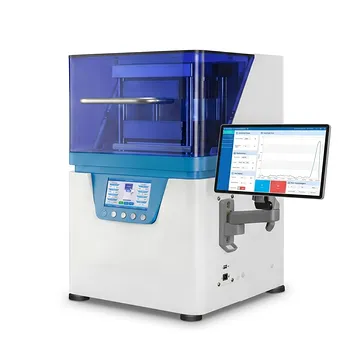
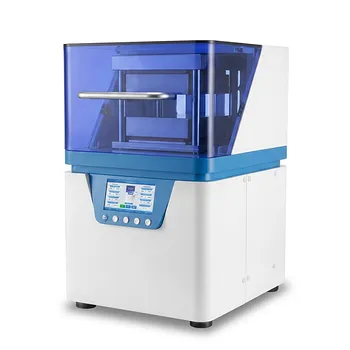
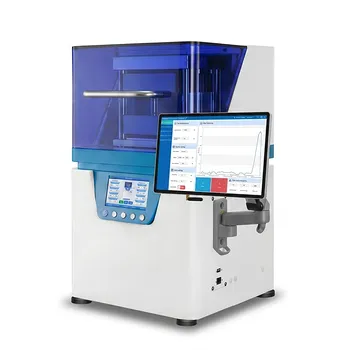
- Automatic High Temperature Heated Hydraulic Press Machine with Heated Plates for Lab
- Automatic Hydraulic Hot Press with Large Plate and Precision Temperature Control for Advanced Material Sample Preparation and Industrial Research
- Automatic Heated Hydraulic Lab Press with Programmable Touch Screen Controls and Precision Temperature Regulation
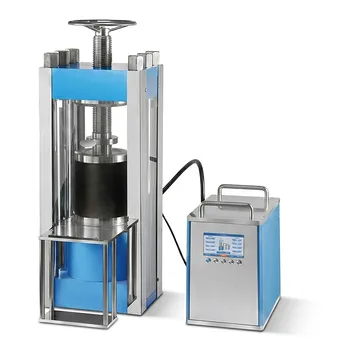
- 24T 30T 60T Heated Hydraulic Lab Press Machine with Hot Plates for Laboratory
- Automatic Hydraulic Heat Press Machine with Multi Stage Programmable Control and Integrated Water Cooling Plate Size 180x180mm
People Also Ask
- Function of a Laboratory Hydraulic Press with Heated Platens in SSE? Enhance Battery Density & Conductivity
- How does a laboratory heated hydraulic press facilitate PBN sample prep for WAXS? Achieve Precise X-Ray Scattering
- What are the requirements for electrode pressing with high-viscosity ionic liquids like EMIM TFSI? Optimize Performance
- What are the industrial applications of heated hydraulic presses? Master Heat & Force for Precision Manufacturing
- Why is a laboratory hydraulic press with heating plates required for PLA/TEC films? Achieve Precise Sample Integrity