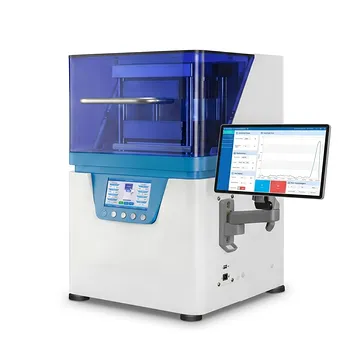
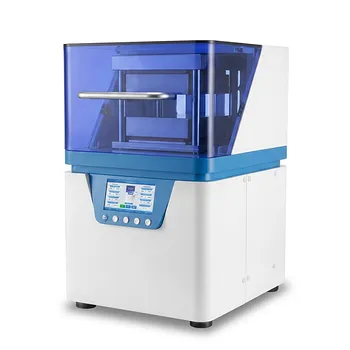
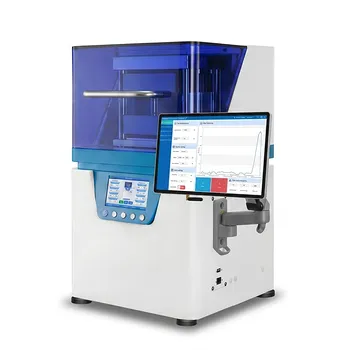
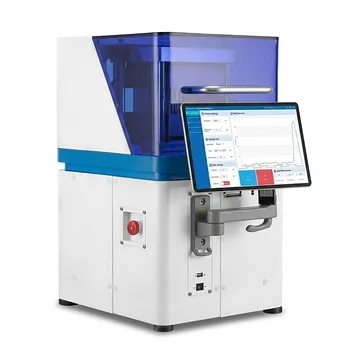
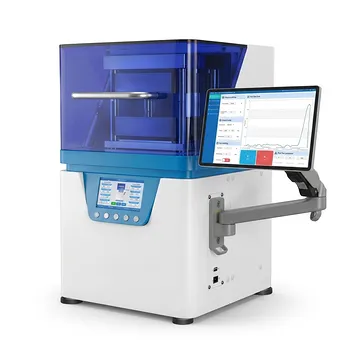
Adding a heating element to a hydraulic press transforms it from a purely mechanical tool into a sophisticated system for thermal processing. This modification allows you to manipulate materials that require elevated temperatures to change state or properties, enabling operations such as melting, curing, and bonding that are impossible with pressure alone.
Core Takeaway While a standard hydraulic press provides force for shaping, a heated press adds the thermodynamic energy required to synthesize and fuse materials. This addition is the critical differentiator for working with thermoplastics, composites, and adhesives, significantly expanding the machine's utility beyond cold forming.
Unlocking Advanced Material Processing
Beyond Mechanical Force
A standard hydraulic press is limited to applying mechanical pressure to deform or compact a sample. By integrating a heating element, you gain the ability to facilitate chemical and physical changes within the material structure.
Critical Operations: Melting and Curing
According to technical specifications, the primary advantage of this addition is the ability to melt and cure. This is essential for converting powders into solid forms or setting thermosetting plastics that require heat to crosslink and harden.
Bonding Capabilities
Heat enables the bonding of distinct materials. Under simultaneous heat and pressure, laminates and composites can be fused together to create unified, high-strength structures.
Expanding Operational Versatility
A Broader Material Library
The inclusion of heat significantly expands the range of materials you can process. You are no longer restricted to materials that are malleable at room temperature; you can now work with rigid polymers and advanced composites that require thermal softening.
Retaining Precision with Added Complexity
Even with the addition of thermal elements, the system retains the fundamental benefits of a hydraulic press. You still benefit from precise control over force and direction, ensuring that the thermal processing does not compromise dimensional accuracy.
Efficiency in Sample Preparation
For laboratory applications, combining heat and pressure in a single unit streamlines workflow. It eliminates the need to move samples between a separate oven and a press, maintaining the high-speed and high-volume advantages inherent to hydraulic systems.
Understanding the Trade-offs
Increased Operational variables
Adding a heating element introduces a new variable—temperature—that must be controlled as strictly as pressure. This requires more attention to the setup to ensure consistent results across different samples.
Safety and Maintenance Implications
While hydraulic presses are noted for being safe and low-maintenance, the addition of thermal elements introduces burn hazards and electrical complexity. The safety features mentioned in general press designs (such as overload protection) become even more vital when high temperatures are involved.
Making the Right Choice for Your Goal
To determine if a heated hydraulic press is necessary for your specific application, consider the following:
- If your primary focus is cold forming or crushing: A standard press offers the most cost-effective solution, providing high force and precision without the complexity of thermal controls.
- If your primary focus is material synthesis or composites: A heated press is mandatory, as you require the capability to melt, cure, or bond materials to achieve specific physical properties.
The addition of a heating element is not merely an upgrade; it is a functional necessity for any professional looking to bridge the gap between simple mechanical shaping and complex material engineering.
Summary Table:
| Feature | Standard Hydraulic Press | Heated Hydraulic Press |
|---|---|---|
| Primary Mechanism | Mechanical Pressure Only | Pressure + Thermodynamic Energy |
| Material Compatibility | Malleable metals, powders | Thermoplastics, composites, resins |
| Key Processes | Cold forming, crushing | Melting, curing, laminating, bonding |
| Workflow | Basic mechanical shaping | Integrated synthesis & engineering |
| Control Variables | Force & Displacement | Force, Displacement, & Temperature |
Elevate Your Material Research with KINTEK Precision
Don’t let temperature limitations stall your innovation. KINTEK specializes in comprehensive laboratory pressing solutions, offering manual, automatic, heated, multifunctional, and glovebox-compatible models, alongside advanced cold and warm isostatic presses. Whether you are advancing battery research or developing high-strength composites, our heated presses provide the thermal stability and pressure precision your lab requires.
Ready to transform your sample preparation? Contact our technical experts today to find the perfect pressing solution tailored to your specific research goals.
Related Products
- Heated Hydraulic Press Machine with Heated Plates for Vacuum Box Laboratory Hot Press
- Automatic High Temperature Heated Hydraulic Press Machine with Heated Plates for Lab
- Automatic Heated Hydraulic Lab Press with Programmable Touch Screen Controls and Precision Temperature Regulation
- Automatic Hydraulic Heat Press Machine with Multi Stage Programmable Control and Integrated Water Cooling Plate Size 180x180mm
- Automatic Hydraulic Hot Press with Large Plate and Precision Temperature Control for Advanced Material Sample Preparation and Industrial Research
People Also Ask
- What are the requirements for electrode pressing with high-viscosity ionic liquids like EMIM TFSI? Optimize Performance
- How does a laboratory heated hydraulic press facilitate PBN sample prep for WAXS? Achieve Precise X-Ray Scattering
- What are the industrial applications of heated hydraulic presses? Master Heat & Force for Precision Manufacturing
- Function of a Laboratory Hydraulic Press with Heated Platens in SSE? Enhance Battery Density & Conductivity
- How are heated hydraulic presses utilized in the preparation of thin films? Key Mechanisms and Applications