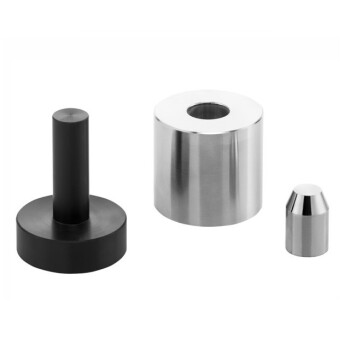
The primary purpose of utilizing high-sealing stainless steel test cells is to ensure environmental integrity while evaluating how batteries react to extreme heat. These specialized cells are designed to withstand significant internal pressure and prevent the escape of volatile components, allowing researchers to observe the chemical shutdown process without the interference of leaks or structural failure.
By maintaining a hermetically sealed, high-pressure environment, these test cells allow for the precise identification of the thermal shutdown point in fully charged batteries, ensuring data accuracy and researcher safety.
The Mechanics of Containment
Withstanding Internal Pressure
During thermal shutdown evaluations, chemical reactions within the battery accelerate rapidly. This process generates gases and significantly increases internal pressure.
Stainless steel test cells provide the necessary structural rigidity to contain this pressure. This prevents the cell from rupturing, which is critical for maintaining a controlled testing environment.
Preventing Solvent Evaporation
Electrolyte solvents are highly volatile and prone to evaporation at the high temperatures required for these tests. If the solvent evaporates, the internal chemistry of the battery changes, invalidating the test results.
The high-sealing capability of these cells ensures that the electrolyte remains contained. This preserves the chemical composition of the battery up until the moment of shutdown.
Ensuring Data Integrity
Monitoring Voltage Under Load
To understand thermal behavior accurately, researchers must test batteries that are fully charged. This presents a high energy risk if containment fails.
These cells allow researchers to safely monitor Open-Circuit Voltage (OCV) changes throughout the heating process. Because the physical structure is secure, data collection can continue uninterrupted even as the battery approaches critical failure points.
Precise Identification of Triggers
The ultimate goal of this testing is to find the exact moment and temperature at which thermal shutdown occurs.
By eliminating variables such as electrolyte loss or pressure leakage, the test cell isolates the thermal response. This allows researchers to pinpoint the specific conditions that trigger the safety shutdown mechanism.
Understanding the Trade-offs
The Necessity of Robust Sealing
While these cells are essential for safety, their effectiveness relies entirely on the quality of the seal. If the "high-sealing" aspect is compromised even slightly, the high-pressure buildup becomes a liability rather than a control measure.
Simulation vs. Reality
It is important to recognize that a rigid stainless steel cell behaves differently than a flexible commercial pouch cell. These test cells prevent the mechanical swelling that might occur in a real-world application, focusing the data strictly on internal pressure and chemical behavior rather than mechanical deformation.
Making the Right Choice for Your Goal
To ensure your thermal evaluations yield actionable data, consider the following regarding your testing setup:
- If your primary focus is Safety and Containment: Prioritize cells with verified high-pressure resistance to prevent rupture during the aggressive chemical reactions of a thermal shutdown.
- If your primary focus is Chemical Accuracy: Ensure the airtightness of the cell is absolute to prevent solvent evaporation, which would otherwise skew your voltage data and shutdown timing.
High-sealing stainless steel cells are not just containers; they are precision instruments that enable the safe observation of volatile chemical limits.
Summary Table:
| Feature | Purpose in Thermal Shutdown Testing | Benefit to Research |
|---|---|---|
| High-Sealing Design | Prevents volatile electrolyte solvent evaporation | Maintains chemical consistency for accurate shutdown data |
| Stainless Steel Body | Provides structural rigidity against internal gas pressure | Prevents rupture and ensures researcher safety during failure |
| Pressure Containment | Isolates thermal response from environmental leaks | Pinpoints exact triggers of the safety shutdown mechanism |
| OCV Monitoring | Tracks voltage changes in fully charged states | Enables continuous data collection under high energy loads |
Optimize Your Battery Research with KINTEK Precision
Ensure the integrity of your thermal safety evaluations with laboratory solutions designed for extreme conditions. KINTEK specializes in comprehensive laboratory pressing and testing solutions, offering manual, automatic, heated, and glovebox-compatible models, as well as specialized isostatic presses for advanced battery research.
Our high-pressure containment solutions help you:
- Ensure Researcher Safety: Withstand aggressive chemical reactions and internal pressure.
- Guarantee Data Accuracy: Prevent solvent loss for precise chemical analysis.
- Standardize Testing: Achieve repeatable results across all battery chemistry profiles.
Ready to elevate your lab's testing capabilities? Contact KINTEK today to find the perfect press or test cell solution!
References
- Arnab Ghosh, De‐Yi Wang. Deciphering a New Electrolyte Formulation for Intelligent Modulation of Thermal Runaway to Improve the Safety of Lithium‐Ion Batteries. DOI: 10.1002/adfm.202502761
This article is also based on technical information from Kintek Solution Knowledge Base .
Related Products
People Also Ask
- How does a sealed battery mold facilitate the assembly and testing of asymmetric supercapacitors using VO2?
- Why use standardized CR2032 components & high-precision presses? Ensure reliability in lithium metal battery research.
- Why is a laboratory battery sealing press essential for desolvation energy testing? Ensure Reliable Kinetic Data
- What is the function of specialized battery molds and sealing consumables? Optimize Your In-situ XRD Testing Today
- What role does a laboratory sealing press play in thermal analysis of solid dispersion films? Ensure Data Integrity