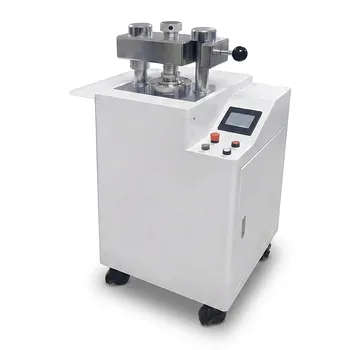
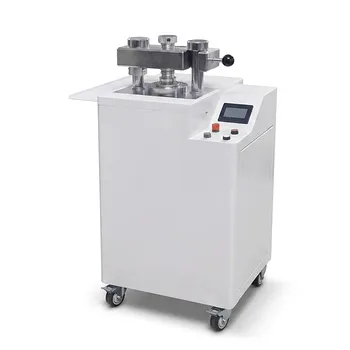
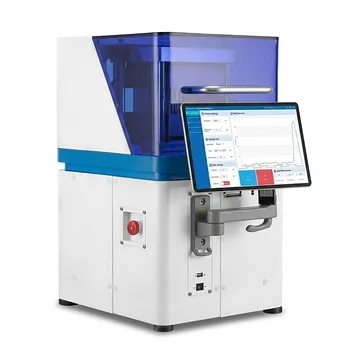
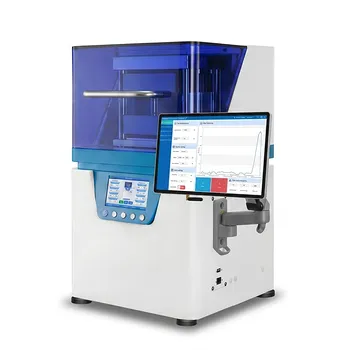
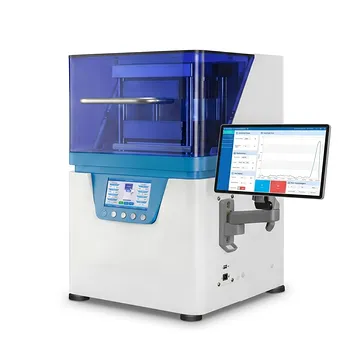
In biological research, lab pellet presses act as a critical preparation tool that transforms raw organic matter into standardized forms for analysis. They are specifically engineered to compress materials like biological tissues, cellular structures, and microbial cultures into compact, uniform samples.
Core Takeaway: The value of a lab pellet press lies in standardization. By converting variable biological samples into homogeneous pellets with smooth surfaces, these devices eliminate physical irregularity as a variable, ensuring precise and reproducible data during spectral and diffraction analyses.
The Science of Sample Preparation
Creating Uniformity from Complexity
Biological samples are inherently variable in shape and density. Lab pellet presses mitigate this by using high pressure to create compact, uniform samples.
This uniformity is essential for minimizing artifacts during analysis. A smooth, homogeneous surface ensures that the detector reads the chemical composition of the sample, rather than surface irregularities.
Enabling Advanced Analytical Techniques
Once prepared, these pellets are the primary input for sophisticated analytical methods.
The primary reference highlights their use in infrared spectroscopy and X-ray diffraction. Supplementary data indicates their utility in X-ray fluorescence as well. Without the high-quality pellet produced by the press, these sensitive instruments cannot yield accurate or comparable data.
Key Applications Across Disciplines
Plant Physiology and Microbiology
In fields like plant physiology and microbiology, researchers must analyze the chemical makeup of organic structures.
The press allows for the consistent preparation of plant tissues or microbial cultures. This ensures that comparative studies between different organisms or growth conditions remain valid.
Biochemistry and Drug Discovery
In biochemistry and pharmaceutical research, the press plays a vital role in high-throughput screening.
When screening potential drug compounds, sample consistency is vital for reliable data. The ability to rapidly produce uniform pellets allows researchers to process large volumes of samples without sacrificing precision.
Understanding the Trade-offs and Equipment
Manual vs. Automatic Operation
Lab pellet presses are available in manual and automatic models.
Manual presses offer precision and control for lower-volume, high-sensitivity work, often serving as a cost-effective solution for academic settings. Automatic models suit high-throughput environments like drug discovery but require a higher initial investment.
Durability and Construction
The reliability of these tools depends on their construction.
High-quality presses utilize heavy-duty hydraulic systems and high tensile steel tie rods. While this robust construction ensures longevity and consistent pressure, it also means the equipment can be heavy and requires dedicated bench space.
Making the Right Choice for Your Goal
To select the correct pellet press for your laboratory, assess your throughput requirements and specific analytical needs.
- If your primary focus is High-Throughput Screening: Prioritize automatic models to ensure speed and consistency across large batches of pharmaceutical or biochemical samples.
- If your primary focus is Academic or Basic Research: A manual hydraulic press provides the necessary precision and tactile control for preparing delicate tissue or culture samples at a lower cost.
- If your primary focus is Versatility: Look for customizable benchtop models that can handle various die sizes to accommodate different sample volumes and experimental constraints.
Consistent sample preparation is the invisible foundation of reliable biological data.
Summary Table:
| Feature | Manual Pellet Press | Automatic Pellet Press |
|---|---|---|
| Primary Use | Academic & basic research | High-throughput screening (e.g., drug discovery) |
| Control | High precision & tactile feedback | Automated consistency across large batches |
| Investment | Cost-effective | Higher initial capital expenditure |
| Applications | Plant physiology, tissue analysis | Biochemistry, large-scale pharmaceutical testing |
| Durability | Heavy-duty hydraulic/steel build | Robust automated hydraulic systems |
Elevate Your Biological Research with KINTEK Precision
Don't let sample irregularity compromise your analytical results. KINTEK specializes in comprehensive laboratory pressing solutions, offering manual, automatic, heated, multifunctional, and glovebox-compatible models designed to transform biological tissues and microbial cultures into perfect, homogeneous pellets.
Whether you are conducting delicate plant physiology studies or high-throughput drug screening, our cold and warm isostatic presses provide the uniformity required for precise infrared spectroscopy and X-ray diffraction.
Ready to standardize your sample preparation? Contact us today to discover how KINTEK’s advanced pressing technology can bring unparalleled accuracy to your laboratory's workflow.
Related Products
- Automatic Fluorescence Sample Preparation Press 40 Ton Lab Pellet Press for XRF Analysis
- Automatic Laboratory Hydraulic Press Lab Pellet Press Machine
- Laboratory Hydraulic Press 2T Lab Pellet Press for KBR FTIR
- Laboratory Hydraulic Pellet Press for XRF KBR FTIR Lab Press
- Laboratory Hydraulic Press Lab Pellet Press Machine for Glove Box
People Also Ask
- What is the general process for preparing a sample pellet for XRF? Master Consistency for Accurate Analysis
- What are the advantages of preparing a sample as a dense pellet for XRF? Unlock High-Precision Trace Element Analysis
- What are the common operational types of lab pellet presses? Choosing the Right Manual, Automatic, or Hydraulic System
- What are the emerging trends in the design and materials of lab pellet presses? Modernize Your Lab Efficiency
- What are common lab pellet press issues? Expert Troubleshooting Guide for Reliable Material Research