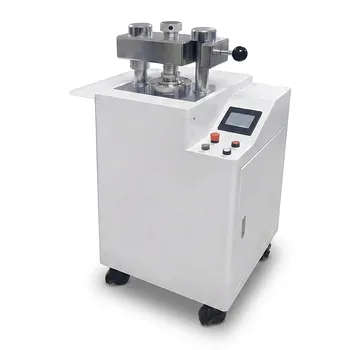
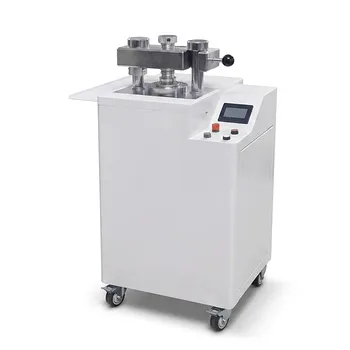
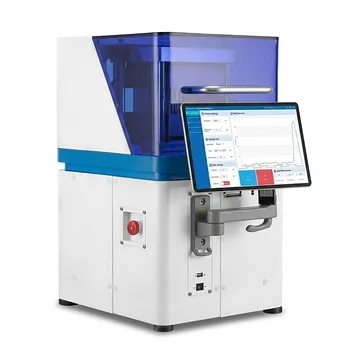
Technological evolution in the laboratory is driving a shift from simple mechanical devices to intelligent, integrated systems. The key future trends in lab pellet press technology are defined by automation and digital integration, precision engineering for analytical accuracy, the development of compact, portable designs, and a renewed focus on sustainability and advanced materials.
Core Insight The future of pellet press technology is not just about applying force; it is about repeatability and connectivity. Modern presses are evolving into smart, data-driven instruments that integrate seamlessly into laboratory workflows while minimizing their physical and environmental footprint.
The Rise of Smart Automation and Integration
Digital Control and Data Logging
The most significant shift is the move toward automation and digital integration. Automated presses reduce the reliance on manual labor, minimizing operator fatigue and variability.
Digital control systems allow for precise adjustments and automatic data logging. This ensures every pressing cycle is recorded, which is critical for maintaining audit trails and quality control in regulated environments.
Seamless Laboratory Workflows
Future devices are being designed to integrate with other laboratory equipment. This connectivity allows for seamless workflows where data and sample information flow directly from the press to analytical instruments.
Redefining Hardware: Compactness and Durability
Compact and Portable Designs
To address space constraints in modern labs, manufacturers are prioritizing benchtop models. These compact designs deliver high performance without occupying valuable floor space.
Portability is also a growing focus. These lighter, smaller units are increasingly suitable for fieldwork, allowing researchers to prepare samples on-site rather than transporting raw materials back to a central lab.
Advanced Materials and Coatings
The physical construction of presses is evolving through the use of high-strength alloys and wear-resistant coatings. These materials significantly improve the durability of the machine.
By resisting wear and corrosion, these advanced components extend the lifespan of the press and reduce the frequency of maintenance requirements.
Precision Engineering for Analytical Accuracy
Uniformity for Spectroscopy
Precision engineering is driven by the stringent requirements of analytical techniques like X-ray fluorescence (XRF) and infrared spectroscopy (IR).
Because pellet quality directly influences analytical results, modern presses focus on producing highly uniform pellets. This consistency ensures that variations in data are due to the sample itself, not the preparation method.
Customization and Adaptability
One size rarely fits all in advanced research. Trends favor customizable features, such as interchangeable die sizes and variable pressure settings.
This adaptability allows a single unit to handle diverse sample types and preparation protocols, making the equipment more versatile for multi-disciplinary labs.
Sustainability and Efficiency
Energy-Efficient Operation
Sustainability is influencing design through the use of energy-saving components. Modern presses are engineered with optimized operational cycles that consume less power during use and standby modes.
Recyclable Construction
There is a growing emphasis on using recyclable materials in the manufacturing of the presses themselves. This aligns laboratory equipment procurement with broader organizational green initiatives.
Understanding the Trade-offs
While these trends offer significant benefits, they introduce new considerations for the buyer.
- Complexity vs. Maintainability: Highly automated, digital presses contain complex electronics. Unlike simple manual hydraulic presses, they may require specialized technical support or software updates rather than basic mechanical maintenance.
- Initial Investment: Features like digital integration, advanced alloys, and automation typically command a higher upfront cost compared to traditional manual units.
- Space vs. Capacity: While compact designs save space, they may have lower total force capacities compared to massive floor-standing units. You must ensure a benchtop model can meet your specific tonnage requirements.
Making the Right Choice for Your Goal
The "best" trend to follow depends entirely on your laboratory's specific output requirements.
- If your primary focus is Analytical Accuracy (XRF/IR): Prioritize Precision Engineering and automation to ensure every pellet is identical, eliminating sample preparation as a variable in your data.
- If your primary focus is Field Research or Small Labs: Focus on Compact and Portable Designs that offer high tonnage in a benchtop footprint.
- If your primary focus is High-Volume Throughput: Invest in Automation and Digital Integration to reduce operator labor and increase the speed of sample processing.
Ultimately, the ideal modern pellet press is one that balances physical durability with the digital intelligence required for reproducible science.
Summary Table:
| Trend Category | Key Feature | Primary Benefit |
|---|---|---|
| Automation | Digital control & data logging | Improved repeatability & audit trails |
| Design | Benchtop & portable models | Space efficiency & field research capability |
| Engineering | High-strength alloys & coatings | Extended equipment lifespan & durability |
| Precision | Uniform pellet production | Higher accuracy for XRF/IR spectroscopy |
| Sustainability | Energy-efficient cycles | Reduced power consumption & green compliance |
Elevate Your Research with KINTEK Precision Solutions
Stay ahead of technological trends with KINTEK, your partner in advanced laboratory pressing. Whether you are conducting cutting-edge battery research or routine spectroscopy, we offer a comprehensive range of solutions tailored to your needs:
- Versatile Hardware: Choose from manual, automatic, heated, and multifunctional models.
- Specialized Applications: Glovebox-compatible designs and high-performance Isostatic Presses (Cold and Warm).
- Reliable Results: Achieve the ultimate uniformity and repeatability required for modern analytical science.
Ready to modernize your lab workflow? Contact KINTEK today to discuss how our laboratory pressing solutions can enhance your efficiency and precision.
Related Products
- Automatic Fluorescence Sample Preparation Press 40 Ton Lab Pellet Press for XRF Analysis
- Automatic Laboratory Hydraulic Press Lab Pellet Press Machine
- Laboratory Hydraulic Press 2T Lab Pellet Press for KBR FTIR
- Laboratory Hydraulic Pellet Press for XRF KBR FTIR Lab Press
- Laboratory Hydraulic Press Lab Pellet Press Machine for Glove Box
People Also Ask
- What is the general process for preparing a sample pellet for XRF? Master Consistency for Accurate Analysis
- What are the advantages of preparing a sample as a dense pellet for XRF? Unlock High-Precision Trace Element Analysis
- What are the common operational types of lab pellet presses? Choosing the Right Manual, Automatic, or Hydraulic System
- What are the emerging trends in the design and materials of lab pellet presses? Modernize Your Lab Efficiency
- What are common lab pellet press issues? Expert Troubleshooting Guide for Reliable Material Research