Pouch cell assembly acts as the definitive bridge between theoretical laboratory results and practical application. It serves as a comprehensive validation step that subjects the PHMS electrolyte to realistic mechanical stresses and operational conditions to verify its safety and stability in a commercially relevant form factor.
While laboratory data confirms chemical properties, pouch cell testing is essential to prove physical viability. It verifies that the electrolyte can withstand the bending, folding, and puncturing inherent in real-world usage without sacrificing electrochemical performance.
Validating Mechanical Integrity
Simulating Real-World Deformation
Laboratory coin cells are rigid and protected, shielding the electrolyte from physical stress. However, practical applications often require flexibility.
Pouch cell assembly simulates extreme mechanical stresses, including bending, folding, and twisting. This process determines if the PHMS electrolyte acts as a functional membrane or if it cracks under pressure.
Ensuring Interfacial Stability
A major failure point in flexible batteries is the separation of layers during movement.
Testing in a pouch format verifies the interfacial stability between the electrolyte and the electrodes. It ensures the PHMS maintains continuous contact and ionic conductivity even when the cell is subjected to complex deformations.
Assessing Operational Safety and Performance
The Critical Safety Check
Safety is the paramount concern when scaling up from milligram-level lab samples.
Pouch cells allow for rigorous abuse testing, such as puncture tests. This evaluates the electrolyte's ability to prevent short circuits and thermal runaway when the battery's physical integrity is compromised.
Maintaining High Current Densities
Scaling up dimensions often reveals performance bottlenecks that small cells hide.
This evaluation phase tests the material's potential to maintain high current densities in a larger format. It proves whether the PHMS electrolyte can sustain power output under real-world operating conditions, rather than just in ideal, low-load lab settings.
Understanding the Trade-offs
Process Complexity vs. Data Value
Moving to pouch cell assembly significantly increases the complexity of your testing. Unlike simple coin cells, pouch cells require precise stacking, tab welding, and vacuum sealing.
Material Consumption
This phase requires a much larger volume of PHMS electrolyte. If your synthesis method is not yet scalable or expensive, high-volume pouch cell testing may be premature before refining the synthesis process.
Making the Right Choice for Your Goal
Pouch cell assembly is not always the immediate next step; it is a specific tool for specific maturity levels.
- If your primary focus is fundamental chemical characterization: Stick to coin cells to conserve material and isolate variables without the noise of mechanical stress.
- If your primary focus is proving commercial viability: You must transition to pouch cells to validate safety, mechanical robustness, and performance under deformation.
True confidence in a PHMS electrolyte comes not just from its chemistry, but from its ability to survive the physical reality of the application.
Summary Table:
| Evaluation Metric | Coin Cell Testing | Pouch Cell Testing |
|---|---|---|
| Primary Focus | Fundamental chemical properties | Commercial viability & mechanical robustness |
| Mechanical Stress | Rigid, protected environment | Simulates bending, folding, and twisting |
| Safety Validation | Limited thermal/abuse data | Comprehensive puncture and short-circuit tests |
| Interfacial Stability | Static electrode contact | Dynamic stability under deformation |
| Material Required | Minimal (milligram-level) | High (required for larger form factors) |
| Complexity | Simple assembly | Advanced (stacking, welding, vacuum sealing) |
Elevate Your Battery Research with KINTEK Precision Solutions
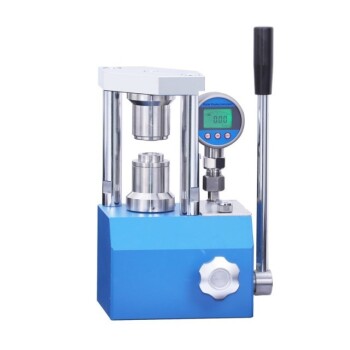
Transitioning from coin cells to pouch cell assembly is a critical step in proving the commercial viability of your PHMS electrolytes. KINTEK specializes in comprehensive laboratory pressing solutions designed to facilitate this transition. Whether you require manual or automatic presses for electrode preparation, heated systems for lamination, or glovebox-compatible models for sensitive assembly, we provide the tools to ensure interfacial stability and mechanical integrity.
From high-performance battery research to cold and warm isostatic presses, KINTEK offers the scalability and precision your lab needs to maintain high current densities and safety standards. Contact KINTEK today to find the perfect press for your pouch cell assembly workflow!
References
- Yunpeng Qu, Fangyuan Hu. Modulation of lithium ion transport kinetics in polymer-based electrolytes by defect engineering for ultralong-cycle solid-state lithium metal batteries. DOI: 10.1039/d5eb00152h
This article is also based on technical information from Kintek Solution Knowledge Base .
Related Products
- Lab Button Battery Tablet Press Sealing Mold
- Button Battery Sealing Press Machine for Lab
- Button Battery Sealing Machine for Button Batteries
- Lab Button Battery Disassembly and Sealing Mold
People Also Ask
- How does a sealed battery mold facilitate the assembly and testing of asymmetric supercapacitors using VO2?
- Why use standardized CR2032 components & high-precision presses? Ensure reliability in lithium metal battery research.
- Why is a laboratory battery sealing press essential for desolvation energy testing? Ensure Reliable Kinetic Data
- What is the function of specialized battery molds and sealing consumables? Optimize Your In-situ XRD Testing Today
- What role does a laboratory sealing press play in thermal analysis of solid dispersion films? Ensure Data Integrity