The primary commercial driver for isostatic pressing is significant cost reduction. This process allows manufacturers to form product shapes to precise tolerances, often achieving "near-net" shape immediately after pressing. By hitting these precise dimensions early, you significantly reduce or eliminate the need for subsequent, costly machining operations.
The commercial viability of isostatic pressing relies on its ability to produce highly uniform, precise components that require minimal finishing, thereby cutting down on labor, tooling, and material waste.
The Mechanics of Uniformity
Omni-Directional Pressure
The core principle involves confining powder within a flexible membrane or hermetic container. A pressurizing medium, either liquid or gas, applies force equally from all directions. This ensures that the compaction is consistent throughout the entire geometry of the part.
Eliminating Friction
Unlike uniaxial cold pressing, isostatic pressing removes die-wall friction from the equation. In traditional methods, friction creates uneven density gradients that can lead to structural weaknesses. By eliminating this friction, isostatic pressing achieves a uniform density distribution that uniaxial methods cannot match.
Quality and Process Efficiency
Superior Density and Integrity
The process works by systematically reducing the porosity of powder mixtures. Because the pressure is uniform, the resulting components—such as billets or preforms—exhibit high integrity with minimal risk of distortion or cracking upon firing.
Simplified Sintering
The uniformity achieved during pressing leads to predictable compression during the sintering phase. Furthermore, because die-wall lubricants are unnecessary, manufacturers avoid the common defects and processing steps associated with lubricant removal.
Handling Complex Materials
This method is particularly effective for brittle or fine powders, which are notoriously difficult to work with using standard pressing. It allows for the creation of complex shapes without the defects typically caused by uneven pressure gradients.
Understanding the Trade-offs
Process Suitability
While isostatic pressing excels at creating complex, high-density parts, it is a specific tool for specific needs. It is most valuable when the cost of machining or the risk of material failure outweighs the operational setup of the pressure vessels.
Tooling Considerations
The process relies on flexible membranes and hermetic containers rather than rigid dies. While this enables the formation of complex geometries, it requires a different approach to tooling design compared to the rigid molds used in uniaxial pressing.
Determining Fit for Your Manufacturing Process
To decide if isostatic pressing is the right solution for your production line, consider your specific constraints:
- If your primary focus is Cost Reduction: Leverage this process to achieve near-net shapes, drastically cutting the budget required for post-press machining.
- If your primary focus is Component Integrity: Use this method to eliminate density gradients and prevent cracking in high-performance or brittle materials.
- If your primary focus is Geometry: Adopt this approach for complex shapes where uniform internal density is critical for the part's final application.
By eliminating friction and ensuring uniform compaction, isostatic pressing turns complex powder metallurgy into a predictable, cost-effective manufacturing solution.
Summary Table:
| Feature | Isostatic Pressing Benefit | Commercial Impact |
|---|---|---|
| Pressure Application | Omni-directional (Equal from all sides) | Uniform density and structural integrity |
| Friction Control | Eliminates die-wall friction | No density gradients or internal weaknesses |
| Shape Capability | Near-net shape formation | Drastic reduction in post-process machining |
| Material Efficiency | No lubricants needed / minimal waste | Lower material costs and simplified sintering |
| Powder Suitability | Ideal for brittle or fine powders | Expands product range and material options |
Optimize Your Lab’s Production with KINTEK Pressing Solutions
Are you looking to reduce material waste and eliminate costly machining in your research? KINTEK specializes in comprehensive laboratory pressing solutions designed for precision and efficiency. Whether you are advancing battery research or developing high-performance ceramics, our range of manual, automatic, heated, multifunctional, and glovebox-compatible models, alongside our advanced cold (CIP) and warm isostatic presses, ensures the perfect fit for your specific application.
Partner with KINTEK to achieve superior component integrity and cost-effective manufacturing.
Related Products
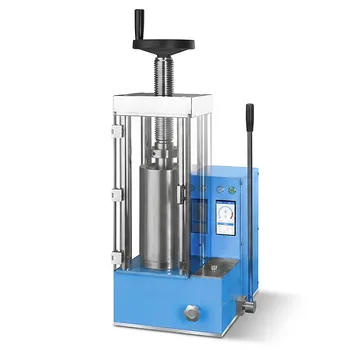
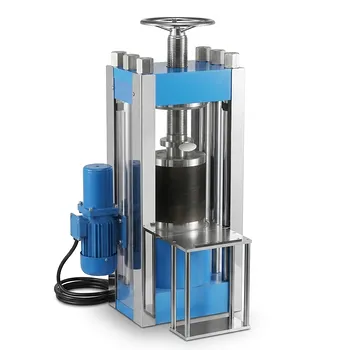
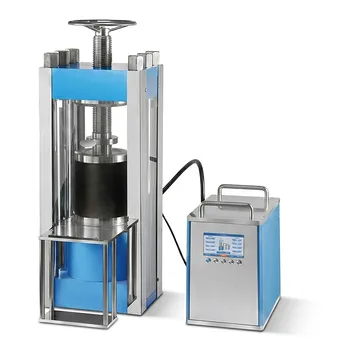
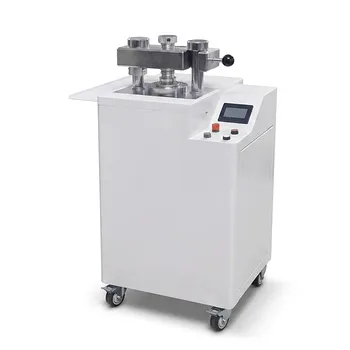
- Electric Isostatic Pressing Machine 40 Tons Automatic Laboratory Powder Compacting Press
- Warm Isostatic Press for Solid State Battery Research Warm Isostatic Press
- Split Warm Isostatic Lab Press 200 Ton Powder Compaction Chamber for Battery Research and Material Science
- Electric Lab Cold Isostatic Press CIP Machine
- Split Hot Isostatic Pressing Machine 150 Ton Laboratory Heated Isostatic Press
People Also Ask
- What are the key characteristics of the isostatic pressing process? Unlock Uniform Density and Complex Geometries
- Why is vacuum-sealed packaging necessary before isostatic pressing of CuPc thin films? Protect Integrity & Uniformity
- How is pressure applied to the material during isostatic pressing? Master Uniform Density and Complex Geometries
- How does pressure distribute during isostatic pressing of aluminum? Achieve Uniform Density for Your Lab Materials
- What are the applications of isostatic pressing in the automotive industry? Precision Manufacturing for High-Performance Parts