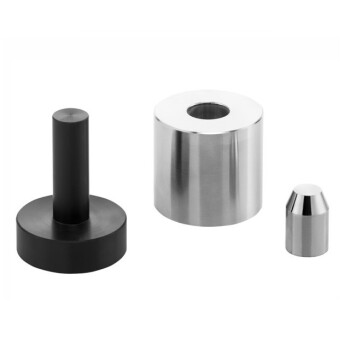
A high-precision laboratory press machine serves as the foundational tool for standardizing the physical architecture of lithium-sulfur cathodes.
It functions by applying uniform, controlled pressure to the sulfur cathode coating through rolling or compaction. This mechanical process allows researchers to precisely dictate the porosity and thickness of the electrode, transforming a loose coating into a cohesive, high-performance component ready for assembly.
Core Takeaway: By optimizing the physical interface between active materials and the current collector, the laboratory press minimizes contact resistance and maximizes structural consistency. This ensures that subsequent testing data regarding rate performance and cycling stability reflects the true chemistry of the materials, rather than inconsistencies in manufacturing.
Optimizing the Physical Structure
The performance of a lithium-sulfur battery is heavily dependent on the microscopic structure of its cathode. The laboratory press acts as the architect of this structure.
Precise Control of Porosity
The press regulates the void spaces within the electrode material.
If an electrode is too porous, electrical contact is weak; if it is too dense, electrolyte cannot penetrate. The laboratory press applies the exact pressure needed to balance these factors, ensuring sufficient electrolyte infiltration while maintaining structural integrity.
Controlling Thickness and Uniformity
Consistency is critical for reliable data.
The machine ensures the electrode layer achieves a uniform thickness across the entire current collector. This creates a flat, even surface that is fundamental for repeatable electrochemical performance tests.
Increasing Compaction Density
By rearranging and tightly squeezing the coated particles, the press increases the material's compaction density.
This directly translates to higher volumetric energy density and capacity per unit area, allowing the battery to store more energy within the same physical footprint.
Enhancing Electrical Conductivity
Lithium-sulfur batteries face a specific challenge: sulfur is naturally insulating. Therefore, establishing a robust conductive network is paramount.
Reducing Interfacial Contact Resistance
The primary role of the press in this context is to force the active materials into tight physical contact with the current collector (typically foil).
This mechanical pressure minimizes the gap between components, significantly reducing interfacial contact resistance. This allows electrons to flow freely from the chemical reaction sites to the external circuit.
Strengthening Particle-to-Particle Connection
Beyond the current collector, the press compacts the active sulfur materials, conductive agents, and binders together.
This compression reduces "tunnel resistance" between carbon particles and creates continuous electronic conduction paths. It ensures that the conductive network remains intact even during the stress of cycling.
Ensuring Data Reliability
In a research setting, the validity of your data is only as good as the consistency of your sample preparation.
Eliminating Manufacturing Variables
Without precise compaction, electrodes from the same batch might perform differently due to variations in density or contact.
A high-precision press removes this variable. By guaranteeing electrode consistency, it ensures that any changes in rate performance or cycling stability are due to the material chemistry, not the preparation method.
Understanding the Trade-offs
While compaction is necessary, it requires a delicate balance that only a high-precision machine can achieve.
The Risk of Over-Compaction
Applying excessive pressure can close off the pores entirely.
This prevents the electrolyte from "wetting" the active material efficiently, which stifles ion transport and degrades the battery's rate performance.
The Risk of Under-Compaction
Insufficient pressure leads to loose particle contact.
This results in high internal resistance and poor mechanical adhesion, causing the active material to delaminate or detach from the current collector during cycling.
Making the Right Choice for Your Goal
The pressure settings you choose should align with the specific performance metrics you are trying to optimize for your lithium-sulfur cells.
- If your primary focus is Energy Density: Prioritize higher compaction pressure to maximize the capacity per unit area and volumetric density, ensuring the most active material is packed into the space.
- If your primary focus is Rate Performance: Prioritize moderate pressure that optimizes porosity, ensuring maximum electrolyte wetting efficiency to facilitate rapid ion transport.
Ultimately, the laboratory press transforms a chemical mixture into a functional electrode, bridging the gap between theoretical material potential and real-world battery performance.
Summary Table:
| Parameter | Optimization Goal | Impact on Battery Performance |
|---|---|---|
| Porosity | Balanced electrolyte infiltration | Faster ion transport and rate performance |
| Compaction Density | Maximized active material volume | Higher volumetric energy density (Wh/L) |
| Thickness | Uniformity across current collector | Repeatable testing and consistent data |
| Contact Resistance | Tight physical interface | Enhanced electron flow and lower impedance |
| Conductive Network | Reinforced particle-to-particle contact | Improved cycling stability and material utilization |
Elevate Your Battery Research with KINTEK Precision
At KINTEK, we understand that high-performance lithium-sulfur batteries start with perfect electrode architecture. We specialize in comprehensive laboratory pressing solutions tailored for energy research, offering a versatile range of manual, automatic, heated, multifunctional, and glovebox-compatible models, alongside advanced cold and warm isostatic presses.
Our equipment empowers researchers to precisely control compaction density and porosity, eliminating manufacturing variables and ensuring your data reflects the true potential of your materials. Let us help you bridge the gap from chemical innovation to real-world performance.
Ready to optimize your cathode preparation? Contact KINTEK Experts Today
References
- Zhuangnan Li. Editor’s choice: Practice of electrochemical testing in lithium‒sulfur batteries. DOI: 10.1557/s43581-025-00135-4
This article is also based on technical information from Kintek Solution Knowledge Base .
Related Products
- Carbide Lab Press Mold for Laboratory Sample Preparation
- Lab Infrared Press Mold for Laboratory Applications
- Laboratory Hydraulic Press Lab Pellet Press Button Battery Press
- Lab Cylindrical Press Mold for Laboratory Use
- Automatic Laboratory Hydraulic Press for XRF and KBR Pellet Pressing
People Also Ask
- What is the purpose of incorporating cartridge heaters into a lab press mold for MLCC block compression? Optimize Results
- What is the function of a pressing tool in thermoplastic panels? Master Precision Shaping & Fusion Bonding
- Why is precise cooling management of the lab press mold necessary? Protect Core Integrity in Thermoforming
- How does the geometry of laboratory molds influence mycelium-based composites? Optimize Density and Strength
- What is the significance of standardized molds in lab presses? Ensure Precise Seal Material Evaluation