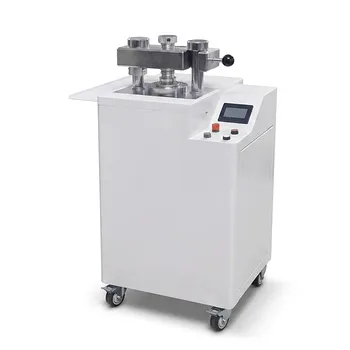
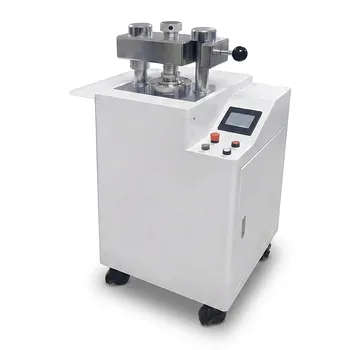
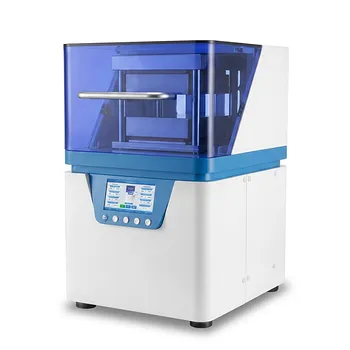
Addressing insufficient compaction pressure in a pellet press requires a systematic inspection of both the machine's hydraulic integrity and its operational settings. If your equipment fails to reach the preset pressure, the primary solutions involve checking the hydraulic system for leaks, replacing a failing hydraulic pump, or swapping out aging sealing elements.
Core Insight: Compaction failure is typically a symptom of hydraulic fatigue—such as worn seals or pump issues—but can also stem from external variables like uneven raw material distribution or incorrect parameter settings. Effective resolution requires diagnosing the power source (hydraulics) before adjusting the process.
Diagnosing Hydraulic System Failures
The most direct cause of pressure loss is usually found within the hydraulic unit itself. This system generates the force necessary for compaction.
Inspecting System Pressure
The hydraulic system provides the raw force for the press. If the pressure in the hydraulic system is insufficient, the ram cannot exert the required force on the material.
Begin by verifying the system's pressure gauge against the manufacturer's baseline.
Evaluating the Hydraulic Pump
The hydraulic pump is the heart of the machine. A hydraulic pump failure will result in a total inability to build or maintain pressure.
If the pump is making excessive noise or failing to move fluid efficiently, it likely requires immediate replacement.
Checking Sealing Elements
Hydraulic systems rely on a closed loop. Aging sealing elements (O-rings and gaskets) introduce micro-leaks that prevent the system from reaching peak pressure.
Inspect all visible seals for cracking or wear. Replacing these inexpensive components often restores full pressure capabilities.
Performing System Debugging
Hardware is not always the culprit. Sometimes the control logic or sensor feedback drifts.
Performing a system debugging or calibration ensures that the electronic controls are correctly commanding the hydraulic valves to close and pressurize.
Addressing Mechanical and Operational Factors
If the hydraulic system is healthy, the issue often lies in how the machine interacts with the material.
Verifying Parameter Settings
Incorrect inputs lead to poor output. Improper parameter settings may tell the machine to stop compression before the target density is reached.
Review your force and dwell time settings. Adjust these parameters to ensure the machine is programmed to apply sufficient force for the specific material being processed.
Assessing Raw Material Distribution
Pressure must be applied against a consistent resistance. Uneven distribution of the raw material powder creates soft spots where pressure dissipates.
Ensure the feed mechanism is working correctly. You may need to refill and manually level the raw material to ensure evenness in the die.
Inspecting the Mold
The physical tooling defines the pellet's shape. A damaged mold can prevent the punch from sealing correctly, leading to pressure loss.
Inspect the die and punch for scratches, warping, or cracks. Replace any damaged tooling immediately to restore uniform compaction.
Understanding the Trade-offs
When troubleshooting pressure issues, there is a balance between quick operational fixes and deep maintenance.
Adjustment vs. Replacement
Adjusting parameters is fast and cost-free, but it creates a false sense of security if the root cause is mechanical.
Increasing force settings to compensate for a dying pump or leaking seal will only accelerate component failure.
Speed vs. Precision
Refilling material to fix uneven distribution solves the immediate problem but slows down production.
However, ignoring distribution issues leads to inconsistent pellet density, resulting in a high rejection rate downstream.
Making the Right Choice for Your Goal
To resolve the pressure issue effectively, match your troubleshooting steps to the symptoms you observe.
- If your primary focus is restoring total force: Prioritize inspecting the hydraulic pump and replacing aging sealing elements to ensure the system is sealed and powered.
- If your primary focus is resolving uneven density: Focus on refilling the raw material for even distribution and verifying that the mold is not damaged.
- If your primary focus is process optimization: Perform a system debugging and adjust parameter settings to align the machine's logic with your material's requirements.
A well-maintained hydraulic system combined with precise material handling ensures consistent, high-quality compaction every cycle.
Summary Table:
| Symptom | Probable Cause | Recommended Action |
|---|---|---|
| Loss of System Force | Hydraulic Pump Failure | Replace hydraulic pump |
| Internal Fluid Leaks | Aging Sealing Elements | Inspect and replace O-rings/gaskets |
| Inconsistent Density | Uneven Raw Material | Level powder and check feed mechanism |
| Control Drifting | Improper Parameter Settings | Perform system debugging and calibration |
| Structural Leakage | Damaged Mold/Die | Inspect tooling for warping or cracks |
Maximize Your Compaction Precision with KINTEK
Don't let pressure failure stall your research. KINTEK specializes in comprehensive laboratory pressing solutions, offering a wide range of manual, automatic, heated, and multifunctional models. Whether you need glovebox-compatible presses or advanced cold and warm isostatic presses for battery research, our experts provide the technical support and durable components you need to ensure consistent results.
Ready to upgrade your lab's efficiency? Contact KINTEK for Expert Support & Solutions
Related Products
- Automatic XRF Pellet Press for Laboratory Spectrometry Sample Preparation
- Laboratory Hydraulic Split Electric Lab Pellet Press
- Laboratory Hydraulic Pellet Press for XRF KBR FTIR Lab Press
- Manual Laboratory Hydraulic Pellet Press Lab Hydraulic Press
- Automatic Fluorescence Sample Preparation Press 40 Ton Lab Pellet Press for XRF Analysis
People Also Ask
- How can contamination occur during the preparation of pressed pellets for XRF analysis? Expert Prevention Guide
- How does the sample material influence the required pressing load for making an XRF pellet? Find the Optimal Pressure
- What are the different methods for preparing a sample pellet for XRF analysis? Expert Guide to Superior XRF Results
- What are the advantages of preparing a sample as a dense pellet for XRF? Unlock High-Precision Trace Element Analysis
- What is the primary purpose of using an automatic pellet press? Achieve Precise Geopolymer Analysis Results