Isostatic pressing was pioneered in the mid-1950s, marking a shift from a research curiosity to a vital manufacturing technology. Today, it is widely applied to consolidate powders and heal defects in diverse materials, serving industries ranging from aerospace and automotive to pharmaceuticals and nuclear energy.
Isostatic pressing addresses the limitations of unidirectional compaction by applying uniform pressure from all directions. This ensures consistent density and material integrity across complex shapes, making it a standard for high-performance components in ceramics, metals, and composites.
The Mechanism Behind the Method
Uniform Pressure Application
The fundamental principle of isostatic pressing is the application of equal pressure across the entire surface of a product. Unlike unidirectional pressing, this method utilizes a fluid (such as water or oil) or gas (such as argon) to pressurize materials uniformly from all directions.
Achieving Consistent Density
This omnidirectional compression results in a homogeneous density distribution throughout the part. Because the force is applied equally, the process eliminates many constraints associated with geometric complexity, allowing for the creation of shapes that would be impossible with standard compaction methods.
Flexible Tooling
The process typically involves sealing powder within a flexible mold, often made of materials like polyurethane. This mold is subjected to hydrostatic pressure, causing the internal powder molecules to bond together effectively.
Material Versatility and Remediation
Powder Consolidation
Isostatic pressing is a primary technique in powder metallurgy. It compacts raw particles into predetermined shapes with high density, effectively bonding powder molecules into a solid mass.
Defect Healing
Beyond creating new parts, this technology is used for defect remediation. It is widely applied to heal internal defects in castings, significantly enhancing the mechanical properties and reliability of the final product.
Broad Material Compatibility
The technology is highly versatile regarding material selection. It is currently used to process ceramics, metals, composites, plastics, and carbon, making it adaptable to widely different industrial requirements.
Critical Modern Applications
Aerospace and Automotive
In sectors where durability is non-negotiable, isostatic pressing is used to manufacture high-performance components. This includes automotive engine parts like pistons and cylinder heads, as well as critical safety components such as brake pads and clutch plates.
Medical and Pharmaceutical
The technology ensures precision in the medical field, used for creating specialized implants and device components. In pharmaceuticals, it is a common method for compressing tablets, ensuring a uniform distribution of active ingredients and consistent density.
Energy and Electronics
The method supports the energy sector through the production of nuclear fuel. Additionally, it is essential in the electronics industry for manufacturing ferrites and other specialized chemical compounds.
Understanding the Trade-offs
Post-Processing Requirements
While isostatic pressing creates high-density parts, the process is not always "net-shape." Parts often require subsequent finishing to achieve the final surface tolerances after removal from the flexible mold.
Production Speed and Complexity
Compared to simple mechanical pressing, isostatic pressing involves managing high-pressure fluids or gases. This adds a layer of operational complexity and may influence production cycle times depending on the specific application (e.g., room temperature vs. high temperature).
Making the Right Choice for Your Goal
To determine if isostatic pressing aligns with your manufacturing requirements, consider your specific performance objectives:
- If your primary focus is geometric complexity: This method is ideal for producing parts with irregular shapes that require uniform strength in all directions.
- If your primary focus is material reliability: Use this technology to heal internal defects in castings or to ensure high-density consolidation in ceramics and metals.
- If your primary focus is pharmaceutical consistency: This process is best suited for ensuring homogeneous density distribution in tablets and medical compounds.
Isostatic pressing remains a definitive solution for manufacturers demanding internal structural integrity and density uniformity that traditional methods cannot achieve.
Summary Table:
| Application Category | Common Use Cases | Key Material Benefits |
|---|---|---|
| Aerospace & Auto | Engine parts, brake pads, pistons | Enhanced durability & fatigue resistance |
| Medical/Pharma | Implants, tablet compression | Precise density & uniform ingredient distribution |
| Energy & Research | Nuclear fuel, battery research | High-density powder consolidation |
| Industrial | Casting defect healing, ceramics | Homogeneous density in complex shapes |
Optimize Your Lab’s Material Integrity with KINTEK
Are you looking to achieve superior material density and structural uniformity? KINTEK specializes in comprehensive laboratory pressing solutions designed to meet the rigorous demands of modern research and manufacturing.
Our extensive range includes:
- Manual & Automatic Presses for versatile lab work.
- Heated & Multifunctional Models for advanced material processing.
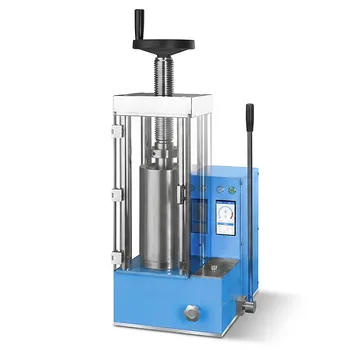
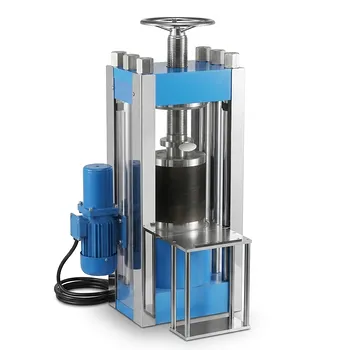
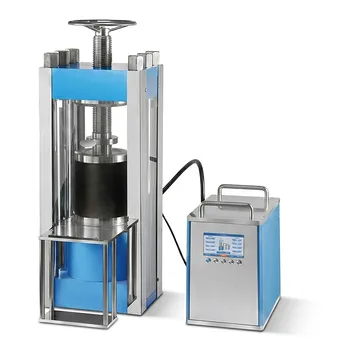
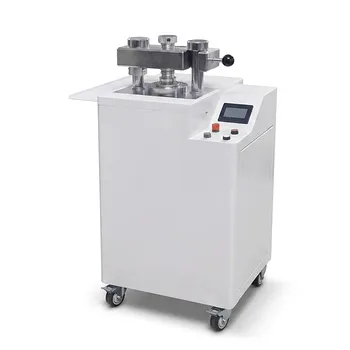
- Cold and Warm Isostatic Presses (CIP/WIP), widely applied in cutting-edge battery research and ceramics.
- Glovebox-Compatible Systems for sensitive environments.
From aerospace components to pharmaceutical tablets, our expertise ensures you get the right equipment for your specific application. Contact us today to find your perfect pressing solution and take your material performance to the next level.
Related Products
- Electric Isostatic Pressing Machine 40 Tons Automatic Laboratory Powder Compacting Press
- Warm Isostatic Press for Solid State Battery Research Warm Isostatic Press
- Split Warm Isostatic Lab Press 200 Ton Powder Compaction Chamber for Battery Research and Material Science
- Electric Lab Cold Isostatic Press CIP Machine
- Split Hot Isostatic Pressing Machine 150 Ton Laboratory Heated Isostatic Press
People Also Ask
- What are the key characteristics of the isostatic pressing process? Unlock Uniform Density and Complex Geometries
- Why is vacuum-sealed packaging necessary before isostatic pressing of CuPc thin films? Protect Integrity & Uniformity
- How is pressure applied to the material during isostatic pressing? Master Uniform Density and Complex Geometries
- How does pressure distribute during isostatic pressing of aluminum? Achieve Uniform Density for Your Lab Materials
- What are the applications of isostatic pressing in the automotive industry? Precision Manufacturing for High-Performance Parts