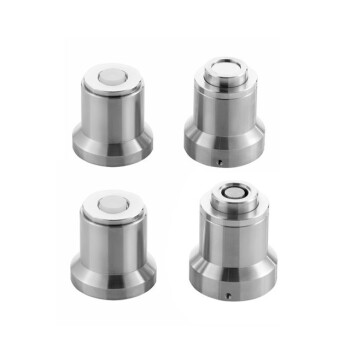
Corrosion-resistant dual-electrode compression modules are the superior choice for All-Polymer Rechargeable Seawater Batteries (APRSBs) because they effectively mitigate the aggressive chemical environment created by natural seawater. While standard stainless steel coin cells are prone to rapid degradation when exposed to chloride ions, specialized compression modules utilize corrosion-resistant materials and superior sealing to maintain structural integrity and ensure data reliability.
The high concentration of chloride ions in seawater causes severe pitting in standard stainless steel coin cells, leading to seal failure and corrupted experimental data. Specialized compression modules provide the necessary chemical resistance to guarantee valid results during long-term cycling tests.
The Chemistry of Component Failure
The Chloride Ion Threat
Natural seawater serves as the electrolyte in APRSBs, but it introduces a harsh chemical environment.
It contains high concentrations of chloride ions (Cl-), which are notoriously aggressive toward many standard metals used in battery hardware.
Why Standard Coin Cells Fail
Standard coin cells are typically manufactured from stainless steel.
While durable in many applications, stainless steel is highly susceptible to pitting corrosion when exposed to chloride-rich environments like seawater.
This corrosion compromises the cell casing, leading to leakage and eventual mechanical failure.
The Advantages of Compression Modules
Specialized Material Composition
To withstand the seawater electrolyte, compression modules are engineered with corrosion-resistant materials.
Unlike standard stainless steel, these materials do not react aggressively with chloride ions, maintaining the cell's physical structure over time.
Superior Sealing Integrity
Compression modules are designed with advanced sealing mechanisms that outperform standard coin cells.
This ensures that the liquid electrolyte remains contained and that external contaminants do not enter the system.
Robust sealing is critical for maintaining stable internal pressure and chemical balance during operation.
Understanding the Trade-offs
The Cost of Data Accuracy
Standard coin cells are generally ubiquitous and inexpensive, making them attractive for general battery research.
However, in seawater applications, their lower cost is negated by the high risk of data corruption.
If the hardware corrodes, it is impossible to distinguish between a failure of the battery chemistry and a failure of the casing itself.
Long-Term Cycling Viability
For short-term tests, a standard cell might survive briefly, but APRSBs require long-term cycling to prove their utility.
Using a standard coin cell introduces a ticking clock; the casing will eventually pit and fail.
Compression modules are an investment in long-term reliability, ensuring the test duration is dictated by the polymer chemistry, not the hardware limitations.
Ensuring Experimental Success
To ensure the validity of your APRSB research, align your hardware choice with your reliability goals:
- If your primary focus is Data Accuracy: Choose corrosion-resistant compression modules to eliminate the variable of hardware corrosion from your results.
- If your primary focus is Long-Term Durability: Rely on compression modules to prevent pitting and leakage during extended cycling tests.
By selecting the correct hardware, you ensure that your findings reflect the true performance of the battery polymer rather than the limitations of the test cell.
Summary Table:
| Feature | Standard Coin Cells | Corrosion-Resistant Compression Modules |
|---|---|---|
| Material | Standard Stainless Steel | Specialized Corrosion-Resistant Alloys |
| Chloride Resistance | Low (Susceptible to pitting) | High (Engineered for seawater) |
| Sealing Quality | Basic / Single-use | Advanced / High-integrity sealing |
| Data Reliability | High risk of corruption due to leaks | High accuracy for long-term cycling |
| Best Use Case | General lab environments | Harsh electrolytes & Seawater batteries |
Elevate Your Battery Research with KINTEK Precision
Don't let hardware failure compromise your breakthrough data. KINTEK specializes in comprehensive laboratory pressing solutions, offering a diverse range of manual, automatic, and heated models designed for precision. Our corrosion-resistant dual-electrode compression modules are specifically engineered to withstand aggressive electrolytes, ensuring your All-Polymer Rechargeable Seawater Battery (APRSB) tests are dictated by chemistry, not hardware limitations.
From glovebox-compatible designs to advanced isostatic presses, we provide the durability your battery research demands. Contact KINTEK today to find your ideal laboratory solution and ensure long-term reliability for your next experiment!
References
- Yuanzhe Lu, Dingshan Yu. Beyond Metal‐Air Chemistry: Coupling n‐/p‐Type Organic Redox Chemistry Toward Sustainable Sub‐Zero‐Temperature All‐Polymer Seawater Batteries. DOI: 10.1002/advs.202504004
This article is also based on technical information from Kintek Solution Knowledge Base .
Related Products
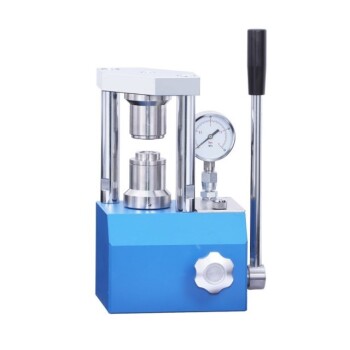
- Laboratory Hydraulic Split Electric Lab Pellet Press
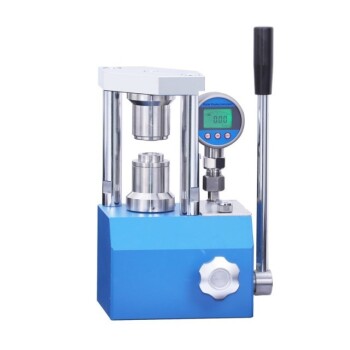
- Laboratory Hydraulic Press Lab Pellet Press Button Battery Press
- Manual Laboratory Hydraulic Press Lab Pellet Press
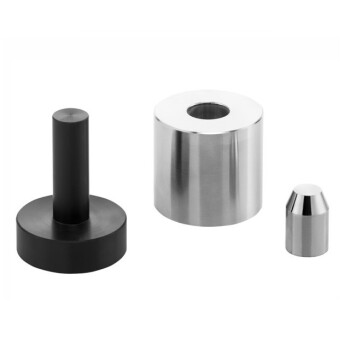
- Lab Cylindrical Press Mold for Laboratory Use
- Manual Button Battery Sealing Machine for Battery Sealing
People Also Ask
- What are the emerging trends in the design and materials of lab pellet presses? Modernize Your Lab Efficiency
- What are common lab pellet press issues? Expert Troubleshooting Guide for Reliable Material Research
- How do lab pellet presses support customization and flexibility? Optimize Your Sample Prep for Any Material
- What are the common operational types of lab pellet presses? Choosing the Right Manual, Automatic, or Hydraulic System
- Why use a laboratory pellet press for solid-state battery evaluation? Ensure Accuracy in Interface Stability Testing