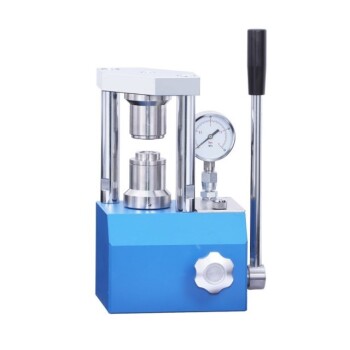
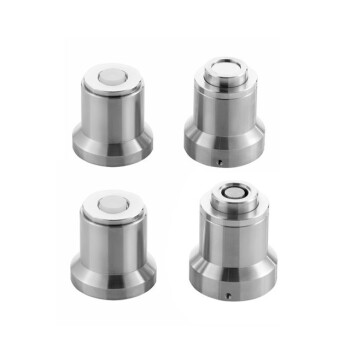
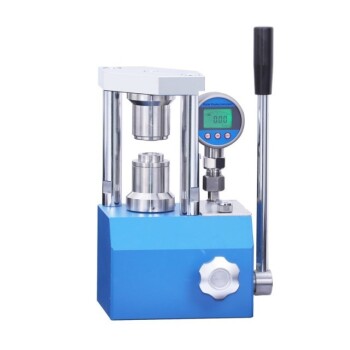
Specialized battery molds and pressure test fixtures are strictly necessary to maintain the structural integrity of sulfide solid-state batteries during operation. Because these batteries undergo significant chemo-mechanical volume changes during cycling, rigid confinement is required to prevent the internal layers from physically separating. Without continuous external pressure, the loss of contact between particles leads to immediate performance degradation and unreliable test data.
Core Takeaway: Solid electrolytes cannot flow to fill physical gaps like liquid electrolytes do. Specialized fixtures act as a mechanical stabilizer, applying constant stack pressure to compensate for electrode "breathing" (expansion and contraction) and ensuring the electrochemical interface remains intact.
The Chemo-Mechanical Challenge
Significant Volume Changes
During the charging and discharging process, electrode materials in sulfide solid-state batteries expand and contract. This phenomenon, known as chemo-mechanical volume change, is particularly pronounced in high-capacity anodes like silicon or lithium metal. As the battery cycles, the internal stack effectively "breathes," altering the physical dimensions of the active materials.
The Inability to Self-Repair
Unlike traditional batteries using liquid electrolytes, solid electrolytes lack fluidity. If a gap forms between the electrode and the electrolyte due to shrinkage, the solid material cannot flow to fill the void. This inability to self-repair means that any physical separation becomes permanent without external intervention.
Loss of Interfacial Contact
When volume changes occur without restraint, the contact between particles is broken. This leads to interfacial delamination, causing a rapid rise in internal resistance (impedance). Once this contact is lost, ion transport paths are severed, resulting in premature battery failure.
The Function of Specialized Fixtures
Maintaining Constant Stack Pressure
Specialized fixtures, such as molds equipped with torque control or spring-loaded frames, apply continuous external pressure. This pressure, typically maintained between 5 MPa and 25 MPa for cycling, forces the layers to remain in tight contact. This mechanical constraint effectively compensates for particle shrinkage during delithiation.
Suppressing Dendrite Formation
Gaps and voids at the interface are hotspots for lithium dendrite growth. By maintaining high pressure, the fixture suppresses the formation of these voids. This is critical for preventing short circuits and ensuring the long-term safety of the cell.
Ensuring Data Accuracy
Without controlled pressure, performance data reflects mechanical failure rather than electrochemical capability. Specialized molds eliminate the variable of "contact loss" from the experiment. This ensures that the data acquired reflects the true performance of the battery chemistry.
Understanding the Trade-offs
Fabrication Pressure vs. Cycling Pressure
It is vital to distinguish between the pressure required to make the cell and the pressure required to test it. High-pressure hydraulic presses are used to compact sulfide powders into dense pellets, often requiring up to 410 MPa to eliminate pores. However, the operating pressure maintained by the test fixture during cycling is significantly lower (e.g., 15 MPa) to avoid crushing the active materials while still maintaining contact.
Complexity of Dynamic Sensors
Advanced fixtures often include dynamic pressure sensors to monitor changes in real-time. While these provide superior data, they add complexity to the experimental setup compared to static bolt-tightened cells. Miscalibration of these sensors can lead to inconsistent pressure application, skewing results.
Making the Right Choice for Your Goal
To ensure valid results, select your testing hardware based on your specific experimental needs:
- If your primary focus is Cycle Life Stability: Prioritize fixtures with spring-loaded mechanisms that can maintain a constant 15-25 MPa range to accommodate volume expansion without losing contact.
- If your primary focus is Material Fabrication: Ensure you have access to a high-pressure hydraulic press capable of 400+ MPa to create dense, pore-free electrolyte pellets before testing begins.
- If your primary focus is Mechanism Analysis: Use molds equipped with dynamic pressure sensors to correlate electrochemical performance directly with mechanical volume changes in real-time.
Success in sulfide solid-state battery testing relies not just on chemistry, but on mechanically enforcing the physical connection between solid particles.
Summary Table:
| Feature | Fabrication Phase | Testing/Cycling Phase |
|---|---|---|
| Pressure Required | High (Up to 410 MPa) | Low to Moderate (5 - 25 MPa) |
| Primary Goal | Eliminate pores; create dense pellets | Maintain interfacial contact; suppress dendrites |
| Equipment Type | Hydraulic Pellet Press | Spring-loaded Fixture or Torque Mold |
| Mechanism | Static compaction | Dynamic compensation for volume changes |
Elevate Your Battery Research with KINTEK
Precision mechanical pressure is the backbone of reliable solid-state battery data. KINTEK specializes in comprehensive laboratory pressing solutions tailored for the next generation of energy storage. Whether you need high-pressure hydraulic presses for dense pellet fabrication or specialized fixtures for stable battery cycling, our range of manual, automatic, and heated models—including glovebox-compatible and isostatic presses—ensures your interfaces remain intact and your results stay accurate.
Contact KINTEK today to find your ideal battery testing solution!
References
- Mattis Batzer, Arno Kwade. Current Status of Formulations and Scalable Processes for Producing Sulfidic Solid‐State Batteries. DOI: 10.1002/batt.202200328
This article is also based on technical information from Kintek Solution Knowledge Base .
Related Products
- Laboratory Hydraulic Press Lab Pellet Press Button Battery Press
- Button Battery Sealing Press Machine for Lab
- Warm Isostatic Press for Solid State Battery Research Warm Isostatic Press
- Manual Button Battery Sealing Machine for Battery Sealing
- Lab Button Battery Tablet Press Sealing Mold
People Also Ask
- How is a laboratory hydraulic press used for HAP composite gels? Master Mineral Substrate Standardization
- What role does a laboratory hydraulic press play in reaction pellets? Optimizing Lunar Soil and Metal Fuel Density
- What role does a laboratory hydraulic press play in the preparation of piezoelectric ceramic discs for DC-PG? | KINTEK
- Why is a laboratory hydraulic press required for PBAT and PLA sample preparation? Achieve Flawless Characterization
- What role does a laboratory hydraulic press play in the assembly of all-solid-state battery test cells? Expert Guide