Precision in sample preparation is the prerequisite for valid experimental data.
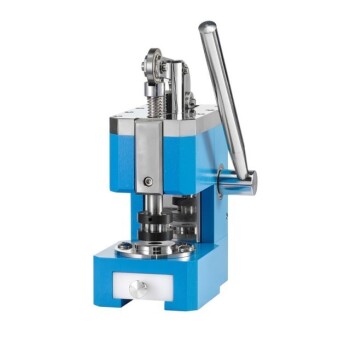
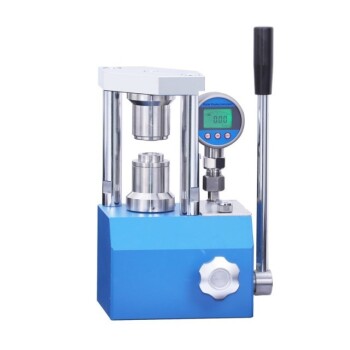
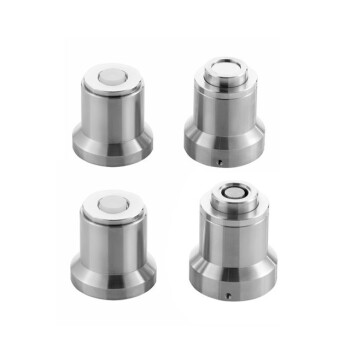
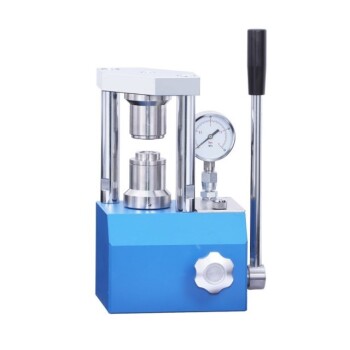
Using a high-precision disc cutter or die is necessary to ensure that electrode sheets and separators have regular circular profiles and clean, burr-free edges. This precise dimensional control—such as cutting electrodes to exactly 15 mm and separators to 19 mm—is the only way to effectively prevent internal short circuits during assembly and guarantee the consistent geometric arrangement required for stable, reliable test results.
Core Takeaway The physical integrity of your materials dictates the reliability of your electrochemical data. Precision cutting is not merely about aesthetics; it is a critical control step to prevent micro-shorts caused by edge burrs and to ensure mathematical accuracy in calculating current density and specific capacity.
Preventing Failure at the Micro-Scale
The most immediate risk in coin cell assembly is the physical destruction of the internal components before the test even begins.
Eliminating Edge Burrs
When electrodes are cut with substandard tools, the edges often deform or develop burrs—microscopic spikes of metal or active material.
In the tight confines of a coin cell, these burrs can puncture the delicate separator. This creates a direct path for electrons to flow between the anode and cathode, causing an internal short circuit that renders the cell useless.
Preserving Separator Integrity
The separator isolates the positive and negative electrodes while allowing ion transport.
A precision cutter ensures the separator disc is cut cleanly without fraying or deformation. If the separator's edges are ragged or its microporous structure is crushed during cutting, it may fail to prevent contact between the electrodes, leading to immediate failure or unstable cycling.
Ensuring Data Integrity and Repeatability
Beyond immediate failure, the lack of precision introduces hidden variables that ruin experimental validity.
Accurate Current Density Calculations
Electrochemical calculations, such as current density and specific capacity, are mathematically dependent on the exact surface area of the electrode.
If your cutting tool produces discs that vary slightly in diameter or are oval rather than circular, your value for "Area" is incorrect. This introduces error into every subsequent calculation, making it impossible to obtain repeatable electrochemical test data.
Consistent Active Material Loading
To compare the performance of different materials, the active material loading (mass per unit area) must be uniform across all test cells.
High-precision dies use stable pressure to ensure the electrode film is not compressed unevenly or delaminated during the cut. This guarantees that every disc represents the same fundamental baseline, providing a reliable basis for comparing experimental data.
Geometric Arrangement and Assembly
The physical layout of the stack inside the case relies on exact size differentials.
Controlled Dimensional Hierarchy
Proper cell assembly typically requires the separator to be slightly larger than the electrode to prevent shorting around the edges (e.g., a 15 mm electrode paired with a 19 mm separator).
Precision cutters maintain these exact diameters consistently. If the separator is cut too small due to poor tolerancing, the electrodes may touch around the perimeter. If the electrode is cut too large, it may not fit the casing or gasket properly.
Understanding the Trade-offs
While manual cutting or low-quality punches may seem faster or cheaper, they introduce significant risks to your research.
The Cost of Edge Deformation
Manual methods often shear or tear the foil current collector rather than slicing it. This edge deformation changes the physical geometry of the electrode near the perimeter, potentially leading to uneven current distribution or "hot spots" during cycling.
False Negatives in Research
If a cell fails or performs poorly, you must know if it was the material's fault or the assembly's fault.
Using low-precision tools introduces a variable of mechanical inconsistency. You may discard a promising active material simply because the cell shorted due to a burr, not because the chemistry was unstable.
Making the Right Choice for Your Goal
Select your preparation tools based on the specific metrics you need to control.
- If your primary focus is Safety and Stability: Prioritize cutters that guarantee burr-free edges to eliminate the risk of separator puncture and internal shorts.
- If your primary focus is Quantitative Accuracy: Prioritize dies with strict dimensional tolerances to ensure the active area is identical for every calculation of specific capacity.
Ultimately, high-precision cutting transforms your coin cell from a rough prototype into a scientifically valid measurement device.
Summary Table:
| Feature | High-Precision Disc Cutter | Standard/Manual Punching |
|---|---|---|
| Edge Quality | Clean, burr-free edges | Frequent burrs and deformations |
| Dimensional Accuracy | Precise (e.g., ±0.01mm) | Inconsistent diameters/shapes |
| Separator Integrity | Preserves microporous structure | Risk of fraying or crushing |
| Data Reliability | High repeatability for area-based math | Low; introduces calculation errors |
| Failure Risk | Minimal internal short-circuit risk | High risk of micro-shorts |
Elevate Your Battery Research with KINTEK Precision
Don't let mechanical inconsistencies ruin your electrochemical data. KINTEK specializes in comprehensive laboratory pressing and cutting solutions, offering manual, automatic, and glovebox-compatible models designed to eliminate burrs and ensure exact electrode geometry. Whether you are working on battery research or advanced material science, our range of cold and warm isostatic presses and precision dies provide the stability you need for repeatable results.
Ready to optimize your sample preparation? Contact KINTEK today to find the perfect precision solution for your lab!
References
- Mohammad K. Shehab, Hani M. El‐Kaderi. Metalated Covalent Organic Frameworks as Electrocatalytic Sulfur Cathodes for High-Performance Lithium–Sulfur Batteries. DOI: 10.1021/acsaem.5c01625
This article is also based on technical information from Kintek Solution Knowledge Base .
Related Products
- Lab Manual Microtome Slicer for Tissue Sectioning
- Button Battery Sealing Machine for Button Batteries
- Laboratory Hydraulic Split Electric Lab Pellet Press
- Manual Laboratory Hydraulic Press Lab Pellet Press
- Lab Button Battery Disassembly and Sealing Mold
People Also Ask
- Why is a precision disc cutter used to process samples? Ensure Accuracy in Gel Content and Swelling Ratio Testing
- How does a precision disc puncher ensure experimental accuracy? Standardize Your Battery Research Samples
- How do chemical etchants assist in Micro EDM microstructure analysis? Reveal Heat-Affected Zones and Recast Layers
- Why is a blade grinder necessary for PLA composites? Master Pretreatment for Perfect Hot-Press Molding
- How does the use of a precision disc puncher contribute to the consistency of battery testing results? Ensure Accuracy