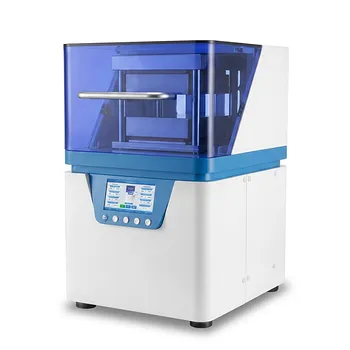
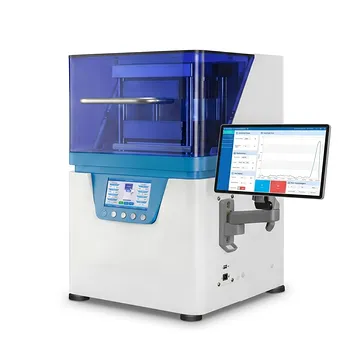
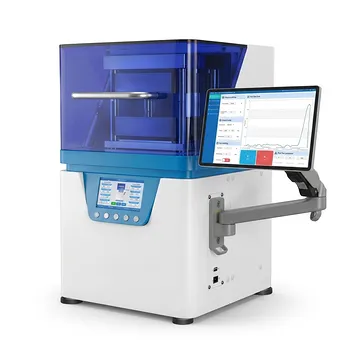
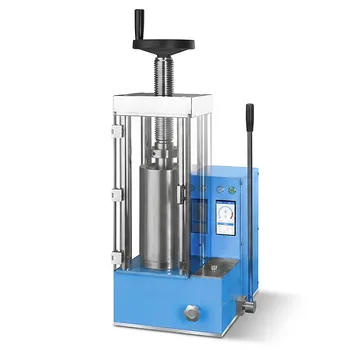
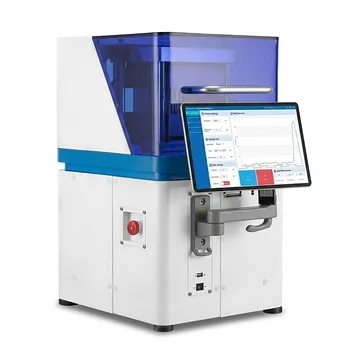
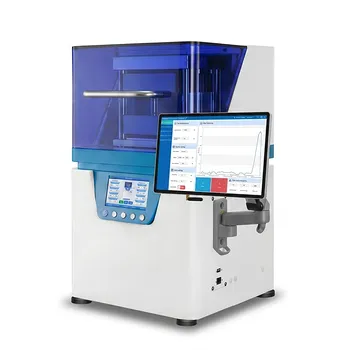
Benchtop presses are primarily utilized for precise sample preparation and material testing within space-constrained laboratory environments. Their most critical function is the creation of uniform pellets for analytical techniques, specifically X-Ray Fluorescence (XRF) analysis and Fourier Transform Infrared (FTIR) spectroscopy.
Core Takeaway While benchtop presses are versatile tools used for tasks ranging from fluid extraction to laminating, their value lies in delivering high-pressure consistency for analytical sample preparation. They bridge the gap between manual preparation and industrial-scale machinery, enabling high-throughput workflows in materials science, geology, and chemistry without requiring a large physical footprint.
Analytical Sample Preparation
Creating Pellets for Spectroscopy
The most frequent application of a benchtop press is the preparation of solid samples for spectroscopic analysis.
To ensure accurate results in XRF and FTIR spectroscopy, powder mixtures must be compressed into smooth, flat, and uniform pellets.
The benchtop press applies controlled high pressure to bind these powders, ensuring the sample density required for precise analytical readings.
Geological and Chemical Analysis
In the fields of geology and chemistry, sample uniformity is non-negotiable.
Laboratories use these presses to process raw materials into consistent forms for testing.
This standardization is essential for comparing material properties across different batches or geological samples.
Material Testing and R&D
Destructive Testing
Benchtop presses are frequently employed to evaluate material limits through destructive testing.
Researchers apply increasing pressure to a sample until failure to measure compressive strength and durability.
This is critical for quality control in sectors such as rubber and plastic molding.
Research and Prototype Formation
For Research and Development (R&D) departments, these presses facilitate pressure forming and short production runs.
Scientists can create small batches of prototypes, such as pharmaceutical tablets or laminated materials, without interrupting mass-production machinery.
This allows for "lean manufacturing" and rapid iteration during the development phase.
Educational Demonstrations
Due to their compact size and safety features, benchtop presses are standard fixtures in academic settings.
They are used to teach students the fundamental principles of material properties and compression techniques.
The transparent operation of manual models allows students to visually observe how different materials react under pressure.
Processing and Extraction
Fluid Extraction
Beyond solid formation, these units are utilized to squeeze liquids from solid samples.
This is useful in biological or chemical applications where the liquid component of a matrix needs to be isolated for analysis.
Small-Scale Molding
Industries involving polymers often use benchtop presses for laminating and molding small test specimens.
This ensures that the material properties evaluated in the lab accurately reflect the properties of the final manufactured product.
Understanding the Trade-offs
Pressure Limitations
While powerful, benchtop units cannot match the extreme force capabilities of large floor-standing industrial presses.
If your application requires ultra-high tonnage for heavy industrial metals, a benchtop unit may be insufficient.
Capacity Constraints
The compact design, while excellent for saving space, limits the physical volume of material you can process at once.
These presses are optimized for individual samples or small batches, not continuous mass production.
Making the Right Choice for Your Goal
To determine if a benchtop press fits your specific laboratory needs, evaluate your primary objective:
- If your primary focus is Analytical Precision: Prioritize a press designed specifically for XRF or FTIR pelletizing to ensure maximum sample uniformity.
- If your primary focus is R&D or Education: Look for a versatile manual model that allows for easy setup and offers tactile feedback during destructive testing.
- If your primary focus is Production Simulation: Ensure the press offers enough pressure to accurately mimic your full-scale manufacturing process on a smaller level.
The ideal benchtop press balances your need for high-pressure capability with the constraints of your available laboratory workspace.
Summary Table:
| Application Category | Primary Uses & Analytical Techniques | Key Benefits |
|---|---|---|
| Spectroscopy | XRF and FTIR pellet preparation | High sample density and uniformity |
| Material Science | Destructive testing, compressive strength analysis | Evaluates material limits and durability |
| R&D & Prototyping | Small-batch molding, pharmaceutical tablets | Rapid iteration without production downtime |
| Extraction | Fluid isolation from solid matrices | Precise separation for biological analysis |
| Education | Teaching material properties and compression | Compact, safe, and easy-to-operate |
| Processing | Laminating and small-scale polymer molding | Ensures lab specimens match industrial standards |
Maximize Your Lab’s Precision with KINTEK Pressing Solutions
At KINTEK, we understand that analytical accuracy begins with perfect sample preparation. Whether you are conducting cutting-edge battery research or routine XRF analysis, our comprehensive range of laboratory pressing solutions—including manual, automatic, heated, and multifunctional models—is designed to meet your specific pressure requirements.
From glovebox-compatible units to advanced cold and warm isostatic presses, we provide the tools needed for high-throughput consistency and material integrity. Don't let limited space compromise your results.
Ready to elevate your research capabilities? Contact KINTEK Today to Find Your Ideal Pressing Solution
Related Products
- Automatic Hydraulic Heat Press Machine with Multi Stage Programmable Control and Integrated Water Cooling Plate Size 180x180mm
- Automatic Hydraulic Hot Press with Large Plate and Precision Temperature Control for Advanced Material Sample Preparation and Industrial Research
- Split Automatic Heated Hydraulic Press Machine with Heated Plates
- Automatic Heated Hydraulic Lab Press with Programmable Touch Screen Controls and Precision Temperature Regulation
- Automatic High Temperature Heated Hydraulic Press Machine with Heated Plates for Lab
People Also Ask
- How does a laboratory hydraulic heat press facilitate the molding of cellulose composite specimens? Precision Molding
- How is a hydraulic heat press used for sample preparation? Achieve Uniform, Void-Free Samples for Lab Analysis
- What is the role of a hydraulic heat press in material testing? Unlock Superior Data for Research & QC
- What is a hydraulic heat press? Discover Precision Material Bonding and Sample Preparation
- What are the industrial applications of a hydraulic heat press? Powering Lamination, Bonding, and R&D Efficiency