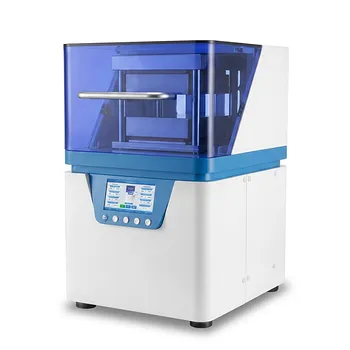
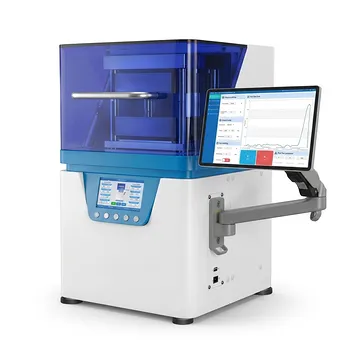
Hydraulic presses act as the versatile workhorses of modern industry and science, utilizing fluid mechanics to generate immense compressive force. These machines are fundamental to operations ranging from heavy-duty metal forging and automotive assembly to delicate laboratory sample preparation and material testing. By delivering high pressure with exceptional precision, they serve critical roles in the aerospace, automotive, energy, and medical sectors.
Core Takeaway: The true value of a hydraulic press lies in its ability to scale force with control. Whether compressing scrap metal into dense bales or creating microscopic pellets for spectroscopic analysis, these systems provide the uniform pressure necessary for both mass production and high-precision research.
Industrial Manufacturing and Metal Forming
The most visible application of hydraulic presses is in the heavy manufacturing sector, where they shape materials that resist other forms of manipulation.
Metal Forging and Stamping
Hydraulic presses are essential for manipulating metal billets into complex shapes. They are widely used in the automotive industry to stamp body panels and in the aerospace sector to form intricate components like turbine blades.
Powder Compacting and Ceramics
Beyond sheet metal, these presses are used to compress powdered materials into solid forms. This application is standard in manufacturing ceramics, such as tiles and bricks, and creating composite parts at room temperature.
Assembly and Press-Fitting
In assembly lines, hydraulic presses are used to force components together. They are the standard tool for press-fitting bearings, shafts, and fittings, as well as for riveting and crimping operations where a permanent mechanical bond is required.
Laboratory and Scientific Research
While industrial presses focus on raw tonnage, laboratory presses focus on precision and uniformity.
Sample Preparation for Spectroscopy
In chemical analysis, particularly spectroscopy, uniformity is paramount. Hydraulic presses are used to compress powder samples into perfectly flat, dense pellets to ensure accurate analytical results.
Material Stress Testing
Engineers use these presses to test the limits of materials. They apply controlled high pressure to concrete, metals, and composites to verify tensile strength and durability before these materials are approved for construction or manufacturing use.
High-Pressure Physics
Researchers utilize hydraulic systems to study how substances behave under extreme conditions. This allows scientists to investigate the effects of high pressure on matter, simulating environments that cannot be found naturally on Earth's surface.
Waste Management and Recycling
The ability to reduce volume is a key application for hydraulic technology in environmental management.
Compacting and Baling
Hydraulic presses, often referred to as balers in this context, crush waste materials into dense, manageable blocks. This includes compressing scrap metal, crushing cars for transport, and compacting paper or plastic for recycling.
Understanding the Operational Trade-offs
While hydraulic presses are powerful, they are not the universal solution for every mechanical problem.
Speed vs. Force
Hydraulic presses are unmatched in their ability to generate constant force throughout a stroke. However, they are generally slower than mechanical flywheel presses, making them less suitable for high-speed, low-force stamping operations.
Maintenance and Environment
These systems rely on hydraulic fluid under high pressure. This necessitates rigorous maintenance to prevent leaks, which can create safety hazards and environmental contamination in clean manufacturing environments.
Making the Right Choice for Your Goal
Selecting the correct hydraulic application depends entirely on the balance between the force required and the precision demanded.
- If your primary focus is Heavy Manufacturing: Prioritize a press capable of sustained high tonnage for tasks like deep-drawing metal or molding composites.
- If your primary focus is Laboratory Analysis: Prioritize a press with programmable pressure controls to ensure repeatability when creating samples or testing material limits.
- If your primary focus is Assembly: Look for systems designed for specific stroke lengths to accurately press-fit bearings or join components without damaging the parts.
Hydraulic technology remains the definitive choice whenever a process requires the application of substantial, controlled force to alter the state or shape of a material.
Summary Table:
| Industry Sector | Primary Applications | Key Benefits |
|---|---|---|
| Manufacturing | Metal forging, stamping, powder compacting | Sustained tonnage for shaping tough materials |
| Laboratory | KBr pellet pressing, material testing, spectroscopy | High precision and repeatable pressure control |
| Automotive | Body panel stamping, press-fitting bearings | Reliable assembly and complex component forming |
| Recycling | Scrap metal baling, waste compaction | Significant volume reduction for transport |
| Aerospace | Turbine blade forming, composite molding | Exceptional force for high-strength alloys |
Elevate Your Pressing Precision with KINTEK
From high-tonnage industrial manufacturing to delicate laboratory analysis, KINTEK specializes in comprehensive laboratory pressing solutions designed to meet the rigorous demands of battery research and material science. We offer a versatile range of equipment, including:
- Manual & Automatic Presses for consistent sample preparation.
- Heated & Multifunctional Models for advanced material synthesis.
- Glovebox-Compatible & Isostatic Presses (Cold/Warm) for specialized research environments.
Ready to enhance your lab's efficiency and accuracy? Contact KINTEK today to find the perfect hydraulic solution for your application!
Related Products
- Automatic Hydraulic Hot Press with Large Plate and Precision Temperature Control for Advanced Material Sample Preparation and Industrial Research
- Automatic Hydraulic Heat Press Machine with Multi Stage Programmable Control and Integrated Water Cooling Plate Size 180x180mm
- Automatic High Temperature Heated Hydraulic Press Machine with Heated Plates for Lab
- Automatic Heated Hydraulic Lab Press with Programmable Touch Screen Controls and Precision Temperature Regulation
- Heated Hydraulic Press Machine with Heated Plates for Vacuum Box Laboratory Hot Press
People Also Ask
- What are the specific features and applications of hydraulic hot press machines? Precision Solutions for Modern Labs
- How does an automatic hydraulic press operate? Achieve Precision and Consistency in Lab Pelleting
- What are the advantages and common applications of an automatic hydraulic press? Elevate Your Lab's Precision
- What is the technical significance of setting a precise dwell time? Achieve Peak Material Density and Stability
- When is an automatic hydraulic press more suitable than a manual press? Scale Your Lab with Precision & Speed