Hydraulic presses are the fundamental engines behind the consolidation and densification of advanced materials in powder metallurgy and composite manufacturing. They function by applying immense, precise force—often combined with thermal energy—to transform loose particles or layered substrates into solid, structurally sound components with specific geometries.
Core Takeaway: The value of a hydraulic press lies in its ability to force materials through a transition phase. Whether creating a pre-sintered "green" compact or curing a composite, the press drives particle rearrangement and solid-phase reactions that define the final density and mechanical integrity of the product.
The Role in Powder Metallurgy
Creating the "Green Compact"
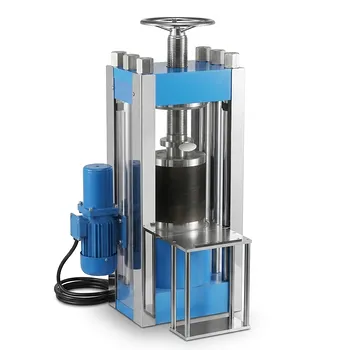
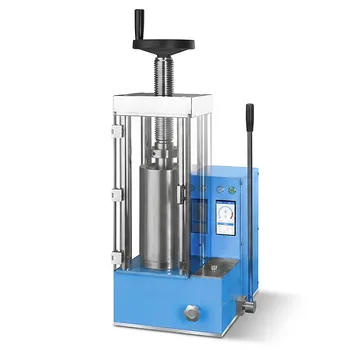
In the initial stages of powder metallurgy, a uniaxial hydraulic press is typically used to consolidate loose metal powders. By applying pressure in a single direction within a mold, the machine compresses the powder into a "green compact"—a solid object with a defined shape but limited structural strength.
The Mechanics of Compression
This consolidation is not instantaneous; it follows a distinct physical progression. The pressure forces the powder through three critical stages: particle rearrangement, inter-particle sliding, and finally, plastic deformation.
Preparing for Sintering
The goal of this cold-pressing stage is to establish preliminary physical contact between particles. This mechanical interlocking provides the necessary shape and size required for the subsequent sintering process, where thermal energy fuses the particles permanently.
High-Temperature Densification
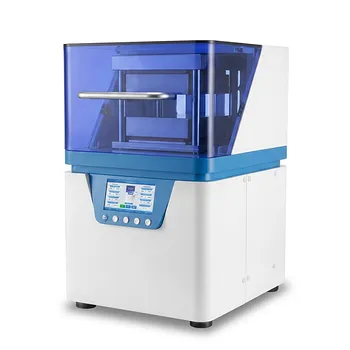
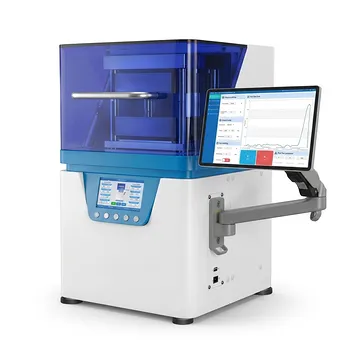
For applications requiring superior mechanical properties, hydraulic hot press machines are utilized. By introducing heat during the pressing cycle, these machines facilitate solid-phase reactions, resulting in significantly improved material densification compared to cold pressing alone.
Applications in Composite Preparation
Bonding and Curing
In composite manufacturing, hydraulic presses are essential for bonding disparate layers and curing chemical resins. These presses generally feature heated plates that transfer thermal energy to the material while it is under compression.
Laminating Layers
This combination of heat and pressure is used to manufacture layered products such as wooden panels, plastic sheets, and industrial rubber components. The process ensures that layers adhere uniformly, resulting in strong, durable products like conveyor belts or furniture elements.
Research and Material Testing
Simulating Extreme Conditions
Beyond manufacturing, hydraulic presses are vital in laboratory settings for simulating high-pressure environments. Researchers use them to investigate properties such as elasticity, plasticity, and fracture points, providing data that drives engineering innovations.
Sample Standardization
Hydraulic pellet presses are frequently used to prepare uniform samples for analytical techniques like FTIR (Fourier Transform Infrared Spectroscopy) and XRF (X-Ray Fluorescence). Creating a perfectly flat, dense pellet ensures consistent spectroscopic measurements and accurate compositional analysis.
Understanding the Trade-offs
Green Strength vs. Final Strength
It is critical to distinguish between the output of a cold press and a hot press. A cold-pressed "green compact" holds its shape but lacks the durability of a finished part; it relies entirely on subsequent sintering for strength.
Unidirectional Limitations
Standard uniaxial presses apply force from one direction. While effective for simple geometries like discs, this can sometimes lead to density gradients within the part if the powder does not distribute perfectly during the rearrangement phase.
Making the Right Choice for Your Goal
To select the correct hydraulic pressing strategy, consider your specific end-state requirements:
- If your primary focus is Final Part Density: Prioritize hydraulic hot pressing, as the addition of heat facilitates solid-phase reactions that cold pressing cannot achieve.
- If your primary focus is Pre-Sintering Shaping: Utilize a uniaxial laboratory press to efficiently form loose powders into green compacts with precise geometry.
- If your primary focus is Composite Manufacturing: Ensure your equipment features heated plates to effectively cure resins and bond laminar layers.
Success in material preparation depends not just on the force applied, but on controlling the interaction between pressure, temperature, and particle deformation.
Summary Table:
| Process Type | Primary Objective | Key Mechanism | Typical Application |
|---|---|---|---|
| Cold Pressing | Green Compact Formation | Particle rearrangement & sliding | Pre-sintering metal parts |
| Hot Pressing | High-Density Consolidation | Heat + pressure for solid-phase reaction | High-performance ceramics/alloys |
| Laminating | Bonding & Resin Curing | Heated plates for thermal transfer | Rubber, wood, and plastic composites |
| Pelletizing | Sample Standardization | High-pressure compression | FTIR and XRF analytical testing |
Elevate Your Material Research with KINTEK
Precision is the difference between a failed sample and a breakthrough. KINTEK specializes in comprehensive laboratory pressing solutions designed to meet the rigorous demands of modern material science. Whether you are conducting cutting-edge battery research or developing next-generation composites, our equipment provides the exact control you need.
Our Versatile Range Includes:
- Manual & Automatic Presses: For flexible lab workflows.
- Heated & Multifunctional Models: Perfect for complex curing and bonding.
- Isostatic Presses (Cold & Warm): Ensuring uniform density for advanced powder metallurgy.
- Glovebox-Compatible Systems: Optimized for sensitive material handling.
Don't settle for inconsistent results. Partner with KINTEK to achieve superior densification and structural integrity in every project.
Contact Our Technical Experts Today
Related Products
- Automatic Hydraulic Hot Press with Large Plate and Precision Temperature Control for Advanced Material Sample Preparation and Industrial Research
- Automatic Heated Hydraulic Lab Press 120x120mm Plate Fully Automated Material Research Press
- Laboratory Hydraulic Press Lab Pellet Press Button Battery Press
- Automatic High Temperature Heated Hydraulic Press Machine with Heated Plates for Lab
- Laboratory Hydraulic Press Lab Pellet Press Machine for Glove Box
People Also Ask
- What are the specific features and applications of hydraulic hot press machines? Precision Solutions for Modern Labs
- How does an automatic hydraulic press operate? Achieve Precision and Consistency in Lab Pelleting
- What are the advantages and common applications of an automatic hydraulic press? Elevate Your Lab's Precision
- What is the technical significance of setting a precise dwell time? Achieve Peak Material Density and Stability
- When is an automatic hydraulic press more suitable than a manual press? Scale Your Lab with Precision & Speed