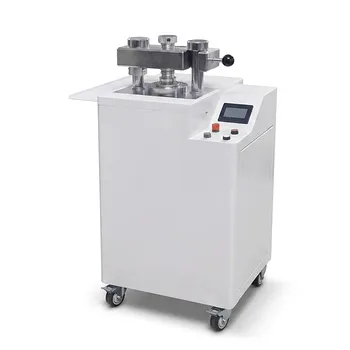
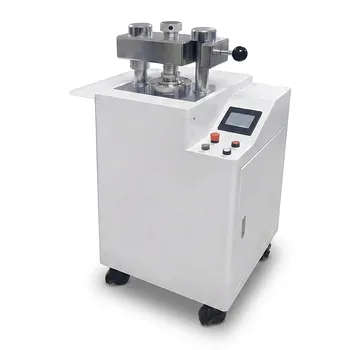
Pressed pellets for XRF analysis are prepared by grinding a sample into a fine powder, mixing it with a binding agent to ensure adhesion, and compressing it under high pressure into a dense, solid disc. While this method provides excellent sample homogeneity and sensitivity, its significant drawback is that it retains the sample's original mineralogical structure, which can interfere with the X-ray fluorescence process and reduce the overall accuracy of the results.
Pressed pellets maximize sensitivity for trace element analysis by creating a dense, uniform sample without chemical alteration. However, because the process is physical, the retention of original mineral structures remains a limiting factor for absolute accuracy compared to fusion methods.
The Mechanics of Preparation
To transform a raw material into an analyzable pellet, you must follow a strict physical process designed to eliminate void spaces and ensure uniformity.
Grinding and Homogenization
The sample is first processed through a laboratory crusher or pulverizer. The goal is to achieve a very fine powder, which increases the surface area and minimizes particle size effects.
Utilizing Binding Agents
Once ground, the powder is mixed with a binding agent, such as cellulose or boric acid. This additive is crucial for improving particle flow and ensuring the powder adheres together during the pressing stage.
High-Pressure Compression
The mixture is loaded into a die—typically 32 mm or 40 mm in diameter—and compressed. A load of 10 to 20 tonnes is standard, though difficult samples may require up to 40 tonnes to produce a stable, durable pellet.
Why Professionals Choose Pellets
Despite the labor involved, pressed pellets offer distinct advantages over loose powders, particularly regarding data quality.
Enhanced Sensitivity
By compressing the sample, you eliminate void spaces and minimize dilution. This results in higher intensities, making pellets excellent for analyzing elements present in trace amounts (ppm range).
Superior Homogeneity
The pressing process creates a sample with uniform density. This minimizes segregation and ensures the elements are evenly distributed, which is vital for reproducibility.
Understanding the Trade-offs
While pressed pellets are a standard industry method, they are not without limitations. You must weigh the benefits of sensitivity against specific accuracy risks.
The "Mineralogical Effect" Drawback
The most critical drawback is that pellets retain their mineralogical structures. Unlike fusion methods that melt the sample into glass, pellets keep the crystal lattice intact. This can alter how X-rays interact with the sample, leading to "mineralogical effects" that reduce the overall accuracy of the analysis.
Vulnerability to Contamination
Contamination is a persistent risk, most often occurring during the grinding phase. Impurities can be introduced from the grinding equipment itself or through cross-contamination from previously processed samples.
Making the Right Choice for Your Goal
Not every sample preparation method suits every analytical objective. Use the criteria below to decide if pellets are right for your project.
- If your primary focus is detecting trace elements: Choose pressed pellets, as the dense, undiluted nature of the sample yields higher intensities and better sensitivity in the ppm range.
- If your primary focus is absolute structural accuracy: Be cautious with pellets, as the retention of mineralogical structures can negatively impact the fluorescent process and compromise data precision.
By controlling the grinding and pressing variables, you can transform difficult geological materials into stable, high-intensity analytical samples.
Summary Table:
| Preparation Stage | Key Process / Requirement | Benefit / Objective |
|---|---|---|
| Grinding | Pulverize to fine powder | Increases surface area & minimizes particle size effects |
| Binding | Mix with cellulose or boric acid | Improves particle adhesion and flow during pressing |
| Compression | 10 to 40 tonnes of pressure | Eliminates void spaces for a dense, stable disc |
| Primary Goal | High sample density | Maximizes sensitivity for trace element analysis (ppm) |
| Main Drawback | Retention of mineral structure | Potential for mineralogical effects to reduce accuracy |
Elevate Your Material Analysis with KINTEK
Don't let sample preparation be the bottleneck in your research. KINTEK specializes in comprehensive laboratory pressing solutions, offering manual, automatic, heated, multifunctional, and glovebox-compatible models designed to produce flawless pellets for XRF and battery research. Whether you need high-pressure stability or specialized cold/warm isostatic presses, our equipment ensures the homogeneity and sensitivity your data demands.
Ready to optimize your lab's precision? Contact our experts today to find the perfect pressing solution for your application!
Related Products
- Automatic XRF Pellet Press for Laboratory Spectrometry Sample Preparation
- XRF KBR Plastic Ring Lab Powder Pellet Pressing Mold for FTIR
- Lab XRF Boric Acid Powder Pellet Pressing Mold for Laboratory Use
- XRF KBR Steel Ring Lab Powder Pellet Pressing Mold for FTIR
- Automatic Fluorescence Sample Preparation Press 40 Ton Lab Pellet Press for XRF Analysis
People Also Ask
- How can contamination occur during the preparation of pressed pellets for XRF analysis? Expert Prevention Guide
- How does the sample material influence the required pressing load for making an XRF pellet? Find the Optimal Pressure
- What are the different methods for preparing a sample pellet for XRF analysis? Expert Guide to Superior XRF Results
- What are the advantages of preparing a sample as a dense pellet for XRF? Unlock High-Precision Trace Element Analysis
- What is the primary purpose of using an automatic pellet press? Achieve Precise Geopolymer Analysis Results