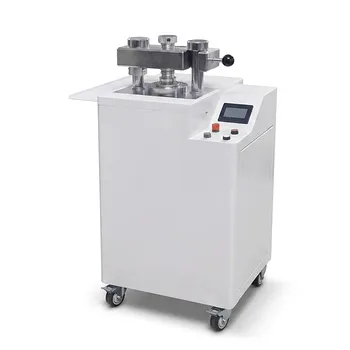
Rubber Vulcanizing Presses are primarily categorized based on their structural configuration and the medium used within their hydraulic systems. Specifically, they are distinguished by the number of working layers—classified as either single or double point presses—and by the working medium used to generate pressure, which is either oil or water.
Classification is not just about labeling; it defines how the machine delivers the critical pressure and temperature required for the vulcanization process. The choice between oil or water hydraulic systems and single or double point designs fundamentally alters the press's operational profile.
Categorization by Structural Design
The Number of Working Layers
The most visible structural distinction in Rubber Vulcanizing Presses is the configuration of the working layers.
Single vs. Double Point
Presses are explicitly categorized as either single point or double point presses. This classification refers to the mechanical design regarding the number of working layers involved in the pressing operation.
Categorization by Hydraulic Medium
The Hydraulic System
The hydraulic system is the powerhouse of the press, responsible for generating the necessary force via a hydraulic cylinder.
Oil Pressure Systems
One major category of presses utilizes oil pressure as the working medium. This indicates the hydraulic system is designed to pump and circulate hydraulic oil to generate the required force.
Water Pressure Systems
Alternatively, presses are categorized by their use of water pressure. These systems rely on water as the fluid medium to drive the hydraulic cylinders.
The Core Function Behind the Categories
Purpose of Classification
Understanding these categories is essential because the main function of the press is to provide precise pressure and temperature.
Delivering the Environment
While the hydraulic system (oil or water) manages the pressure, a separate heating medium supplies the temperature. The categorization of the press helps users understand exactly how that critical pressure is being generated and applied.
Understanding the Trade-offs
Medium Considerations
When selecting between oil and water pressure categories, you are choosing between distinct operating environments.
System Implications
While the primary reference does not list specific defects, standard technical evaluation suggests that the choice of medium (oil vs. water) impacts maintenance requirements and the physical environment of the laboratory or factory floor.
Making the Right Choice for Your Goal
To select the correct Rubber Vulcanizing Press, you must match the category to your specific operational needs.
- If your primary focus is mechanical configuration: Evaluate whether a single or double point press aligns with your required number of working layers.
- If your primary focus is the operating environment: Choose the hydraulic medium (oil or water) that best suits your facility's maintenance capabilities and contamination standards.
Proper categorization ensures you select a machine capable of delivering the precise pressure and temperature control your vulcanization process demands.
Summary Table:
| Category Basis | Type | Key Features |
|---|---|---|
| Structural Configuration | Single Point | Features one working layer for specific pressing tasks. |
| Structural Configuration | Double Point | Features two working layers to enhance throughput. |
| Hydraulic Medium | Oil Pressure | Uses hydraulic oil; standard for high force and lubrication. |
| Hydraulic Medium | Water Pressure | Uses water as the fluid; ideal for specific environmental standards. |
Elevate Your Materials Research with KINTEK
Precision in pressure and temperature is the backbone of successful vulcanization. KINTEK specializes in comprehensive laboratory pressing solutions, offering a diverse range of manual, automatic, heated, and multifunctional models, as well as specialized glovebox-compatible units and isostatic presses.
Whether you are advancing battery research or material science, our team is ready to help you select the perfect oil or water-based system tailored to your technical requirements. Don't settle for standard—achieve superior results with KINTEK.
Contact Us Today to Find Your Pressing Solution
Related Products
- Laboratory Hydraulic Press Lab Pellet Press Machine for Glove Box
- Automatic Laboratory Hydraulic Press for XRF and KBR Pellet Pressing
- Laboratory Hydraulic Pellet Press for XRF KBR FTIR Lab Press
- Lab Round Bidirectional Press Mold
- Automatic Laboratory Hydraulic Press Lab Pellet Press Machine
People Also Ask
- How does a laboratory hydraulic press contribute to the preparation of Li3-3xScxSb samples? Optimize Ionic Conductivity
- What is the function of a laboratory hydraulic press in FT-IR of curcumin-coated MWCNTs? Achieve Optical Clarity.
- Why is a laboratory hydraulic press required for compression molding boron-siloxane? Solve High-Loading Density Challenges
- What role does a laboratory hydraulic press play in the preparation of piezoelectric ceramic discs for DC-PG? | KINTEK
- What role does a laboratory hydraulic press play in reaction pellets? Optimizing Lunar Soil and Metal Fuel Density