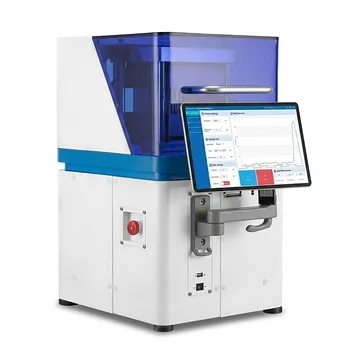
Hydraulic laboratory presses utilize precision-engineered hydraulic systems to generate the stable, high-pressure outputs necessary for scientific reproducibility. By strictly controlling mechanical force, these instruments ensure that applications, such as pellet formation, result in uniform samples every time.
Consistency in laboratory presses is achieved through the integration of high-pressure hydraulic mechanisms, multi-stage pressure fine-tuning, and advanced pulse heating technologies. This synergy ensures that both force and temperature remain uniform across the sample, eliminating variables that could compromise experimental data.
The Mechanics of Reliability
To achieve reproducible results, a laboratory press must control two primary variables: force and temperature.
Precision-Engineered Hydraulics
The foundation of consistent performance lies in the hydraulic system itself. High-quality presses are engineered to deliver high-pressure outputs that do not fluctuate during operation.
This stability is critical for applications like pelletizing. If the hydraulic pressure wavers, the density of the resulting pellets will vary, rendering subsequent analysis unreliable.
Uniform Formation
By maintaining a constant force, the press ensures the uniform formation of materials. Whether compacting powders or bonding layers, the hydraulic system guarantees that the physical structure of the sample is identical in every cycle.
Advanced Control Systems
Beyond raw mechanical power, modern consistency is driven by sophisticated digital control systems that manage the environment around the sample.
Multi-Stage Pressure Fine-Tuning
Advanced presses move beyond simple "on/off" pressure application. They utilize control systems that allow researchers to fine-tune applied pressure in multiple stages.
This capability is essential when working with complex materials. It allows for the optimization of compaction and bonding settings to match the specific material properties, ensuring uniform results regardless of the sample type.
Pulse Heating Technology
For heated applications, maintaining a static temperature is insufficient; the temperature must be uniform across the entire platen. Advanced presses employ pulse heating technology to regulate temperature with extreme precision.
These systems are capable of rapid temperature increases and can maintain set points with high accuracy. Some systems utilize sampling frequencies as high as 0.1 seconds to detect and correct even microscopic thermal deviations instantly.
Platen Heat Distribution
The ultimate goal of pulse heating is the uniform distribution of heat across the platens.
This prevents thermal gradients—hot or cold spots—that could alter the chemical or physical properties of a portion of the sample. By eliminating these variations, the press ensures that experimental data remains valid and reproducible.
Understanding the Trade-offs
While advanced hydraulic presses offer superior consistency, they introduce specific operational considerations that users must manage.
Complexity of Operation
The ability to fine-tune pressure in multiple stages and regulate pulse heating adds layers of complexity to the equipment. Researchers must be adequately trained to configure these parameters correctly, as improper settings can lead to consistently incorrect results.
Maintenance Dependencies
The reliability of high-frequency sampling sensors and precision hydraulic seals depends on regular maintenance.
If these components are not calibrated frequently, the machine's ability to "self-correct" diminishes. A lack of maintenance can lead to a false sense of security where the machine reports stable parameters that no longer reflect reality.
Making the Right Choice for Your Goal
Selecting the right hydraulic press depends on which variable—pressure or temperature—is most critical to your specific research.
- If your primary focus is basic sample preparation (e.g., KBr pellets): Prioritize a model with a precision-engineered hydraulic system that guarantees high-pressure stability for uniform density.
- If your primary focus is material characterization (e.g., polymers): Choose a unit with advanced pulse heating and multi-stage pressure controls to manage complex bonding and thermal transitions.
True consistency is achieved when the precision of the equipment matches the sensitivity of your material.
Summary Table:
| Feature | How it Ensures Consistency | Impact on Research |
|---|---|---|
| Precision Hydraulics | Delivers stable, high-pressure output without fluctuations. | Uniform pellet density and structural integrity. |
| Multi-Stage Tuning | Allows incremental pressure adjustments for complex materials. | Optimized compaction tailored to material properties. |
| Pulse Heating | High-frequency (0.1s) sampling for instant thermal correction. | Eliminates thermal gradients and uneven bonding. |
| Digital Controls | Automates and monitors force/temperature parameters. | High reproducibility across multiple experimental cycles. |
Elevate Your Material Research with KINTEK Precision
Consistency is the backbone of scientific discovery. KINTEK specializes in comprehensive laboratory pressing solutions, offering manual, automatic, heated, multifunctional, and glovebox-compatible models, as well as cold and warm isostatic presses widely applied in battery research. Whether you need uniform pellet formation or precise thermal control for polymer characterization, our advanced hydraulic systems eliminate variables to ensure your data is always reliable.
Ready to achieve superior sample uniformity? Contact us today to find the perfect pressing solution for your lab!
Related Products
- 24T 30T 60T Heated Hydraulic Lab Press Machine with Hot Plates for Laboratory
- Laboratory Hydraulic Press Lab Pellet Press Machine for Glove Box
- Laboratory Hydraulic Press 2T Lab Pellet Press for KBR FTIR
- Laboratory Hydraulic Press Lab Pellet Press Button Battery Press
- Automatic Laboratory Hydraulic Press Lab Pellet Press Machine
People Also Ask
- Function of a Laboratory Hydraulic Press with Heated Platens in SSE? Enhance Battery Density & Conductivity
- Why is a laboratory hydraulic press with heating plates required for PLA/TEC films? Achieve Precise Sample Integrity
- What role does a laboratory heated hydraulic press play in LTCC? Essential for High-Density Ceramic Lamination
- What is the primary function of a laboratory heated hydraulic press? Mastering Thermoplastic Carbon Fiber Composites
- What is the critical role of a laboratory heated hydraulic press? Mastering PVC Sample Prep for Testing