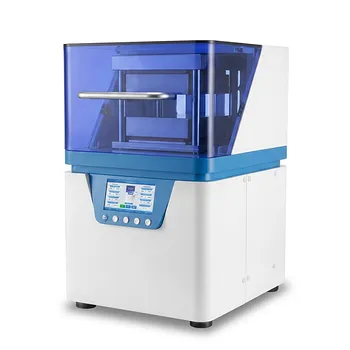
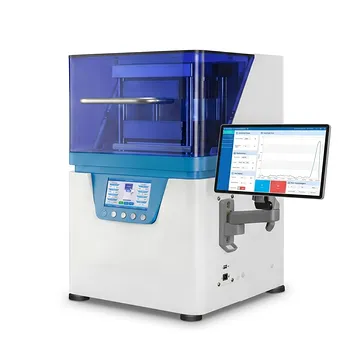
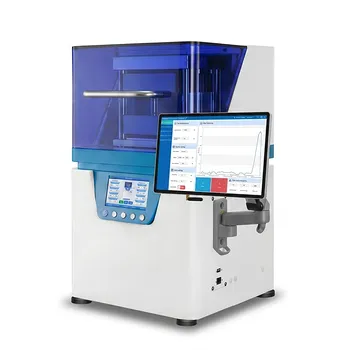
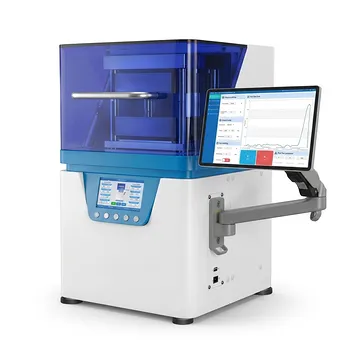
Hydraulic presses act as the foundational step in ensuring data integrity during analytical workflows. By exerting immense pressure to compress loose powders or irregular materials into uniform pellets or thin films, these devices transform raw materials into homogenous samples specifically optimized for spectroscopic examination.
Core Takeaway Reliable compositional analysis is impossible without consistent sample geometry and density. A hydraulic press standardizes the physical state of the material, ensuring that subsequent test results reflect the sample's true chemistry rather than inconsistencies in its preparation.
Achieving Analytical Precision
Creating Uniform Geometries
The primary function of the hydraulic press in a laboratory setting is to alter the physical form of a sample.
By compressing materials into solid pellets or thin films, the press eliminates irregularities. This creates a flat, even surface that is essential for interaction with analytical instruments.
Ensuring Homogeneity
For compositional analysis, the distribution of the material must be uniform throughout the sample.
Pressing a sample creates a homogenous structure, reducing voids or density gradients. This uniformity is the key factor that allows researchers to achieve accurate and reliable quantitative results.
Broader Material Science Applications
Facilitating Spectroscopic Examination
Many spectroscopic techniques require samples to be transmissive or reflective in a specific way.
Hydraulic presses prepare samples that meet these strict physical criteria. Without this preparation, light scattering or uneven absorption could compromise the quality of the spectroscopic data.
Densification of Ceramics
Beyond standard analysis, hydraulic presses are critical in the preparation of ceramic materials.
They are employed to shape and densify ceramic powders into solid forms. This process is vital for developing high-performance ceramics intended for demanding industrial applications.
Common Pitfalls in Sample Preparation
The Risk of Inconsistency
If a sample is not pressed to a uniform density, the analytical data will likely be flawed.
Variations in thickness or density can lead to signal artifacts in spectroscopy. Therefore, skipping or rushing the pressing stage often renders the final data unusable.
Material Integrity
While density is important, it is critical to ensure the sample is not altered chemically during the process.
The goal is to change the physical shape—creating a pellet or film—without introducing contamination or causing decomposition. The press must provide controlled force to achieve this balance.
Making the Right Choice for Your Goal
To determine how best to utilize a hydraulic press for your specific needs, consider your end objective:
- If your primary focus is Spectroscopic Analysis: Prioritize the creation of thin films or pellets to ensure maximum homogeneity for accurate light interaction.
- If your primary focus is Ceramic Engineering: Focus on the press's ability to densify and shape powders to simulate high-performance industrial solid forms.
Consistency in preparation is the single most effective variable you can control to guarantee the accuracy of your results.
Summary Table:
| Feature | Benefit to Analytical Techniques |
|---|---|
| Uniform Geometry | Creates flat surfaces essential for consistent instrument interaction. |
| Homogeneity | Eliminates density gradients to provide reliable quantitative results. |
| Densification | Converts loose powders into solid forms for high-performance ceramic testing. |
| Controlled Force | Maintains material integrity without causing chemical decomposition. |
Elevate Your Analytical Accuracy with KINTEK
Don't let inconsistent sample preparation compromise your research data. KINTEK specializes in comprehensive laboratory pressing solutions designed to meet the rigorous demands of battery research and material science.
Whether you require manual, automatic, heated, multifunctional, or glovebox-compatible models, our range—including high-precision cold and warm isostatic presses—ensures your samples achieve the perfect density and homogeneity every time.
Contact KINTEK today to find your ideal pressing solution and secure the consistency your lab deserves.
Related Products
- Automatic Hydraulic Hot Press with Large Plate and Precision Temperature Control for Advanced Material Sample Preparation and Industrial Research
- Automatic Hydraulic Heat Press Machine with Multi Stage Programmable Control and Integrated Water Cooling Plate Size 180x180mm
- Automatic High Temperature Heated Hydraulic Press Machine with Heated Plates for Lab
- Automatic Heated Hydraulic Lab Press with Programmable Touch Screen Controls and Precision Temperature Regulation
- Manual Heated Hydraulic Lab Press with Integrated Hot Plates Hydraulic Press Machine
People Also Ask
- What are the specific features and applications of hydraulic hot press machines? Precision Solutions for Modern Labs
- How does an automatic hydraulic press operate? Achieve Precision and Consistency in Lab Pelleting
- What are the advantages and common applications of an automatic hydraulic press? Elevate Your Lab's Precision
- What is the technical significance of setting a precise dwell time? Achieve Peak Material Density and Stability
- When is an automatic hydraulic press more suitable than a manual press? Scale Your Lab with Precision & Speed