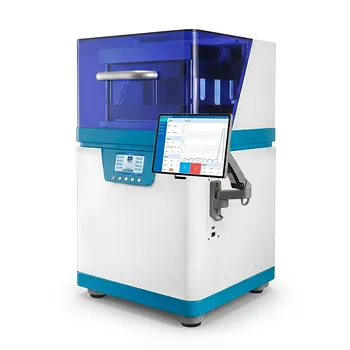
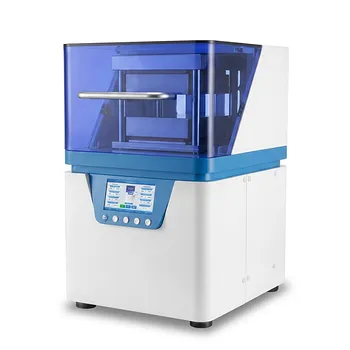
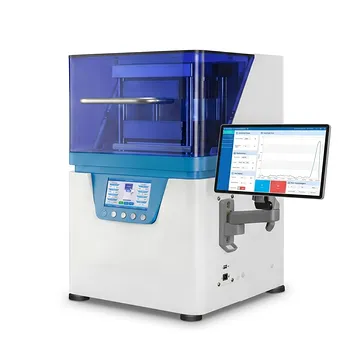
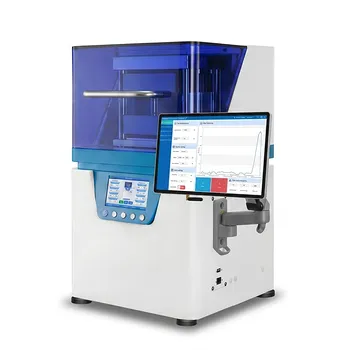
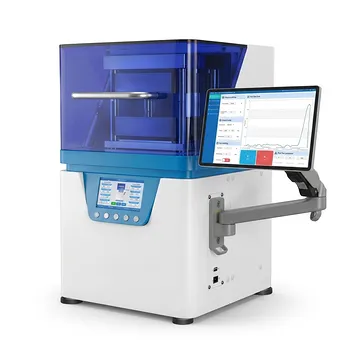
Hydraulic presses drive laboratory efficiency by combining ergonomic physical design with precise measurement tools to standardize sample preparation. They ensure ease of use through mechanical advantages like long handles and leak-free construction, while integrated pressure gauges allow operators to replicate exact load conditions for every cycle.
The core value of a hydraulic press lies in its ability to transform high-force application into a controlled, repeatable process. By stabilizing pressure and temperature variables, these tools ensure that physical sample preparation never becomes a hidden variable in your analytical data.
Achieving Reproducible Results
To trust analytical data, you must trust the sample preparation. Hydraulic presses eliminate the guesswork from this critical phase.
The Role of the Pressure Gauge
The integration of an accurate pressure gauge is the definitive feature for consistency. It allows the operator to visualize and quantify the exact load being applied to a sample.
This visualization prevents the "brute force" variability common in purely manual methods. It ensures that the pressure applied today matches the pressure applied last week.
Standardization for Analysis
Consistency in load application is the foundation of repeatable results. If the pressure varies, the density and optical properties of the sample will vary, compromising the data.
This is particularly critical in applications like FTIR (Fourier Transform Infrared Spectroscopy) sample preparation. In these sensitive tests, uniform sample thickness and density are required to produce reliable spectra.
Precision Control Features
Beyond simple monitoring, these presses allow for adjustable pressure settings. This enables researchers to dial in the exact force required for a specific protocol.
Mini presses, in particular, excel here by producing smaller pellets with high uniformity. This ensures that the physical characteristics of the sample remain constant across multiple test batches.
Streamlining the User Experience
While consistency addresses the "deep need" of data integrity, the design of modern hydraulic presses addresses the immediate need for usability and safety.
Ergonomic Operation
Hydraulic presses are designed to generate significant force in a compact space without requiring excessive physical exertion from the user.
Features such as long handles provide a mechanical advantage, making the application of tons of pressure physically manageable for the operator.
Safety Mechanisms
High-pressure environments carry inherent risks, which these devices mitigate through built-in safety features.
Perspex safety guards shield the user from debris, while pressure relief valves prevent the device from exceeding its safe operation limits. This reduces the risk of sudden mechanical failure.
Low Maintenance Durability
Ease of use extends to ownership and upkeep. Many modern presses feature an all-in-one leak-free design and hardened steel construction.
This rugged build quality minimizes downtime for repairs, making them a cost-effective and reliable staple in the lab.
Operational Trade-offs
While hydraulic presses provide control, they are not "set and forget" tools; they require active management of variables.
Balancing Force and Fragility
The high force output that makes these presses efficient can also be detrimental if not properly managed.
Sample damage is a risk if the pressure is not adjusted correctly for the specific material. While the press can handle metals and ceramics easily, softer materials like polymers or biological samples require precise, lower-pressure settings to maintain structural integrity.
Making the Right Choice for Your Goal
Selecting and utilizing a hydraulic press depends on the specific demands of your analytical techniques.
- If your primary focus is Analytical Precision (e.g., FTIR): Prioritize a press with a high-resolution pressure gauge to ensure identical density across all sample pellets.
- If your primary focus is Material Versatility: Focus on the adjustable pressure range to safely switch between hard ceramics and delicate biological samples without causing damage.
By leveraging the precise control and ergonomic features of a hydraulic press, you ensure that your equipment serves the science, rather than complicating it.
Summary Table:
| Feature | Benefit for Lab Work | Impact on Consistency |
|---|---|---|
| Integrated Pressure Gauge | Real-time force visualization | Prevents "brute force" variability; ensures identical load cycles. |
| Long-Handle Ergonomics | Reduced physical exertion | Lowers operator fatigue and improves manual control. |
| Adjustable Pressure Settings | Precision force control | Safely processes diverse materials from ceramics to polymers. |
| Perspex Safety Guards | Operator protection | Minimizes risk during high-pressure pelletizing. |
| Leak-Free Construction | High durability/Low maintenance | Ensures long-term reliability and constant pressure retention. |
Elevate Your Research with KINTEK Pressing Solutions
Don't let sample preparation become a hidden variable in your data. KINTEK specializes in comprehensive laboratory pressing solutions designed for absolute precision and user safety. Whether you require manual, automatic, heated, or multifunctional models, our equipment—including specialized glovebox-compatible and isostatic presses—is engineered to meet the rigorous demands of battery research and material science.
Ready to standardize your results? Contact us today to discover how our tailored pressing solutions can enhance your laboratory's efficiency and accuracy.
Related Products
- Automatic Hydraulic Hot Press with Large Plate and Precision Temperature Control for Advanced Material Sample Preparation and Industrial Research
- Automatic Hydraulic Heat Press Machine with Multi Stage Programmable Control and Integrated Water Cooling Plate Size 180x180mm
- Automatic High Temperature Heated Hydraulic Press Machine with Heated Plates for Lab
- Automatic Heated Hydraulic Lab Press with Programmable Touch Screen Controls and Precision Temperature Regulation
- Manual Heated Hydraulic Lab Press with Integrated Hot Plates Hydraulic Press Machine
People Also Ask
- What are the specific features and applications of hydraulic hot press machines? Precision Solutions for Modern Labs
- How does an automatic hydraulic press operate? Achieve Precision and Consistency in Lab Pelleting
- What are the advantages and common applications of an automatic hydraulic press? Elevate Your Lab's Precision
- What is the technical significance of setting a precise dwell time? Achieve Peak Material Density and Stability
- When is an automatic hydraulic press more suitable than a manual press? Scale Your Lab with Precision & Speed