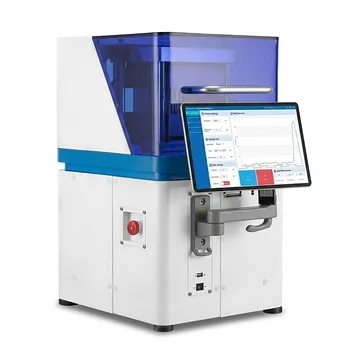
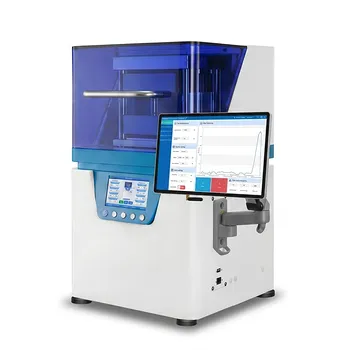
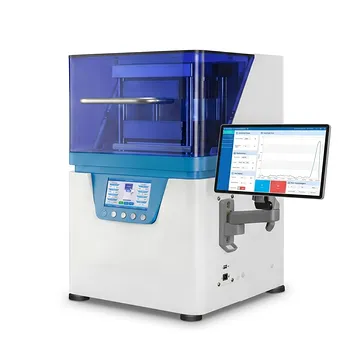
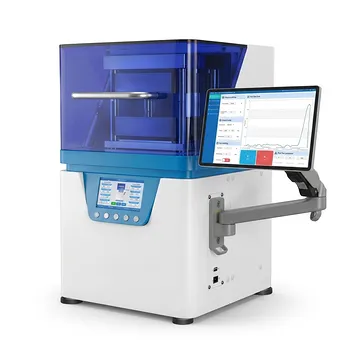
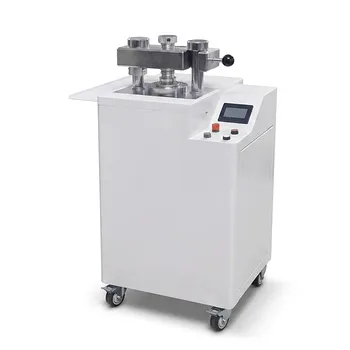
An electric heated plate vulcanizing press ensures product quality by strictly regulating the thermodynamic and mechanical conditions required for chemical transformation. By providing precise temperature control and uniform hydraulic pressure to rubber compounds held within steel molds, the press facilitates essential cross-linking reactions. This process converts raw, plastic mixed rubber into a stable, three-dimensional molecular network characterized by high strength, elasticity, and thermal resistance.
Core Takeaway: The press acts as a controlled environment where simultaneous heat and pressure management determines the cross-link density of the rubber. This stability is the primary factor in achieving uniform structural integrity, optimal mechanical properties, and the elimination of internal defects.
The Role of Precise Temperature Control
Triggering the Chemical Cross-Linking Reaction
The primary function of the electric heating system is to maintain a stable, high-temperature environment, often between 140°C and 160°C. This specific thermal energy is required to activate vulcanizing agents and accelerators, such as sulfur or dicumyl peroxide.
Without consistent heat, the macromolecular chains of the rubber cannot form the transverse chemical bonds necessary for a three-dimensional spatial network.
Ensuring Material Uniformity
Stable temperature control across the plates prevents localized under-curing or over-curing. This uniformity ensures that every part of the rubber specimen reaches the intended cross-link density, which directly dictates the final modulus and hardness of the product.
The Impact of Uniform Hydraulic Pressure
Elimination of Internal Defects and Air Bubbles
Continuous hydraulic pressure, which can reach levels like 30 bar or 1500 psi, is critical for forcing air out of the rubber matrix. By maintaining this pressure, the press eliminates internal air bubbles and voids that would otherwise create weak points in the material.
This results in a dense sheet structure that is essential for meeting rigorous mechanical performance testing standards.
Maintaining Geometric and Dimensional Stability
High pressure ensures the rubber compound completely fills the steel mold, accurately reflecting the intended shape. This control is vital for producing specimens with precise thickness (e.g., 2 mm), ensuring consistency across production batches.
Achieving Structural and Functional Integrity
Formation of the Three-Dimensional Network
The combination of heat and pressure transforms the physical state of the rubber from plastic raw material to a vulcanized solid. This transformation creates a stable spatial network that provides the material with its characteristic "memory" and elasticity.
Enhancing Specialized Material Properties
For advanced materials like NBR nanocomposites, the press environment determines the flame retardancy and thermal stability. Precise control over the vulcanization time and environment allows these specialized additives to integrate fully within the rubber matrix.
Understanding the Trade-offs and Pitfalls
The Risk of Thermal Gradients
Even high-quality presses can suffer from thermal gradients where the edges of the plate are cooler than the center. If not properly managed, this leads to non-uniform cross-linking, resulting in a product that may fail prematurely in one area while appearing fine in another.
Over-Vulcanization and Material Degradation
Applying high heat for too long—often referred to as "over-cooking"—can lead to the degradation of polymer chains. While higher temperatures can speed up production, they require tighter monitoring to prevent the loss of tensile strength and elasticity.
Applying This to Your Production Goals
Recommendations for Quality Optimization
- If your primary focus is mechanical strength and durability: Prioritize a press that offers high-precision pressure compensation to ensure maximum cross-link density and a defect-free internal matrix.
- If your primary focus is dimensional precision for testing: Select a press with high-tolerance steel molds and fine-tuned temperature sensors to maintain consistent specimen thickness and geometric stability.
- If your primary focus is processing high-performance nanocomposites: Use a press capable of maintaining a stable thermal field at higher temperatures (e.g., 160°C) to ensure full integration of chemical agents and flame retardants.
By mastering the balance of heat, pressure, and time, you turn a volatile chemical reaction into a predictable, high-quality manufacturing process.
Summary Table:
| Key Factor | Function in Vulcanization | Impact on Product Quality |
|---|---|---|
| Temperature (140-160°C) | Activates cross-linking agents | Ensures uniform hardness and modulus; prevents under-curing |
| Hydraulic Pressure | Forces out air and fills molds | Eliminates internal voids; ensures precise dimensional stability |
| Thermodynamic Stability | Prevents thermal gradients | Avoids localized defects and ensures consistent structural integrity |
| Time Management | Regulates chemical reaction | Prevents polymer degradation and maintains tensile strength |
Elevate Your Rubber & Battery Research with KINTEK
Precision is paramount when transforming raw materials into high-performance products. KINTEK specializes in comprehensive laboratory pressing solutions designed to meet the rigorous demands of material science. Our extensive range includes:
- Manual & Automatic Heated Presses for consistent thermal management.
- Multifunctional & Glovebox-Compatible Models for sensitive research environments.
- Cold & Warm Isostatic Presses widely applied in advanced battery research and nanocomposites.
Whether you need to ensure maximum cross-link density or achieve precise specimen thickness, KINTEK provides the reliability your lab requires. Contact our technical experts today to find the ideal pressing solution for your application!
References
- Przemysław Rybiński, Krzysztof Bujnowicz. Flammability of vulcanizates of diene rubbers. DOI: 10.1007/s10973-011-1728-x
This article is also based on technical information from Kintek Solution Knowledge Base .
Related Products
- Split Automatic Heated Hydraulic Press Machine with Heated Plates
- Automatic High Temperature Heated Hydraulic Press Machine with Heated Plates for Lab
- Automatic Heated Hydraulic Press Machine with Heated Plates for Laboratory
- Automatic Heated Hydraulic Lab Press Machine 200x200 Plate Size for Battery Research and Materials Science
- Automatic Heated Hydraulic Press Machine with Hot Plates for Laboratory
People Also Ask
- What are the requirements for electrode pressing with high-viscosity ionic liquids like EMIM TFSI? Optimize Performance
- How does a laboratory heated hydraulic press facilitate PBN sample prep for WAXS? Achieve Precise X-Ray Scattering
- What are the industrial applications of heated hydraulic presses? Master Heat & Force for Precision Manufacturing
- Why is a laboratory hydraulic press with heating plates required for PLA/TEC films? Achieve Precise Sample Integrity
- Function of a Laboratory Hydraulic Press with Heated Platens in SSE? Enhance Battery Density & Conductivity