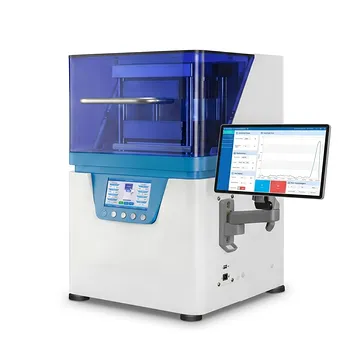
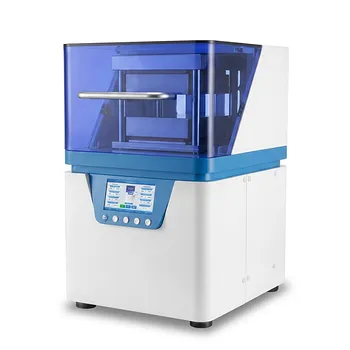
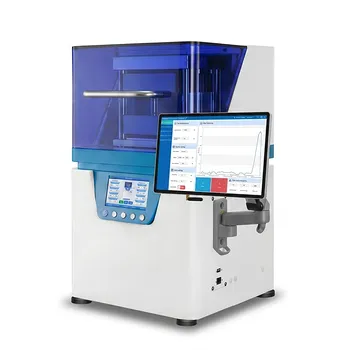
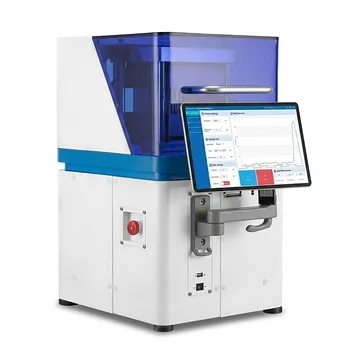
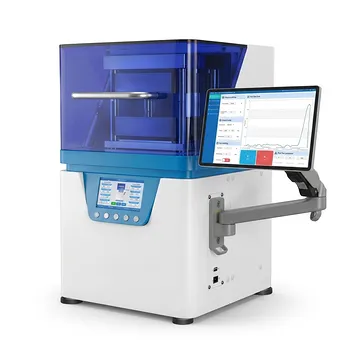
A heated hydraulic press is a versatile instrument designed to bond, shape, or cure materials by applying controlled thermal energy and compressive force simultaneously. Its primary function is to manipulate materials—such as polymers, composites, or ceramics—under high pressure and temperature to alter their physical state or structural properties. This dual capability makes it indispensable for tasks ranging from creating void-free laminates in manufacturing to testing material durability in research laboratories.
The core value of a heated hydraulic press lies in its ability to eliminate internal porosity and induce chemical bonding. By combining heat to soften or cure the material with pressure to densify it, the press achieves structural integrity that force alone cannot generate.
The Mechanics of Simultaneous Heat and Pressure
Integrating Force and Temperature
Unlike a standard press that relies solely on mechanical force, a heated hydraulic press integrates heating systems directly into the compression platens.
This allows the operator to maintain a specific temperature profile while applying hydraulic pressure, often reaching hundreds of megapascals.
Eliminating Voids and Porosity
The combination of heat and pressure is critical for densification.
Heat softens the material or activates a curing process, while pressure forces the material into a mold or compacts loose powders.
This action drives out air gaps and collapses internal structures, significantly reducing porosity and increasing the density of the final product.
Facilitating Chemical and Mechanical Bonding
In many applications, pressure alone is insufficient to bind materials together.
The thermal energy provided by the press facilitates starch gelatinization or chemical cross-linking.
This induces mechanical interlocking and chemical bonding, ensuring uniformity and strength in the final sample.
Critical Applications in Science and Industry
Advanced Sample Preparation
In research settings, such as battery development, these presses are used to compact loose electrolyte powders into high-density pellets.
This minimizes grain boundary resistance by ensuring intimate physical contact between particles.
Accurate measurement of a material's intrinsic properties, such as ionic conductivity, relies on the high-density samples this process creates.
Composite Manufacturing and Curing
For thermoplastic composites, the press manages the curing of laminates by heating the material above its melting point.
It applies uniform pressure to fuse multiple layers into a single, void-free blank.
Furthermore, it is used in thermoforming, where specialized molds rapidly shape these high-temperature blanks into complex geometric profiles.
Structural Modification
The press is capable of altering the fundamental structure of organic materials.
For example, in the creation of densified wood, the press applies pressure to chemically treated wood to collapse its cell structure.
This tightly bonds wood fibers, imparting superior mechanical properties that natural wood lacks.
Understanding the Trade-offs
Process Complexity
Using a heated hydraulic press introduces a second critical variable: temperature control.
Operators must manage the interplay between heat ramp-up rates and pressure application to avoid degrading thermally sensitive materials.
Uniformity Challenges
Achieving consistent results requires absolute thermal uniformity across the platens.
If the heating is uneven, the material may cure at different rates, leading to internal stresses or structural warping in the final part.
Cycle Time
The addition of thermal cycles can increase processing time compared to cold pressing.
The equipment must heat the material to the target temperature and often requires a cooling cycle under pressure to "freeze" the shape before removal.
Making the Right Choice for Your Goal
Whether you are synthesizing new materials or manufacturing components, the application of your press depends on your specific objective.
- If your primary focus is Material Research: Prioritize a press with precise temperature control and high-pressure capabilities to minimize porosity and allow for accurate characterization of intrinsic properties.
- If your primary focus is Composite Manufacturing: Look for a system capable of rapid thermoforming and uniform platen heating to ensure void-free curing of laminates and consistent geometric shaping.
By leveraging the synergistic effect of heat and pressure, a heated hydraulic press allows you to push materials beyond their natural limits to create stronger, denser, and more uniform products.
Summary Table:
| Feature | Primary Function/Benefit | Typical Application |
|---|---|---|
| Thermal Integration | Softens materials & activates chemical curing | Thermoplastic composite laminating |
| Void Elimination | Removes air gaps & collapses internal porosity | High-density electrolyte pellet pressing |
| Chemical Bonding | Facilitates cross-linking & mechanical interlocking | Material synthesis & structural modification |
| Structural Shaping | Thermoforming materials into complex geometries | Manufacturing densified wood or components |
| Uniform Pressure | Ensures consistent density & structural integrity | Battery research & ionic conductivity testing |
Elevate Your Material Research with KINTEK Precision
Unlock superior structural integrity and precise densification for your most demanding projects. KINTEK specializes in comprehensive laboratory pressing solutions, offering a versatile range of manual, automatic, heated, multifunctional, and glovebox-compatible models, alongside advanced cold and warm isostatic presses.
Whether you are pioneering next-generation battery research, synthesizing advanced ceramics, or manufacturing void-free composites, our equipment provides the thermal uniformity and pressure control necessary for consistent, high-quality results.
Ready to optimize your lab’s efficiency? Contact us today to find the perfect pressing solution and see how our expertise can drive your innovation forward.
Related Products
- Heated Hydraulic Press Machine with Heated Plates for Vacuum Box Laboratory Hot Press
- Automatic High Temperature Heated Hydraulic Press Machine with Heated Plates for Lab
- Automatic Heated Hydraulic Lab Press with Programmable Touch Screen Controls and Precision Temperature Regulation
- Automatic Hydraulic Heat Press Machine with Multi Stage Programmable Control and Integrated Water Cooling Plate Size 180x180mm
- Automatic Hydraulic Hot Press with Large Plate and Precision Temperature Control for Advanced Material Sample Preparation and Industrial Research
People Also Ask
- What are the requirements for electrode pressing with high-viscosity ionic liquids like EMIM TFSI? Optimize Performance
- How does a laboratory heated hydraulic press facilitate PBN sample prep for WAXS? Achieve Precise X-Ray Scattering
- What are the industrial applications of heated hydraulic presses? Master Heat & Force for Precision Manufacturing
- Function of a Laboratory Hydraulic Press with Heated Platens in SSE? Enhance Battery Density & Conductivity
- How are heated hydraulic presses utilized in the preparation of thin films? Key Mechanisms and Applications