Laboratory coin cell assembly equipment ensures testing validity by applying uniform radial support pressure through standardized packaging molds. This precise mechanical constraint is essential for stabilizing the interface between composite cathodes and glassy electrolyte disks, ensuring consistent pressure contact throughout charge-discharge cycles without fracturing the brittle electrolyte material.
The Core Takeaway The validity of solid-state battery testing relies on decoupling material failure from electrochemical performance. By maintaining a controlled, standardized pressure environment, assembly hardware preserves the structural integrity of brittle glassy electrolytes while enforcing the robust physical contact required for accurate impedance data.
The Mechanics of Validity
Managing Material Brittleness
Glassy electrolytes are inherently brittle materials.
If they are subjected to non-uniform stress during assembly or cycling, they are prone to fracture.
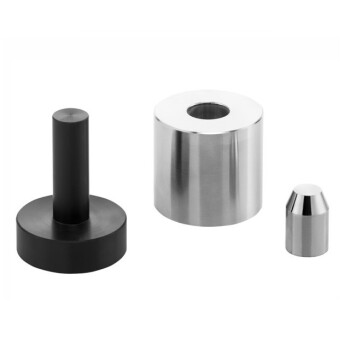
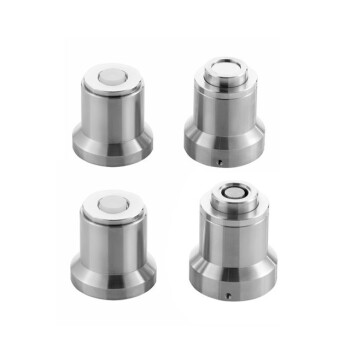
Laboratory assembly equipment uses standardized packaging molds to apply uniform radial support. This prevents stress concentrations that would otherwise crack the electrolyte disk, ensuring the cell fails due to electrochemical limits rather than mechanical breakage.
Ensuring Interfacial Kinetics
Unlike liquid electrolytes that wet the electrode surface, solid-state systems rely entirely on physical contact for ion transport.
The equipment provides a mechanical constraint that forces the electrode and electrolyte into intimate contact.
This "good pressure contact" is maintained even as the battery breathes (expands and contracts) during cycling. Without this sustained pressure, the interface would delaminate, leading to a false reading of high impedance.
The Impact on Data Reliability
Stabilizing Contact Resistance
Fluctuations in physical pressure lead to fluctuations in contact resistance.
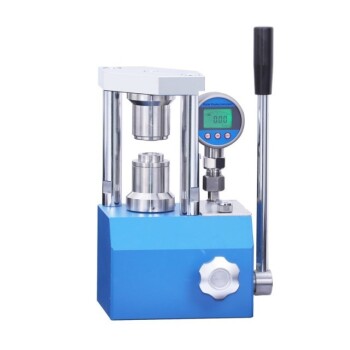
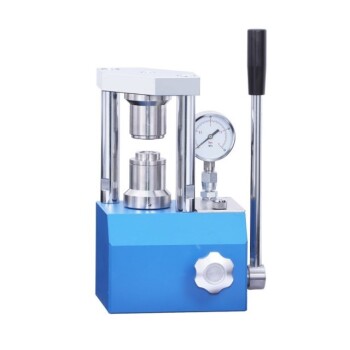
Precision hydraulic presses used during encapsulation minimize these fluctuations.
By standardizing the sealing pressure, researchers can isolate subtle changes in Charge Transfer Resistance (Rct) and Solid Electrolyte Interface Resistance (RSEI). This eliminates "noise" caused by poor assembly, ensuring that observed resistance changes are due to chemical evolution, not mechanical loosening.
Enabling Long-Term Cycling
Validating a battery requires observing performance over time, not just a single cycle.
Standardized encapsulation is a hardware prerequisite for symmetrical long-cycle stripping and plating tests.
The uniform contact provided by cell crimpers allows researchers to track the evolution of interfacial impedance accurately over hundreds of cycles, proving the stability of the electrochemical system.
Understanding the Trade-offs
The Risk of Manual Assembly
Attempting to assemble solid-state coin cells without precision equipment introduces human error.
Manual or non-standardized pressure application results in non-uniform stress distributions.
In glassy systems, this leads to micro-cracking or uneven contact patches. These defects create "hot spots" of current density, which can cause short circuits or artificially low cycle life, rendering the test data invalid.
Pressure Calibration
While the equipment ensures uniformity, the amount of pressure must be calibrated to the material.
Excessive pressure from a hydraulic press can crush porous composite cathodes.
Insufficient pressure will fail to bridge the gaps between the solid electrolyte and the electrode. The equipment guarantees consistency, but the researcher must still define the optimal pressure parameters for their specific chemistry.
Making the Right Choice for Your Goal
To maximize the validity of your solid-state battery testing, align your assembly protocols with your specific research objectives.
- If your primary focus is Material Characterization: Ensure your molds provide uniform radial support to prevent brittle fracture in glassy electrolytes, allowing you to test the intrinsic properties of the material rather than its mechanical failure points.
- If your primary focus is Interfacial Chemistry: Prioritize precision hydraulic pressing to standardize contact resistance, ensuring that measurements of Rct and RSEI reflect true chemical changes rather than assembly artifacts.
Standardized mechanical pressure is not just a safety measure; it is the fundamental variable that turns a pile of components into a reproducible scientific instrument.
Summary Table:
| Feature | Impact on Testing Validity |
|---|---|
| Uniform Radial Support | Prevents brittle fracture of glassy electrolytes by eliminating stress concentrations. |
| Mechanical Constraint | Maintains intimate physical contact for ion transport despite material expansion/contraction. |
| Precision Hydraulic Pressing | Minimizes contact resistance fluctuations to isolate true electrochemical impedance data. |
| Standardized Encapsulation | Enables reliable long-term cycling and accurate tracking of Rct and RSEI evolution. |
Elevate Your Solid-State Battery Research with KINTEK
Precision is the foundation of valid electrochemical data. KINTEK specializes in comprehensive laboratory pressing solutions designed to meet the rigorous demands of solid-state research. Whether you are working with brittle glassy electrolytes or advanced composite cathodes, our range of manual, automatic, heated, and glovebox-compatible models, as well as cold and warm isostatic presses, ensures uniform pressure application and repeatable results.
Don't let mechanical failure compromise your material insights. Contact KINTEK today to find the ideal assembly equipment for your laboratory and ensure every test reflects the true potential of your battery chemistry.
References
- Will Fettkether, Steve W. Martin. Cathode Processing Optimization Toward Solid‐State Batteries with Monolithic Oxysulfide Glassy Solid Electrolytes. DOI: 10.1002/batt.202500065
This article is also based on technical information from Kintek Solution Knowledge Base .
Related Products
- Warm Isostatic Press for Solid State Battery Research Warm Isostatic Press
- Lab Button Battery Tablet Press Sealing Mold
- Button Battery Sealing Machine for Button Batteries
- Lab Button Battery Disassembly and Sealing Mold
- Button Battery Sealing Press Machine for Lab
People Also Ask
- Why must composite cathodes be sealed in vacuum lamination bags for WIP? Ensure Battery Stability and Density
- How do sacrificial volume materials (SVM) maintain microchannels in isostatic pressing? Ensure Structural Integrity
- What is the function of elastic molds in warm isostatic pressing? Achieve Uniform Density in Composite Particles
- What is the function of hydraulic pressure in warm isostatic pressing? Achieve Uniform Material Density
- What is the process involved in warm isostatic pressing? Mastering Uniform Density with WIP Technology