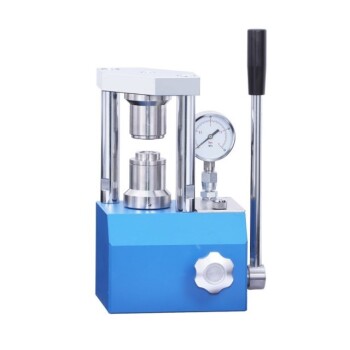
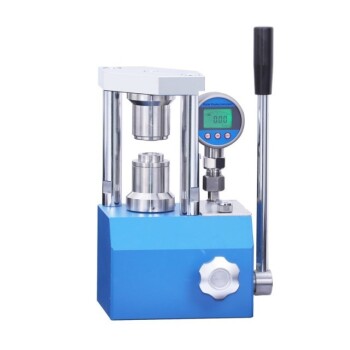
The lamination process is the critical mechanical assembly step that transforms loose battery components into a unified, stable electrochemical system. It functions by applying uniform pressure to the stacked structure—comprising the modified lithium anode, separator, and cathode—to enforce tight physical contact. By eliminating internal voids and gaps, this process establishes the interfacial integrity required for the cell to function reliably over time.
By enforcing uniform contact and eliminating gaps, lamination ensures optimal electrolyte saturation and uniform charge distribution. This mechanical integrity is particularly vital for preserving the protective Li3P layer on the anode, directly enabling high ionic conductivity and extended cycle life.
The Mechanics of Physical Stability
Eliminating Internal Gaps
The primary function of lamination is to remove physical voids between layers. Without this step, microscopic gaps would exist between the electrodes and the separator.
These gaps create areas of high resistance and potential failure points. Lamination forces the components together to create a continuous path for ionic transport.
Ensuring Component Adhesion
For a 0.2 Ah pouch cell to maintain stability, the anode, separator, and cathode must act as a single unit. Lamination applies the necessary pressure to "lock" these layers into place.
This tight physical contact prevents the layers from shifting or delaminating during the expansion and contraction cycles inherent to battery operation.
Optimizing Electrochemical Performance
Facilitating Electrolyte Saturation
A well-laminated cell structure supports the efficient distribution of electrolyte. The process ensures that the electrolyte can fully saturate the porous components of the cell.
Full saturation is essential for consistent ion movement. Dry spots caused by poor lamination would lead to localized "dead zones" where no energy storage occurs.
Uniform Charge Distribution
Lamination creates a homogeneous interface across the entire electrode surface. This uniformity ensures that charge is distributed evenly during cycling.
Uneven contact leads to "hot spots" of high current density. By smoothing out these interactions, lamination prevents localized stress that could degrade the cell materials.
Protecting the Specialized Anode Interface
Preserving the Li3P Layer
For cells utilizing a modified lithium anode (Li@P), the mechanical stability of the protective layer is paramount. Lamination ensures this delicate Li3P layer remains intact and firmly adhered to the underlying lithium.
Maintaining Ionic Conductivity
The long-term cycle life of high-capacity full cells depends on high ionic conductivity. The lamination process minimizes interfacial resistance, allowing ions to pass freely through the protective layer.
If the lamination pressure were insufficient, the protective interface could degrade, severing the ionic pathway and reducing the cell's lifespan.
Understanding the Trade-offs
The Risk of Excessive Pressure
While contact is essential, applying too much pressure during lamination can be detrimental. Excessive force may crush the separator pores or damage the electrode structure, actually impeding electrolyte flow.
Precision Control is Mandatory
The lamination process relies on "controlled assembly." If the pressure is not applied uniformly, it can induce warping or gradients in current density, negating the benefits of the process and potentially accelerating degradation.
Making the Right Choice for Your Goal
To maximize the potential of Li@P||LiCoO2 pouch cells, the lamination parameters must be tuned to specific performance outcomes:
- If your primary focus is Cycle Life: Prioritize pressure uniformity to maintain the mechanical integrity of the Li3P protective layer, preventing premature degradation of the anode.
- If your primary focus is Efficiency: Focus on eliminating all internal gaps to ensure complete electrolyte saturation and minimize internal resistance.
Lamination is not merely a packaging step; it is a foundational process that defines the electrochemical efficiency and structural longevity of the battery.
Summary Table:
| Mechanism | Impact on Long-term Stability |
|---|---|
| Gap Elimination | Removes internal voids to ensure a continuous ionic transport path. |
| Component Adhesion | Prevents delamination during expansion/contraction cycles. |
| Electrolyte Saturation | Ensures full wetting of porous components to avoid "dead zones." |
| Interface Protection | Preserves the delicate Li3P protective layer on the lithium anode. |
| Charge Distribution | Creates a homogeneous interface to prevent high-current density hot spots. |
Optimize Your Battery Research with KINTEK Precision
Achieving the perfect balance of lamination pressure is critical to the longevity of your Li@P||LiCoO2 pouch cells. At KINTEK, we specialize in comprehensive laboratory pressing solutions designed specifically for advanced battery research.
Whether you need manual, automatic, heated, or glovebox-compatible models, or high-performance cold and warm isostatic presses, our equipment ensures the uniform pressure distribution required to preserve delicate anode interfaces and minimize internal resistance.
Ready to enhance your cell assembly precision?
Contact our experts today to find the ideal pressing solution for your lab.
References
- Haoling Liu, Libao Chen. A Lithiophilic Artificial Li3P Interphase with High Li-Ion Conductivity via Solid-State Friction for Lithium Metal Anodes. DOI: 10.3390/ma18091930
This article is also based on technical information from Kintek Solution Knowledge Base .
Related Products
- Warm Isostatic Press for Solid State Battery Research Warm Isostatic Press
- Lab Button Battery Tablet Press Sealing Mold
- Button Battery Sealing Press Machine for Lab
- Laboratory Hydraulic Press Lab Pellet Press Button Battery Press
- Lab Infrared Press Mold for Laboratory Applications
People Also Ask
- Why must composite cathodes be sealed in vacuum lamination bags for WIP? Ensure Battery Stability and Density
- What is the function of elastic molds in warm isostatic pressing? Achieve Uniform Density in Composite Particles
- How do sacrificial volume materials (SVM) maintain microchannels in isostatic pressing? Ensure Structural Integrity
- How does Warm Isostatic Pressing differ from traditional pressing methods? Unlock Uniform Density for Complex Parts
- What is the mechanism of a Warm Isostatic Press (WIP) on cheese? Master Cold Pasteurization for Superior Safety